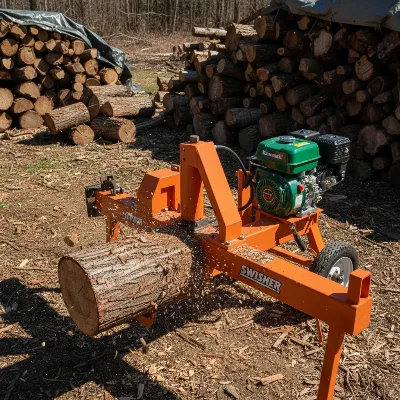
Few things are as frustrating as pulling the starter cord on your gas log splitter, only to be met with silence or a weak sputter. When you’re ready to tackle a pile of logs, a stubborn engine can bring your work to a grinding halt. This comprehensive guide, crafted from years of hands-on experience, will walk you through the most common reasons why your gas log splitter might not be starting quickly, offering clear, actionable solutions to get your machine roaring back to life. From fuel system checks to ignition diagnostics, we’ll cover everything you need to know to troubleshoot effectively and ensure your log splitter is ready for action.
What is a Log Splitter? An Overview of the Essential Tool
A log splitter is a powerful piece of equipment designed to efficiently break down large pieces of wood into smaller, manageable sizes for firewood or other uses. Instead of the strenuous and time-consuming work of splitting logs by hand with an axe, these machines utilize hydraulic force, mechanical power, or even manual leverage to split wood with remarkable ease. Their primary function is to simplify the wood-splitting process, saving both time and physical effort for homeowners, farmers, and commercial users alike.
The history of log splitters dates back to simpler mechanical devices, evolving significantly with the introduction of hydraulic systems, which revolutionized their efficiency and power. Modern log splitters come in various forms, broadly categorized by their power source, size, and orientation, each suited for different applications and wood-splitting demands.
Detailed Classification of Log Splitters
Understanding the different types of log splitters is crucial for both selection and troubleshooting, as their power sources and designs influence their operation and potential issues.
By Power Source:
The engine or motor is the heart of any log splitter, determining its power and mobility.
- Electric Log Splitters: These models are typically quieter and produce no emissions, making them ideal for residential use or indoor environments where exhaust fumes are a concern. They are generally less powerful than gas models, suitable for smaller logs and lighter-duty tasks. Their main advantages include ease of use and lower maintenance, but they are limited by the need for an electrical outlet and cord length.
- Gas Log Splitters: Powered by internal combustion engines, gas log splitters offer superior power and portability, capable of splitting larger, tougher logs without being tethered to a power outlet. They are the go-to choice for heavy-duty tasks, remote locations, and commercial applications. However, they require more maintenance, produce exhaust fumes, and are generally noisier.
- Hydraulic Log Splitters: While many log splitters utilize hydraulic systems, this category specifically refers to the mechanism that generates splitting force. Both electric and gas-powered splitters often employ hydraulics to amplify force. The hydraulic system itself consists of a pump, reservoir, control valve, and cylinder, which together generate immense pressure to push a wedge through a log.
- Manual Log Splitters: These are the simplest and most environmentally friendly options, relying solely on human power. They range from foot-operated models to hand-powered levers or kinetic splitters that use a flywheel. They are best for occasional use with small, seasoned logs and offer the benefit of silent operation and no fuel costs.
|
Our Picks for the Best Log Splitter in 2026
As an Amazon Associate I earn from qualifying purchases.
|
||
| Num | Product | Action |
|---|---|---|
| 1 | KABIN Kindle Quick Compact Log Splitter - Manual Splitting Tool - Steel Wedge Point Splits Firewood Like A Boss Safely & Easily |

|
| 2 | Wood Kindling Splitter - The Firewood Kindling Tool for Wood Stove Fireplace and Fire Pit |
|
| 3 | Kindling Cracker Firewood Kindling Splitter — Original Cast Iron Wood Splitting Wedge, 6.5" Safety Ring, 12" Frame, No Axe Needed, New Zealand Designed & Australian Made |
|
| 4 | Wall Mounted Wood Splitter: Dual-Handle Manual Kindling Splitter with 6-Tooth Clamping, Heavy Duty Steel Log Splitter for Soft Firewood, Includes Gloves and Screws for Indoor and Outdoor Use |
|
| 5 | 2 Pcs 4 Lbs Wood Splitting Wedges Manual Log Splitter Wedge 4-Direction Diamond Design Forged Steel Tool for Easy Wood Splitting Splits Firewood into 4 Pieces Less Effort (Orange) |
|
| 6 | Firewood Kindling Splitter, Manual Log Splitter, Cast Iron Log Splitting Wedge, Heavy Duty Wood Splitter Tool with Cover (Black) |
|
| 7 | 13.8 Inch XL Manual Log Splitter with Self-Locking V-Blade for Hands-Free Safety - Unbreakable Welded Steel Firewood Cutter - Rust-Proof Electroplated Finish for Large Rounds, Fireplace & Camping |
|
| 8 | Kindling Cracker King XL Firewood Kindling Splitter – Extra-Large Cast Iron Wood Splitting Wedge, 9" Safety Ring, 17" Height, No Axe Needed, Made in Australia |
|
| 9 | Firewood Kindling Splitter for Wood, Heavy Duty Cast Iron Wood Splitters for Firewood with No Axe, Manual Log Splitter for Kindling Wedge Point with Safety Cover |
|
| 10 | ESTWING Sure Split Wedge - 5-Pound Wood Splitting Tool with Forged Steel Construction & 1-7/8" Cutting Edge - E-5 |
|
By Size and Capacity:
The scale of your wood-splitting needs often dictates the size and power of the machine you require.
- Small-Sized Log Splitters (Residential Use):
- Advantages: Easy to maneuver and store, more affordable, and perfectly adequate for processing firewood for a home fireplace or wood-burning stove. They typically handle logs up to 20 inches long and 10-12 inches in diameter.
- Disadvantages: Limited power and capacity, not suitable for large, knotty, or green logs.
- Large-Sized Log Splitters (Industrial/Commercial Use):
- Advantages: High tonnage (20 tons and above), powerful engines, and robust construction allow them to effortlessly split large, tough, and green logs quickly. Ideal for commercial logging operations or those with extensive firewood needs.
- Disadvantages: Significantly higher cost, much heavier and bulkier, requiring more storage space and often a towing vehicle for transport.
By Splitting Orientation:
The way a log splitter positions the log for splitting can impact ease of use and efficiency.
- Horizontal Log Splitters: These machines typically position the log horizontally on a beam, where a ram pushes it into a wedge. They are common for home use and smaller operations, as loading logs horizontally can be easier for one person.
- Vertical Log Splitters: In contrast, vertical log splitters allow logs to be placed upright on an end plate, which is particularly advantageous for very large or heavy logs that would be difficult to lift onto a horizontal beam. The ram then descends to split the log. Many commercial and larger residential models offer both horizontal and vertical splitting capabilities for versatility.
Comparison Table of Popular Log Splitter Types
Choosing the right log splitter depends heavily on your specific needs, considering factors like power, portability, and environmental impact.
| Feature | Electric Log Splitter | Gas Log Splitter | Manual Log Splitter |
|---|---|---|---|
| Power Source | Electricity (standard household outlet) | Gasoline Engine (4-stroke) | Human effort (hydraulic pump, lever, kinetic) |
| Splitting Force | 4-10 tons | 15-40+ tons | 1-10 tons (variable by type) |
| Log Capacity | Small to medium (up to 20″ length, 12″ diameter) | Small to large (up to 25″+ length, 24″+ diameter) | Small (up to 18″ length, 8-10″ diameter) |
| Portability | Limited by cord length, generally lighter | Highly portable, often towable | Highly portable, no power source needed |
| Noise Level | Low | High | Very Low / Silent |
| Emissions | None | Exhaust fumes (CO, NOx) | None |
| Maintenance | Low (electrical components, hydraulic fluid) | Moderate to High (engine, fuel, oil, spark plug, air filter) | Very Low (mechanical parts, occasional lubrication) |
| Cost | $$ | $$$$ | $ |
| Typical Use | Residential, light-duty, indoor/garage use | Residential, commercial, heavy-duty, remote areas | Occasional use, small amounts of wood |
| Pros | Quiet, clean, easy to start, low maintenance | Powerful, fast, mobile, handles tough logs | Inexpensive, silent, no fuel, good exercise |
| Cons | Less powerful, cord-dependent, slower cycle time | Noisy, emissions, higher maintenance, more expensive | Slow, labor-intensive, limited log capacity |
Guiding Your Choice: Selecting the Right Log Splitter
Choosing the ideal log splitter is a strategic decision that impacts your efficiency and satisfaction. Consider these factors to align the machine with your specific demands.
Determining Your Usage Needs:
Start by accurately assessing what you need the splitter to do.
- Volume of Wood: How much wood do you plan to split annually? A few cords for a home fireplace require a different machine than several truckloads for commercial sale.
- Log Size and Type: Are you dealing with small, seasoned softwood, or large, knotty, green hardwood? The diameter and hardness of your typical logs will dictate the necessary splitting force.
- Budget Considerations: Establish a realistic budget that encompasses not only the purchase price but also potential maintenance, fuel, and accessory costs.
Critical Factors for Consideration:
Once you understand your needs, evaluate these technical specifications.
- Engine Power/Splitting Force: Measured in tons, this indicates how much pressure the machine can exert. For home use, 4-10 tons might suffice. For tougher, larger logs, 20-30 tons or more is recommended. This is directly related to the engine’s horsepower and the hydraulic system’s efficiency.
- Cycle Time: This is the time it takes for the ram to extend and retract fully. A faster cycle time means more logs split per hour. For high-volume work, look for quicker cycle times.
- Log Opening (Length and Diameter): Ensure the splitter can accommodate the longest and widest logs you typically encounter. Most residential splitters handle logs up to 24-25 inches long.
- Safety Features: Look for features like two-hand operation (requiring both hands to activate, keeping them away from the wedge), automatic ram return, and sturdy guards.
- Brand Reputation and Reliability: Research brands known for quality construction, durable engines, and readily available parts and service. Reliable brands often offer better warranties and support.
Evaluating Additional Features:
These enhancements can improve convenience, comfort, and versatility.
- Auto-Return Valve: This feature automatically retracts the ram once the log is split, speeding up the process and reducing operator fatigue.
- Adjustable Wedge/Multi-Way Splitting: Some models offer a 4-way wedge or adjustable splitting angles, allowing you to split logs into multiple pieces with a single pass, enhancing efficiency.
- Towing Package/Wheels: For gas splitters, large, pneumatic tires and a tow hitch are essential for easy transport around your property or to different locations.
- Log Cradles/Tables: These attachments hold logs in place, preventing them from falling and making the splitting process safer and more efficient.
Top Gas Log Splitters on the Market
While specific models and their availability can fluctuate, several categories of gas log splitters consistently perform well across various applications. When evaluating options in 2026, focus on these types and features to match your splitting demands.
For homeowners with moderate firewood needs, a 15-20 ton horizontal/vertical gas splitter offers an excellent balance of power and maneuverability. These machines are typically equipped with reliable 6-8 HP engines, capable of handling most hardwoods up to 24 inches long. They often feature an auto-return valve and may have a tow hitch for easy transport. Brands known for their durability and widely available parts are generally a safe bet in this range.
For heavy-duty residential or light commercial use, consider a 25-30 ton gas log splitter. These powerhouses feature more robust frames, larger engines (8-10 HP), and often faster cycle times. Many in this class offer both horizontal and vertical splitting, making them versatile for handling larger, unwieldy logs. Look for models with hydraulic fluid filters and easy access for maintenance to ensure longevity.
For professional or extensive commercial operations, a 30-40+ ton industrial gas log splitter is indispensable. These machines are built for continuous use, often with powerful 13-16 HP engines, large hydraulic reservoirs, and heavy-duty components designed for maximum throughput. They may include advanced features like hydraulic lifts for heavy logs and operator platforms. While the initial investment is higher, their efficiency and durability pay dividends in demanding environments.
Regardless of the tonnage, prioritize gas splitters with reputable engine brands (e.g., Honda, Briggs & Stratton, Kohler, Loncin) known for their reliability and ease of maintenance. Check user reviews for insights into real-world performance, common issues, and customer support experience. A good warranty and accessible spare parts are also crucial for long-term satisfaction.
How to Fix a Gas Log Splitter That Won’t Start Fast
When your gas log splitter refuses to start, it’s usually a common issue within the fuel, ignition, or air systems. Systematically checking these areas will often pinpoint the problem quickly. Always prioritize safety by turning off the engine, engaging the brake, and ensuring the work area is clear before beginning any inspection or repair.
An Ounce of Prevention: Safety First
Before troubleshooting, remember to:
- Wear Personal Protective Equipment (PPE): Always don safety glasses, work gloves, and sturdy footwear.
- Disconnect the Spark Plug Wire: This prevents accidental starting during inspection.
- Work in a Well-Ventilated Area: Especially when dealing with fuel.
- Consult Your Owner’s Manual: It provides specific instructions and diagrams for your model.
Troubleshooting Steps:
1. Fuel System Checks: The Most Common Culprit
The vast majority of starting problems trace back to the fuel system.
- Check Fuel Level and Quality: Ensure the fuel tank has enough fresh gasoline. Old or stale gasoline, especially if left in the tank for more than 30 days without stabilizer, can degrade and clog the carburetor. Drain old fuel and refill with fresh, high-octane gasoline, ideally mixed with a fuel stabilizer.
- Inspect the Fuel Filter: A clogged fuel filter restricts fuel flow to the engine. Locate the in-line fuel filter (usually between the fuel tank and carburetor) and check for visible debris. Replace it if it appears dirty or blocked.
- Examine the Fuel Lines: Look for kinks, cracks, or blockages in the fuel lines. Ensure they are securely connected.
- Troubleshoot the Carburetor: The carburetor mixes air and fuel. If your log splitter has been sitting with old fuel, varnish and debris can build up, causing blockages. Symptoms include sputtering, running rough, or not starting at all.
- Cleaning: If comfortable, you can attempt to clean the carburetor using carburetor cleaner. Remove the air filter and spray cleaner into the intake while trying to start the engine. For a deeper clean, the carburetor may need to be disassembled and cleaned with specialized tools.
- Rebuilding/Replacing: If cleaning doesn’t work, the carburetor might need a rebuild kit (new gaskets and seals) or a complete replacement. This is often necessary if it’s severely clogged or damaged.
2. Ignition System Checks: Sparking the Engine
Without a strong spark, the engine won’t ignite the fuel-air mixture.
- Inspect the Spark Plug: Remove the spark plug using a spark plug wrench.
- Condition: Check for signs of wear, damage (cracked porcelain), or heavy carbon buildup. A fouled or wet plug won’t spark efficiently.
- Cleaning/Gap: If dirty, clean it with a wire brush. Check the gap with a feeler gauge and adjust if necessary (refer to your manual for the correct gap).
- Testing: A spark plug tester can verify if the plug is producing a strong, consistent spark. If not, replace it. A new spark plug is an inexpensive component that often resolves starting issues.
- Check Spark Plug Wire Connection: Ensure the spark plug wire is securely attached to the spark plug.
- Examine the Ignition Switch: Ensure the ignition switch is in the “On” position. Sometimes a faulty switch or wiring connection can prevent power from reaching the ignition system.
3. Air System Checks: Breathing Room for Your Engine
Proper airflow is critical for combustion.
- Inspect the Air Filter: A clogged air filter restricts airflow, leading to a rich fuel mixture that can prevent starting. Remove the air filter and check for dirt, debris, or sawdust buildup. Clean or replace it as needed. For foam filters, you might wash and re-oil them. Paper filters typically need replacement.
- Check Choke and Throttle Settings: When starting a cold engine, the choke should be closed to create a richer fuel mixture. Gradually open it as the engine warms up. Ensure the throttle is set to an appropriate starting position (often around halfway or as specified in your manual).
4. Oil Level and Condition: Engine Health
While less common for starting issues, correct oil levels are vital for engine longevity.
- Check Oil Level: Ensure the engine oil is at the recommended level. Low oil levels can sometimes prevent an engine from starting as a safety mechanism, especially on newer models.
- Cold Weather Considerations: In very cold temperatures, engine oil can thicken, making it harder for the engine to crank over. Allowing the machine to warm up in a garage for 15-20 minutes before starting can help.
5. Recoil Starter (Pull Cord) Check: Mechanical Issues
If the engine isn’t even turning over when you pull the cord, the recoil starter might be the problem.
- Inspect Recoil Starter: If the rope pulls out freely without engaging the engine, or if it’s broken, the recoil starter likely needs repair or replacement.
> “Many log splitter starting problems stem from simple oversight. Often, it’s just stale fuel or a fouled spark plug, not a major mechanical failure. Regular checks can save hours of frustration.” – John Davis, Small Engine Repair Specialist
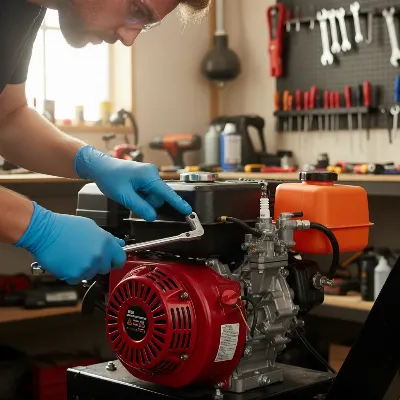 A technician inspecting the engine of a gas log splitter, checking the spark plug and fuel lines.
Guide to Safe Usage and Maintenance of Your Log Splitter
Proper usage and consistent maintenance are paramount not only for the longevity of your gas log splitter but, more importantly, for your safety. Adhering to these guidelines will ensure efficient operation and minimize risks.
Safety During Operation:
Your safety is the highest priority when operating powerful machinery.
- Personal Protective Equipment (PPE): Always wear sturdy safety glasses or a face shield to protect against flying debris, heavy-duty gloves to protect your hands, and ear protection to guard against engine noise. Steel-toed boots are also recommended.
- Pre-Operation Check: Before each use, inspect the machine thoroughly. Check for loose bolts, leaks (fuel, oil, hydraulic fluid), damaged hoses, and ensure all guards are in place. Verify that the spark plug wire is securely connected.
- Clear Work Area: Keep your work area free of clutter, children, pets, and other bystanders. Maintain a safe distance (at least 15 feet) from the operating splitter. Ensure stable footing.
- Proper Log Handling: Place logs securely on the splitting beam. Never attempt to split logs that are too large for your machine’s capacity. Avoid holding logs with your hands directly near the wedge. Use proper lifting techniques to prevent back injuries.
- Two-Hand Operation: Most modern log splitters require two-hand activation for the ram, a critical safety feature to keep both hands away from the splitting wedge during operation. Always follow this protocol.
- Stay Alert: Never operate the log splitter when you are fatigued, under the influence of alcohol, or impaired by medication. Full concentration is essential.
- Engine Shut-Off: Always turn off the engine and wait for all moving parts to stop before performing any adjustments, clearing jammed logs, or leaving the machine unattended.
Regular Maintenance Schedule:
Consistent upkeep prevents breakdowns and extends your splitter’s lifespan.
- After Each Use:
- Clean the Machine: Remove sawdust, wood chips, and debris from the engine, splitting beam, and hydraulic components. This prevents buildup that can cause overheating or interfere with moving parts.
- Inspect for Damage: Look for any new dents, cracks, leaks, or loose fasteners. Address them promptly.
- Every 10-20 Hours of Operation (or Seasonally):
- Check and Change Engine Oil: Refer to your owner’s manual for the recommended oil type and change interval. Dirty oil can cause excessive engine wear.
- Inspect and Clean/Replace Air Filter: A clean air filter is vital for proper engine performance and fuel efficiency.
- Check Spark Plug: Inspect, clean, and re-gap or replace the spark plug.
- Inspect Fuel Filter and Lines: Check for blockages or deterioration. Replace the fuel filter as needed.
- Annually (or Every 50 Hours):
- Change Hydraulic Fluid: Hydraulic fluid degrades over time and can cause performance issues. Follow your manufacturer’s recommendations for fluid type and replacement intervals.
- Inspect Hoses and Fittings: Check for leaks, cracks, or loose connections in the hydraulic system.
- Sharpen or Replace Wedge: A dull wedge reduces splitting efficiency and puts more strain on the engine and hydraulic system.
- Lubricate Moving Parts: Apply grease or oil to pivot points and other moving components as directed by your manual.
- Check Tire Pressure: For towable models, ensure tires are properly inflated.
- Winter Storage: Before storing your log splitter for an extended period:
- Stabilize Fuel: Add a fuel stabilizer to the gas tank and run the engine for a few minutes to ensure the treated fuel circulates through the carburetor. This prevents fuel degradation and carburetor clogging.
- Drain Fuel (Optional but Recommended): For long-term storage (over 6 months), draining the fuel tank and running the engine until it dies can prevent stale fuel issues.
- Change Oil and Filter: Start the next season with fresh oil.
- Clean Thoroughly: Store in a dry, covered area to protect it from the elements.
Where to Purchase Reliable Log Splitters
When investing in a gas log splitter, choosing a reputable vendor is as important as selecting the right machine. Here’s what to look for when deciding where to buy.
For new machines, specialized outdoor power equipment dealerships are often the best choice. These retailers typically offer a wide selection of models, expert advice, assembly services, and often provide warranty support and parts. They are knowledgeable about different brands and can help you match a splitter to your specific needs. Large home improvement stores also carry log splitters, offering convenience and competitive pricing, but their staff may have less specialized knowledge compared to a dedicated dealership. Online retailers provide an extensive range of options, often with detailed specifications and customer reviews, but you’ll miss out on hands-on inspection and immediate local support. When buying online, ensure the retailer has a clear return policy and reliable shipping for heavy equipment.
If you’re considering a used log splitter, exercise caution. While a used machine can be a cost-effective option, it requires thorough inspection. Always check the engine for signs of neglect, the hydraulic system for leaks, the splitting wedge for damage, and the overall frame for structural integrity. Ask for maintenance records and, if possible, test the machine under load. Private sellers or reputable used equipment dealers are common sources. Be wary of deals that seem too good to be true, as they often are.
Frequently Asked Questions
Why is my gas log splitter hard to start in cold weather?
Cold weather can significantly affect starting. Engine oil thickens, increasing the effort needed to crank the engine, and fuel can become less volatile. Try moving the splitter into a warmer garage for 15-20 minutes before starting, or use an engine pre-heater if available. Ensure your battery (if electric start) is fully charged, as cold temperatures reduce battery performance.
How often should I change the oil in my gas log splitter?
Generally, engine oil in a gas log splitter should be changed every 10-20 hours of operation or at least once per splitting season, whichever comes first. Always refer to your log splitter’s owner’s manual for specific recommendations on oil type and change intervals for your model.
Can I use regular car gasoline in my log splitter?
Most gas log splitters are designed to run on unleaded gasoline with an octane rating of 87 or higher. It’s crucial to use fresh gasoline, and for extended storage, add a fuel stabilizer to prevent fuel degradation and carburetor clogging. Avoid using E85 or any fuel with more than 10% ethanol unless explicitly stated in your manual.
What should I do if my log splitter’s ram gets stuck?
If the ram gets stuck in a log, first ensure the engine is off. Avoid forcing it. Some splitters have a relief valve to reduce hydraulic pressure. You might need to wedge the log from the side using a hammer and a wedge, or in some cases, you may need to reverse the ram slightly and try splitting a different part of the log or a smaller log. Always prioritize safety and consult your manual.
How do I store my gas log splitter for the off-season?
Before long-term storage, perform a full maintenance check: change the engine oil, clean or replace filters, and service the spark plug. Add fuel stabilizer to the gas tank and run the engine for a few minutes to circulate it, or drain the fuel completely. Clean the machine thoroughly, lubricate moving parts, and store it in a dry, covered area to protect it from weather and pests.
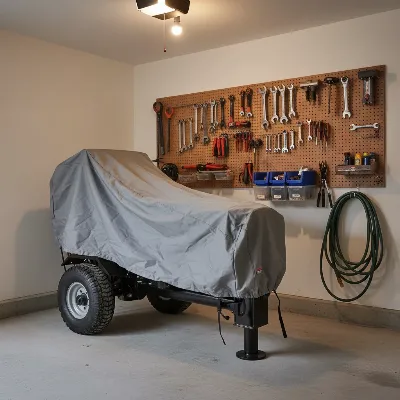 A clean, well-maintained gas log splitter stored in a dry garage for winter.
Conclusion
A gas log splitter is an invaluable tool for managing firewood, and understanding how to quickly diagnose and resolve starting issues can save you significant time and frustration. By systematically checking the fuel, ignition, and air systems, and committing to a routine maintenance schedule, you empower yourself to keep your machine running reliably. Always remember that safety should be your top priority, from wearing appropriate PPE to ensuring a clear work environment. With these insights and a bit of hands-on attention, your gas log splitter will be ready to tackle any pile of logs, ensuring you have a steady supply of firewood when you need it most.
What steps will you take today to ensure your gas Log Splitter is primed for its next season of work?