Tackling large piles of firewood can be a daunting task, turning a relaxing activity into a back-breaking chore. If you’ve ever spent hours with an axe, you understand the immense value of a powerful, efficient log splitter. For serious wood processors, commercial-grade equipment like the Swisher 34 Ton Log Splitter isn’t just a convenience; it’s a necessity, designed to transform dense logs into usable firewood with remarkable speed and minimal effort. This comprehensive review will explore the world of log splitters, categorize their various forms, and then take a focused look at why the Swisher 34 Ton model stands out as a formidable machine for heavy-duty splitting needs.
What is a Log Splitter? An Overview of Essential Equipment
A log splitter is a robust piece of machinery specifically engineered to split logs into smaller, more manageable pieces of firewood. Rather than relying on brute manual force, these machines employ hydraulic pressure or other mechanical means to drive a wedge through a log, effectively splitting it along its grain. This innovation dramatically reduces the physical labor and time involved in preparing firewood, making it an indispensable tool for homeowners with wood-burning stoves, farmers, and commercial operations that process large volumes of timber.
The concept of splitting wood mechanically has evolved over decades, moving from simple lever-based designs to sophisticated hydraulic systems. Early models were often manual, offering a modest improvement over an axe. However, the introduction of motorized engines, particularly gasoline-powered units, revolutionized the industry, enabling significantly higher splitting forces and greater efficiency. Today, log splitters are available in various configurations, each catering to different scales of operation and user preferences, making firewood preparation safer, faster, and far less strenuous than traditional methods.
Detailed Log Splitter Classification
Understanding the different types of log splitters is crucial for selecting the right machine for your specific needs. These powerful tools can be categorized by their power source, size, capacity, and the direction in which they split logs, each offering unique advantages and disadvantages.
By Power Source
The engine or motor driving a log splitter largely determines its power, portability, and environmental impact.
- Electric Log Splitters: These models are typically quieter and produce no exhaust fumes, making them suitable for indoor use or in residential areas where noise is a concern. They are generally less powerful than gas models, often ranging from 5 to 25 tons of splitting force, and require access to a power outlet. Electric splitters are ideal for smaller logs and occasional use, offering convenience and lower maintenance dueability.
- Gas Log Splitters: Powered by internal combustion engines, gas log splitters are the workhorses of the splitting world. They offer superior power and portability, capable of handling larger, denser logs without being tethered to an electrical outlet. This freedom makes them perfect for remote job sites or large properties. While more powerful, they require regular engine maintenance, produce exhaust fumes, and are generally louder and heavier than electric models. The Swisher 34 Ton, for example, embodies the robust nature of a commercial gas-powered unit.
- Hydraulic Log Splitters: While “hydraulic” refers to the mechanism that provides the splitting force, it’s often used loosely to describe models driven by a gas or electric power source that operate a hydraulic pump. True standalone hydraulic systems are less common for consumer models but are the core technology behind most powerful gas and electric splitters.
- Manual Log Splitters: These are the simplest and most affordable, relying entirely on human effort. They typically use a hand- or foot-operated pump to generate hydraulic pressure or a weighted ram. Manual splitters are quiet and portable but best suited for very small splitting tasks or for users who only process wood occasionally and in small quantities.
|
Our Picks for the Best Log Splitter in 2026
As an Amazon Associate I earn from qualifying purchases.
|
||
| Num | Product | Action |
|---|---|---|
| 1 | Firewood Kindling Splitter, Manual Log Splitter, Cast Iron Log Splitting Wedge, Heavy Duty Wood Splitter Tool with Cover (Black) |

|
| 2 | Wall Mounted Wood Splitter: Dual-Handle Manual Kindling Splitter with 6-Tooth Clamping, Heavy Duty Steel Log Splitter for Soft Firewood, Includes Gloves and Screws for Indoor and Outdoor Use |
|
| 3 | Firewood Kindling Splitter for Wood, Heavy Duty Cast Iron Wood Splitters for Firewood with No Axe, Manual Log Splitter for Kindling Wedge Point with Safety Cover |
|
| 4 | KABIN Kindle Quick Compact Log Splitter - Manual Splitting Tool - Steel Wedge Point Splits Firewood Like A Boss Safely & Easily |
|
| 5 | Wood Kindling Splitter - The Firewood Kindling Tool for Wood Stove Fireplace and Fire Pit |
|
| 6 | 13.8 Inch XL Manual Log Splitter with Self-Locking V-Blade for Hands-Free Safety - Unbreakable Welded Steel Firewood Cutter - Rust-Proof Electroplated Finish for Large Rounds, Fireplace & Camping |
|
| 7 | Kindling Cracker King XL Firewood Kindling Splitter – Extra-Large Cast Iron Wood Splitting Wedge, 9" Safety Ring, 17" Height, No Axe Needed, Made in Australia |
|
| 8 | ESTWING Sure Split Wedge - 5-Pound Wood Splitting Tool with Forged Steel Construction & 1-7/8" Cutting Edge - E-5 |
|
| 9 | 2 Pcs 4 Lbs Wood Splitting Wedges Manual Log Splitter Wedge 4-Direction Diamond Design Forged Steel Tool for Easy Wood Splitting Splits Firewood into 4 Pieces Less Effort (Orange) |
|
| 10 | Kindling Cracker Firewood Kindling Splitter — Original Cast Iron Wood Splitting Wedge, 6.5" Safety Ring, 12" Frame, No Axe Needed, New Zealand Designed & Australian Made |
|
By Size and Capacity
Log splitters also vary significantly in their physical dimensions and the amount of splitting force they can exert, which directly correlates to the size and hardness of the logs they can process.
- Small-Sized Log Splitters (Residential): Designed for homeowners with light to moderate firewood needs, these machines typically offer splitting forces between 5 and 25 tons. They are compact, easier to store, and generally more affordable. While sufficient for softwoods and smaller logs, they may struggle with large diameter or knotty hardwoods.
- Advantages: Easy to use and store, cost-effective for small needs.
- Disadvantages: Limited power, not suitable for large or extremely dense wood.
- Large-Sized Log Splitters (Commercial/Heavy-Duty): Built for demanding tasks, these machines provide 20 tons of splitting force and often much more, extending beyond 35 tons. They are equipped with powerful engines and robust hydraulic systems to tackle large, knotty, or seasoned hardwoods effortlessly. Commercial splitters are larger, heavier, and come with a higher price tag, requiring more storage space and often featuring road-towable capabilities for transportation to various work sites. The Swisher 34 Ton falls squarely into this category, designed for serious and continuous operation.
- Advantages: Immense power, handles large logs and hardwoods, built for durability.
- Disadvantages: Higher cost, larger footprint, more complex maintenance.
By Splitting Direction
The orientation of the log splitter’s ram affects how logs are loaded and processed.
- Horizontal Log Splitters: These are common and require logs to be lifted onto a beam for splitting. They are generally suitable for most log sizes, but lifting very heavy logs can be physically demanding.
- Vertical Log Splitters: Designed to handle very large, heavy logs, vertical splitters allow you to roll a log into place without lifting it high off the ground. The wedge descends to split the log. This configuration is excellent for oversized rounds that would be impossible to lift onto a horizontal beam.
- Dual-Action (Horizontal/Vertical) Log Splitters: Many commercial-grade splitters, including the Swisher 34 Ton, offer the flexibility to operate in both horizontal and vertical positions. This versatility is highly advantageous, allowing users to switch positions based on log size, minimizing physical strain for heavy logs while offering efficiency for lighter ones.
Comparison Table of Popular Log Splitter Types
Choosing the right log splitter involves weighing various factors, from power and portability to cost and maintenance. This table provides a quick comparison of the most common types.
| Feature | Manual Log Splitter | Electric Log Splitter | Gas Log Splitter (Residential) | Gas Log Splitter (Commercial) | PTO Log Splitter (Tractor-Mounted) |
|---|---|---|---|---|---|
| Power Source | Human Force | Electric Motor | Gasoline Engine | Gasoline Engine | Tractor PTO Shaft |
| Splitting Force (Tons) | 5-10 | 5-25 | 20-30 | 30-40+ | 20-50+ |
| Log Size | Small, softwoods | Small to medium | Medium to large | Large, dense hardwoods | Very large, dense hardwoods |
| Portability | Highly portable | Limited (cord length) | High (wheeled, towable) | Very High (road-towable) | Very High (tractor dependent) |
| Noise Level | Very Low | Low | Moderate to High | High | High (tractor dependent) |
| Fumes | None | None | Yes | Yes | Yes (tractor dependent) |
| Maintenance | Very Low | Low | Moderate (engine care) | High (heavy-duty engine care) | Moderate (tractor maintenance) |
| Cost | Lowest | Low to Moderate | Moderate to High | Highest | High (plus tractor investment) |
| Best For | Occasional small tasks | Homeowners, light use | Regular homeowner use | Commercial, heavy-duty use | Farm, forestry, existing tractor |
Guide to Choosing the Right Log Splitter
Selecting the ideal log splitter requires careful consideration of your specific needs, the type of wood you’ll be processing, and your budget. Making an informed decision will ensure you invest in a machine that provides efficiency, reliability, and safety for years to come.
Assessing Your Usage
Start by honestly evaluating your splitting requirements to match the right machine to your workload.
- Volume of Wood: How much wood do you plan to split annually? A few cords for a wood stove require a different machine than several cords for commercial sale or heating a large property. Higher volumes demand faster cycle times and greater durability.
- Log Size and Type: Consider the typical diameter and length of logs you’ll encounter. Are you dealing with fresh-cut, knotty hardwoods like oak, hickory, or maple, or mostly seasoned softwoods like pine or fir? Larger, tougher logs require more splitting force (tonnage) and a robust engine. Most splitters handle logs up to 24-25 inches long; if you have longer logs, check the machine’s opening.
- Budget: Log splitters range widely in price. Determine what you’re willing to invest, but remember that a cheaper machine might be a false economy if it’s underpowered for your needs or constantly breaks down. Consider the long-term cost of ownership, including fuel and maintenance.
Key Factors for Consideration
Once you understand your needs, delve into the technical specifications and features of potential log splitters.
- Splitting Force (Tonnage): Measured in tons, this is arguably the most critical factor.
- 10-20 Tons: Sufficient for smaller, softer woods, and well-seasoned logs.
- 20-30 Tons: Good for most hardwoods and moderately knotty logs.
- 30+ Tons: Essential for large-diameter, green, or very dense, knotty hardwoods. For commercial use or heavy-duty residential splitting, a machine like the Swisher 34 Ton provides ample power.
- Engine Power (HP/CC): For gas splitters, a more powerful engine (higher horsepower or cubic centimeters) drives a stronger hydraulic pump, leading to faster cycle times and greater splitting capability. Look for reliable engine brands like Kawasaki, Briggs & Stratton, or Honda.
- Cycle Time: This refers to the time it takes for the ram to extend and retract. A faster cycle time increases productivity, especially when processing large quantities of wood. Two-stage pumps are designed to optimize cycle time.
- Size and Weight: A heavier machine often indicates more robust construction, but also impacts portability. If you need to move the splitter frequently, look for models with road-towable tires and an adjustable stand.
- Safety Features: Prioritize models with features that protect the operator. This includes two-handed operation controls (ensuring hands are away from the wedge), log cradles to prevent logs from rolling, emergency shut-off switches, and beam locks for vertical splitting.
- Brand and Reliability: Research reputable brands known for quality construction, durable components, and good customer support. Reading user reviews can offer valuable insights into real-world performance and longevity.
Evaluating Additional Features
Beyond the core specifications, certain features can significantly enhance your log splitting experience.
- Automatic Ram Return: This feature automatically retracts the splitting wedge after a log is split, saving you a step and speeding up the overall process.
- Adjustable Splitting Speed: Some advanced models allow you to control the speed of the ram, offering more power for tough splits and faster action for easier ones.
- Wheels and Towing Package: For gas-powered splitters, road-towable tires and a standard hitch coupler (e.g., 2-inch ball) are invaluable for transporting the machine across properties or to different locations.
- 4-Way Wedge: This accessory (often included or optional) can split a log into four pieces in a single pass, drastically increasing productivity compared to a standard two-way wedge.
- Log Cradle/Tray: An integrated log cradle helps hold logs securely during splitting and prevents split pieces from falling directly to the ground, reducing bending and retrieval effort.
Review: Swisher 34 Ton Commercial Gas Log Splitter (LSED14534)
For those who demand uncompromising power, durability, and efficiency in their log splitting operations, the Swisher 34 Ton Commercial Gas Log Splitter, model LSED14534, stands as a top-tier contender. This machine is engineered to tackle the most challenging splitting tasks with confidence, making it a favorite among professional landscapers, farmers, and serious homeowners with extensive firewood needs.
The heart of the Swisher 34 Ton is its robust 14.5 HP (603cc) Kawasaki V-Twin electric start engine. Kawasaki engines are renowned for their reliability, power output, and longevity, ensuring that the splitter fires up consistently and provides sustained performance even under heavy loads. This powerful engine drives a heavy-duty 2-stage 22 GPM (Gallons Per Minute) direct-drive pump, which is key to its exceptional efficiency. The high GPM and two-stage design ensure a fast cycle time, meaning less waiting between splits and significantly higher productivity over an operating session.
At its core, the Swisher delivers an impressive 34 tons of splitting force. This immense power allows it to effortlessly cleave through virtually any type of wood, from green oak and dense hickory to large, knotty rounds that would stall lesser machines. User reviews frequently praise its ability to split even “30-inch wide oak or hickory logs like it was nothing.” This formidable force, combined with a 25-inch log opening, means you can handle substantial logs without needing to pre-cut them into smaller segments.
Versatility is a hallmark of this commercial-grade unit, offering both horizontal and vertical splitting positions. The horizontal position is convenient for most standard logs, while the vertical mode is particularly beneficial for exceptionally large and heavy logs, as it eliminates the need to lift them high onto the beam. Instead, you can simply roll the log into position, letting gravity assist. A vertical beam lock adds an extra layer of security when operating in this mode.
The Swisher 34 Ton also incorporates several design features aimed at enhancing productivity and user convenience. It comes standard with a 1-inch machined steel compound wedge and often includes a 4-way wedge, which doubles productivity by splitting logs into four pieces in a single pass. An integrated heavy-duty log cradle helps keep logs stable during splitting and prevents split pieces from falling to the ground, reducing bending and operator fatigue.
Portability is another significant advantage. Equipped with road-towable tires (often DOT-approved for speeds up to 45 mph) and a standard 2-inch ball coupler, this splitter can be easily transported behind a truck or ATV across properties or to various job sites. The adjustable wheeled front stand further facilitates hitching and moving, adding to its overall user-friendliness. The construction itself is robust, featuring a 15-gallon welded steel hydraulic tank and a heavy-duty steel frame, ensuring long-term durability. Swisher also backs its product with a 1-year warranty on the hydraulic system and a 3-year warranty on steel components, reflecting confidence in its build quality.
However, a few minor points are worth noting. Some users have reported an issue with a “burping cap design on the hydraulic tank” which can lead to hydraulic fluid messes. While not a performance flaw, it’s a minor inconvenience that may require attention. Additionally, like many heavy-duty machines, the battery for electric start and hydraulic fluid are typically not included and require assembly upon purchase. Despite these small considerations, the overwhelming consensus is that the Swisher 34 Ton Commercial Gas Log Splitter is a beast of a machine, delivering consistent, powerful performance that meets the demands of rigorous commercial and heavy-duty residential use.
> “The Swisher 34 Ton is a true powerhouse, built for demanding use. Its Kawasaki engine and dual-action splitting capability make quick work of even the gnarliest logs, saving considerable time and effort.” – John D., Commercial Wood Processor
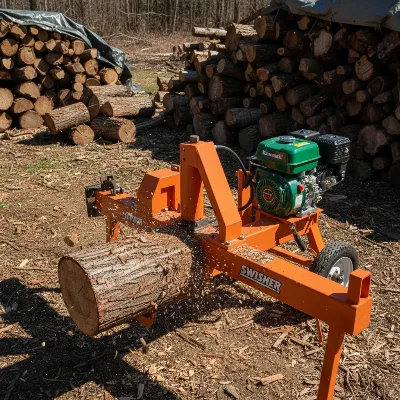 Swisher 34 Ton Commercial Gas Log Splitter splitting a large hardwood log horizontally
Safe Operation and Maintenance of Log Splitters
Operating a powerful machine like a log splitter requires strict adherence to safety protocols and a commitment to regular maintenance to ensure longevity and prevent accidents.
Safety First: Prioritizing Your Well-being
Log splitters are powerful tools that can cause serious injury if not handled correctly. Always prioritize safety.
- Personal Protective Equipment (PPE): Always wear safety glasses or goggles, heavy-duty gloves, steel-toed boots, and hearing protection. Wood chips can fly, and the noise from gas engines can be significant.
- Clear Work Area: Ensure the area around the log splitter is free of debris, children, pets, and bystanders. Maintain a stable, level surface for operation.
- Inspect Before Use: Before each session, perform a quick check:
- Verify all bolts, nuts, and pins are secure.
- Check hydraulic fluid and engine oil levels (for gas models).
- Inspect hoses for leaks or damage.
- Ensure the wedge is sharp and free of obstructions.
- Test all safety controls.
- Proper Log Placement: Always place logs firmly in the cradle against the wedge. Never hold a log by hand during splitting. Avoid splitting logs with embedded metal or excessive knots that could cause kickback.
- Operator Zone: Stand clear of the splitting wedge’s path and ensure your hands are on the controls, away from moving parts. Never reach over or straddle the beam.
- Stay Alert: Do not operate the log splitter when fatigued or under the influence of substances.
Regular Maintenance: Extending Your Machine’s Life
Consistent maintenance is key to the performance, reliability, and lifespan of your log splitter.
- Cleaning After Each Use: Clear away wood chips, sap, and dirt from the wedge, beam, and engine area. This prevents buildup, rust, and interference with moving parts. Use a mild detergent and ensure the machine is dry before storage.
- Hydraulic Fluid Management:
- Check Level: Inspect the hydraulic fluid level before each use. Low fluid can lead to reduced power and damage to the pump.
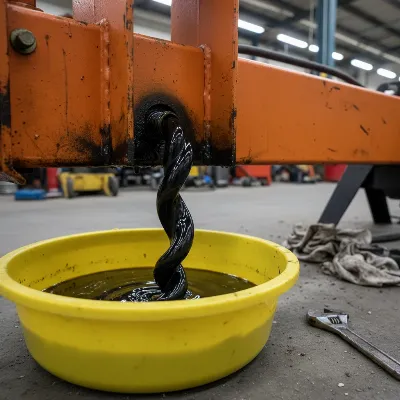
- Change Fluid and Filter: Follow the manufacturer’s recommendations for changing hydraulic fluid, typically annually or after a certain number of operating hours. Replace the hydraulic filter at the same time. Use only the specified type of hydraulic fluid.
- Bleed Air: If the ram operates slowly or erratically, there might be air in the hydraulic system. Consult your manual for the proper procedure to bleed the air.
- Engine Maintenance (for Gas Models):
- Oil Change: Check engine oil regularly and change it according to the manufacturer’s schedule.
- Air Filter: Clean or replace the air filter periodically, especially in dusty conditions.
- Spark Plug: Inspect and replace the spark plug as recommended to ensure easy starting and efficient combustion.
- Fuel System: Use fresh, stabilized fuel. Drain the fuel system for long-term storage to prevent gumming.
- Lubrication: Periodically lubricate all moving parts, such as the beam slides, pivot points, and control levers, to reduce friction and prevent wear. Use appropriate grease or lubricant as specified in your manual.
- Wedge Sharpening: Over time, the splitting wedge can become dull or develop nicks. Sharpen it with a metal file to maintain splitting efficiency.
- Storage: When not in use, store your log splitter in a dry, sheltered area, such as a garage or shed, to protect it from the elements. Covering it with a waterproof tarp offers additional protection.
Where to Purchase Your Log Splitter
When you’re ready to invest in a significant piece of equipment like a commercial log splitter, it’s essential to purchase from reputable sources that offer quality products, reliable service, and appropriate warranties.
- Authorized Dealers: Visiting authorized dealers, whether online or brick-and-mortar, ensures you receive genuine products, valid warranties, and access to professional advice and after-sales support. Brands like Swisher often list authorized dealers on their official websites.
- Specialty Outdoor Power Equipment Stores: These stores specialize in heavy-duty machinery and often have knowledgeable staff who can guide you through the selection process and provide expert setup and maintenance services.
- Large Home Improvement Retailers: Major retailers often carry a selection of log splitters, including commercial-grade models. While convenient, it’s crucial to ensure they offer sufficient support for complex machinery.
- Online Marketplaces: While offering competitive pricing, exercise caution when buying from general online marketplaces. Verify the seller’s reputation, product authenticity, and warranty details before making a purchase.
If considering a used machine, thoroughly inspect its condition, especially the engine, hydraulic system, and structural integrity. Request maintenance records and, if possible, see it operate before committing.
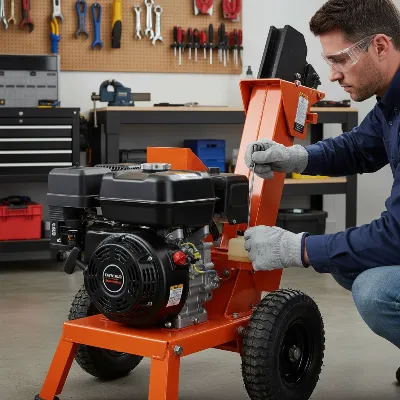 Person performing maintenance on a gas log splitter, emphasizing safety gear.
Conclusion
Choosing the right log splitter is an investment that pays dividends in saved time, effort, and safety. For those with demanding firewood processing needs, whether for commercial use or extensive residential applications, a powerful and durable machine like the Swisher 34 Ton Commercial Gas Log Splitter is an indispensable asset. With its robust Kawasaki engine, impressive 34 tons of splitting force, versatile horizontal and vertical operation, and road-towable design, it is built to conquer the toughest logs with efficiency and reliability. While ongoing maintenance and careful adherence to safety guidelines are essential for any heavy machinery, the right log splitter transforms a challenging chore into a manageable and even satisfying task.
Are you ready to stop battling logs and start effortlessly processing firewood for seasons to come?
Frequently Asked Questions
What kind of logs can a 34-ton log splitter handle?
A 34-ton log splitter, such as the Swisher 34 Ton model, is designed to handle very large, dense, and knotty logs with ease. It can efficiently split challenging hardwoods like oak, hickory, and maple, even if they are green or unusually shaped, up to its maximum log opening capacity, which is typically around 25 inches in length. This tonnage provides ample power for almost any wood-splitting task.
How often should I change the hydraulic fluid in my commercial gas log splitter?
For commercial gas log splitters, it is generally recommended to check the hydraulic fluid level before each use and change the fluid and filter annually or after a specified number of operating hours (e.g., every 100-200 hours), whichever comes first. Always consult your Log Splitter’s owner’s manual for precise recommendations on fluid type and maintenance intervals, as these can vary by model and usage intensity.