Splitting firewood, whether for cozy winter fires or commercial purposes, can be a strenuous and time-consuming task. Modern log splitters have transformed this arduous chore into a more efficient and manageable process. But with a myriad of options available, particularly when it comes to power sources, deciding which log splitter is right for you can be challenging. The primary choice often boils down to gas versus electric models, each offering distinct advantages and limitations tailored to different needs and environments. Understanding these differences is key to making an informed investment that will serve you well for years to come.
What is a Log Splitter? An Overview of the Equipment
A log splitter is a machine specifically engineered to split wood logs into smaller, more manageable pieces, typically for use as firewood. This mechanised process significantly reduces the physical effort and time required compared to traditional methods like using an axe or maul.
The evolution of log splitters has seen a progression from purely manual devices to sophisticated hydraulic and kinetic machines. Early designs were simple lever-action tools, but the advent of engines and hydraulic systems revolutionised wood splitting, making it accessible and practical for both homeowners and professionals. Today’s market offers a variety of models, differing mainly in their power source, size, and splitting capacity. For explore our log splitters reviews on this site.
Common types of log splitters available include:
- Manual Log Splitters: Rely on physical force, often using a foot or hand pump to generate splitting pressure. They are budget-friendly and quiet, suitable for very small, occasional tasks.
- Electric Log Splitters: Powered by an electric motor, these are typically quieter and produce no emissions. They are ideal for residential use with access to a power outlet.
- Gas Log Splitters: Equipped with internal combustion engines, these offer superior power and portability, making them suitable for heavy-duty and remote applications.
- Hydraulic Log Splitters: Both electric and gas models often utilise hydraulic systems to generate immense splitting force. This is the most common mechanism for powered splitters.
- Kinetic Log Splitters: These typically use flywheels to store and release energy, offering very fast cycle times, often found in smaller electric or gas models.
Detailed Classification of Log Splitters
Log splitters can be broadly categorised by their power source, physical size and capacity, and the orientation in which they split logs. Each classification offers unique benefits and drawbacks.
By Power Source:
The power source is arguably the most critical factor influencing a log splitter’s performance, portability, and environmental impact.
-
Electric Log Splitters:
- Advantages: These units are notably quieter than their gas counterparts, making them excellent for residential areas where noise can be a concern. They produce zero emissions, allowing for safe indoor use in well-ventilated garages or workshops. Electric splitters generally require minimal maintenance, as there are no oil changes, spark plugs, or fuel filters to worry about. They are also typically more affordable upfront and offer simple “plug and play” operation.
- Disadvantages: Their primary limitation is the need for a continuous power source, restricting their use to areas with accessible electrical outlets. They also tend to have less splitting force (tonnage) compared to gas models, often struggling with very large diameter logs, dense hardwoods, or knotty pieces.
- Applications: Best for homeowners with smaller to medium wood loads, occasional use, and environments where noise and emissions are a consideration.
-
Gas Log Splitters:
- Advantages: Gas-powered log splitters are synonymous with raw power and superior splitting force, capable of tackling large, dense hardwoods like oak or hickory with ease. Their independence from electrical outlets provides unmatched portability, allowing them to be used in remote locations or expansive properties. They generally offer faster cycle times and higher tonnage ratings, ideal for high-volume work.
- Disadvantages: These machines are considerably louder and produce exhaust fumes, requiring outdoor use and potentially disturbing neighbours. They demand regular maintenance, including oil changes, spark plug replacements, and fuel system care, which adds to the ownership cost and effort. Gas models also tend to be heavier, more expensive initially, and require fuel storage.
- Applications: Preferred by professionals, those with large properties, or users who need to process significant quantities of tough, large-diameter logs in various locations.
-
Hydraulic Log Splitters:
- Advantages: The majority of powered log splitters, both electric and gas, employ a hydraulic system. This technology allows for the generation of immense force, enabling them to split even the toughest, most knotted logs with relative ease. Hydraulic systems are robust and, with proper maintenance, offer excellent durability and consistent performance.
- Disadvantages: While highly effective, hydraulic systems can be slower than kinetic models in terms of cycle time. They also require regular checks and changes of hydraulic fluid to ensure optimal operation and longevity.
- Applications: Widely used across all scales, from heavy-duty residential units to commercial-grade machinery, due to their power and reliability.
-
Manual Log Splitters:
- Advantages: Manual splitters are the most economical option and require no fuel or electricity, making them environmentally friendly and completely silent. They are lightweight, compact, and require very little maintenance.
- Disadvantages: They rely entirely on operator strength and are only suitable for small, seasoned logs. The splitting process is much slower and more physically demanding.
- Applications: Ideal for very light, occasional use, small kindling, or in situations where portability to extremely remote areas without any power source is paramount.
By Size and Capacity:
The physical dimensions and splitting force of a log splitter dictate the type and volume of wood it can handle.
-
Small-Sized Log Splitters (Household Use):
- Advantages: These compact units are typically electric and designed for ease of use, storage, and manoeuvrability. They are more affordable, making them an excellent entry point for homeowners with modest firewood needs.
- Disadvantages: Their splitting capacity is limited, usually ranging from 4 to 10 tons. They are not suited for large or unusually hard logs and may struggle with green wood.
- Typical Specifications: Can handle logs up to 12-16 inches in diameter and 20 inches in length.
-
Large-Sized Log Splitters (Industrial/Commercial Use):
- Advantages: Primarily gas-powered, these machines boast significant power and higher tonnage ratings (15-34 tons or more). They are built for continuous, heavy-duty operation and can effortlessly process substantial quantities of large, dense, or knotty logs.
- Disadvantages: They come with a higher price tag, are considerably larger and heavier, making them less portable and requiring more storage space. Their operation is louder and requires more extensive maintenance.
- Typical Specifications: Capable of splitting logs over 18 inches in diameter and up to 25 inches (or more) in length.
By Splitting Orientation:
Log splitters can also be designed to operate in horizontal or vertical positions, influencing how logs are loaded and processed.
-
Horizontal Log Splitters:
- The log is placed horizontally on a beam and pushed by a ram into a stationary wedge. This is common for smaller to medium-sized logs, allowing for easier loading without lifting heavy rounds to a vertical position.
-
Vertical Log Splitters:
- The log is stood upright on an end plate and the wedge descends from above to split it. Vertical splitters are typically more powerful and are ideal for very large, heavy logs that would be difficult to lift onto a horizontal beam. Many robust gas models offer both horizontal and vertical splitting capabilities.
Comparative Table of Common Log Splitter Types
Choosing the right log splitter involves weighing various factors. This table offers a side-by-side comparison of the most common types.
| Feature | Electric Log Splitter | Gas Log Splitter | Manual Log Splitter |
|---|---|---|---|
| Power Source | Electric Motor (120V/240V) | Internal Combustion Engine (Petrol) | Human Power (Lever/Foot Pump) |
| Splitting Force | 4-10 Tons (Light to Medium Duty) | 15-34+ Tons (Heavy Duty to Commercial) | Up to ~10 Tons (Very Light Duty) |
| Typical Log Size | Up to 14-16″ diameter, 20″ length | 18-25+” diameter, 25+” length | Small, seasoned logs, kindling |
| Portability | Limited by cord length, generally lightweight | Highly portable, can be used anywhere | Highly portable, very lightweight |
| Noise Level | Quiet (~80dB) | Loud (>100dB) | Silent |
| Emissions | Zero emissions | Exhaust fumes present | Zero emissions |
| Maintenance | Minimal (hydraulic fluid, wedge sharpening) | Regular (oil changes, spark plugs, fuel filters) | Very low (occasional lubrication) |
| Initial Cost | Lower | Higher | Lowest |
| Running Cost | Lower (electricity) | Higher (fuel, maintenance) | Zero (physical effort) |
| Ideal Use | Residential, occasional use, indoor/covered areas | Large properties, frequent/heavy use, remote areas | Small batches, kindling, backup |
| Ease of Use | Plug-and-play, easy start | Pull-cord/electric start, more complex operation | Simple, but physically demanding |
Guide to Choosing the Right Log Splitter for Your Needs
Selecting the best log splitter involves a thoughtful assessment of your specific requirements and the characteristics of the wood you’ll be processing. Rushing this decision can lead to an inefficient, frustrating, or even an overly expensive purchase.
Determine Your Usage Needs:
Start by clearly defining what you need the log splitter for.
-
Volume of Wood:
- Are you splitting a few cords of firewood annually for a home fireplace? An electric or smaller gas model might suffice.
- Do you manage a large property or run a commercial firewood operation, requiring dozens of cords each season? A heavy-duty gas splitter is likely essential.
- Consider: “How much wood do you typically split in a season, and how frequently do you engage in this task?”
-
Log Size and Type:
- Are you primarily dealing with small, seasoned softwood logs? Many electric models can handle this with ease.
- Will you be splitting large, green hardwoods like oak, maple, or hickory, often with stubborn knots? You’ll need a machine with substantial splitting force, almost certainly a gas-powered hydraulic unit.
- Consider: The maximum diameter and length of logs you typically encounter.
-
Budget Considerations:
- Electric splitters generally have a lower upfront cost, making them attractive for budget-conscious homeowners.
- Gas splitters represent a more significant initial investment but can offer better long-term value and efficiency for heavy-duty users. Remember to factor in ongoing costs like fuel and maintenance.
Key Factors to Consider:
Once you’ve assessed your basic needs, delve into the technical specifications.
-
Engine Power / Splitting Force (Tonnage):
- This is the most crucial metric. Splitting force is measured in tons (e.g., 4-ton, 20-ton, 34-ton).
- Lower tonnage (4-10 tons): Suitable for small, seasoned, softer woods. Typically found in electric models.
- Medium tonnage (10-20 tons): Can handle a broader range of wood, including some hardwoods and slightly larger diameters. Both electric (higher voltage) and smaller gas models fall here.
- High tonnage (20+ tons): Essential for large, green, knotty hardwoods and high-volume commercial applications. Almost exclusively gas-powered.
- Meaning: A higher tonnage rating indicates the machine’s ability to exert more force, breaking tougher and larger logs.
-
Machine Size and Weight:
- Portability: If you need to move the splitter frequently or to remote locations, a lighter, more compact electric model or a gas model with wheels and a towing hitch would be beneficial.
- Storage: Consider the available space in your garage or shed. Larger gas models can be cumbersome to store.
-
Safety Features:
- Look for features like two-hand operation (requiring both hands to operate, keeping them away from the splitting wedge), automatic ram return, and safety guards.
- Importance: Prioritising safety prevents accidents during operation.
-
Brand Reputation and Reliability:
- Research established brands known for durable, reliable log splitters and good customer support. Brands like Champion, Powermate, and Wen are often well-regarded in different segments of the market.
- Tip: Read user reviews and expert recommendations to gauge real-world performance and longevity.
Evaluate Additional Features:
Beyond the core functionality, certain features can enhance convenience and efficiency.
- Automatic Ram Return: This feature automatically retracts the splitting wedge after a log is split, saving time and effort compared to manually retracting it.
- Adjustable Ram Speed: Some models allow you to control the speed of the splitting ram, which can be useful for different wood types or for precise splitting.
- Log Cradle/Tray: A system that holds the split logs, preventing them from falling to the ground and reducing the need to bend over repeatedly.
- Mobility Wheels/Towing Capability: Essential for gas splitters or larger electric models that need to be moved across uneven terrain or towed behind a vehicle.
- Horizontal/Vertical Splitting Capability: Some powerful gas models offer the versatility to split logs both horizontally (for easier loading) and vertically (for very heavy logs that are hard to lift).
Top Log Splitters of 2026
While specific model availability and “best” rankings can fluctuate throughout the year, several manufacturers consistently produce highly-rated log splitters. Based on typical industry trends and consumer feedback, here are categories of highly-regarded log splitters you might consider in 2026.
For Homeowners (Light to Medium Duty):
- Electric Models (e.g., Wen 56207/56208, Sun Joe LJ10M): These often feature 5-7 tons of splitting force, are relatively lightweight, and are known for quiet operation and minimal maintenance. They are excellent for splitting smaller, seasoned logs for a home fireplace or fire pit. Expect prices generally ranging from $300-$700.
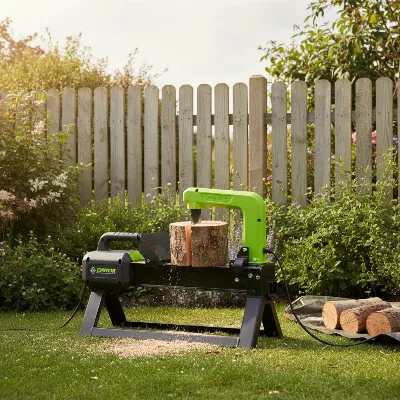 Electric log splitter in a home backyard, splitting a small log for firewood.
For Enthusiasts / Mid-Range Users (Medium to Heavy Duty):
- Mid-Tonnage Gas Models (e.g., Champion Power Equipment 7-Ton or 25-Ton): Offering more power and portability than electric units, these gas splitters are versatile. A 7-ton model can handle a good range of hardwoods, while a 25-ton unit is a significant upgrade for larger logs and more frequent use without the highest commercial price tag. Prices typically range from $800-$1500 depending on tonnage and features.
- Higher-Voltage Electric Hydraulic Splitters (e.g., Boss Industrial ES7T20): Some more powerful electric models use 240V and can achieve 7-10 tons of force, bridging the gap towards lighter gas models for those needing more power but preferring electric operation.
For Professionals / Heavy-Duty Users (Commercial Grade):
- High-Tonnage Gas Horizontal/Vertical Splitters (e.g., Iron & Oak, Brave, Oregon): These are robust, heavy-duty machines offering 27-ton, 30-ton, or even 34-ton splitting forces. They are built for continuous operation, handling the toughest and largest logs. Expect these models to be significantly more expensive, often upwards of $2000-$4000+, but they represent the pinnacle of power and durability.
“The best log splitter isn’t about the highest tonnage, but the right tonnage for your specific wood and frequency of use. Overbuying means wasted money; underbuying means frustration.” – Johnathan Reed, Senior Log Splitter Technician
When reviewing options, always check the latest reviews for 2026, compare specifications like cycle time, maximum log diameter/length, and warranty information. Look for features that align with your intended use, such as trailer hitches for portability or log cradles for convenience.
Safe Usage and Maintenance of Your Log Splitter
Operating a log splitter involves powerful machinery, so safety should always be your top priority. Proper maintenance not only ensures the longevity of your equipment but also guarantees safe and efficient operation.
Safety First When Operating:
- Personal Protective Equipment (PPE): Always wear appropriate safety gear. This includes:
- Safety glasses or face shield: To protect against flying wood chips.
- Heavy-duty gloves: To protect hands from splinters and impacts.
- Steel-toed boots: To safeguard feet from falling logs.
- Hearing protection: Essential for gas models due to their high noise levels.
- Pre-Operation Inspection: Before each use, thoroughly inspect your log splitter. Check for:
- Loose bolts, nuts, or connections.
- Cracks or damage to the wedge or ram.
- Adequate hydraulic fluid levels (for hydraulic models).
- Correct oil and fuel levels (for gas models).
- Ensure all safety guards are in place and functional.
- Follow Manufacturer’s Instructions: Always read and adhere to the operating manual specific to your model. It contains crucial information on safe startup, operation, and shutdown procedures.
- Maintain a Clear Workspace: Keep the area around the log splitter clear of debris, children, and pets. Ensure stable footing and an escape path in case a log jams or splits unpredictably.
- Two-Hand Operation: Most modern log splitters require two-hand operation to engage the ram, keeping both hands away from the moving wedge. Never bypass this safety feature.
- Avoid Overloading: Do not attempt to split logs that exceed the machine’s maximum diameter or length capacity. Forcing oversized logs can damage the machine and create dangerous kickbacks.
- Stay Alert: Never operate the machine when fatigued, under the influence of alcohol or drugs, or when distracted.
- Proper Log Placement: Place logs firmly in the cradle, ensuring they are stable and will split cleanly. Avoid splitting wood with embedded metal or excessively large knots that could cause unpredictable splitting or damage.
Regular Maintenance for Longevity:
Consistent maintenance is key to extending the life of your log splitter and ensuring it performs optimally.
- Clean After Each Use: Remove wood chips, sawdust, and debris from the machine, especially around moving parts, the engine (for gas models), and hydraulic components.
- Check and Change Hydraulic Fluid: For hydraulic models, regularly check the hydraulic fluid level and top it off as needed. Consult your manual for recommended fluid types and the frequency of full fluid changes (typically annually or after a certain number of operating hours).
- Engine Maintenance (Gas Models):
- Oil Changes: Perform oil changes according to the manufacturer’s schedule, usually every 25-50 operating hours.
- Air Filter: Clean or replace the air filter regularly to ensure proper engine performance.
- Spark Plug: Inspect and replace the spark plug as recommended to ensure easy starting and efficient combustion.
- Fuel System: Use fresh fuel, consider a fuel stabiliser for storage, and drain the fuel tank for long-term storage to prevent gumming.
- Inspect and Sharpen the Wedge: A dull wedge reduces efficiency and can lead to logs jamming. Periodically inspect the wedge for damage and sharpen it if necessary.
- Lubricate Moving Parts: Apply grease or oil to pivot points and other moving components as specified in your manual.
- Tighten Fasteners: Vibration from operation can loosen bolts and nuts. Periodically check and tighten all fasteners to prevent parts from coming loose.
- Proper Storage: When not in use, store your log splitter in a dry, covered area to protect it from the elements. For gas models, consider stabilising fuel or draining the tank.
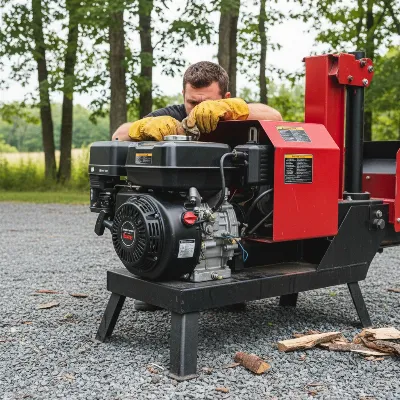 A person performing maintenance on a gas log splitter's engine outdoors.
Where to Purchase a Reliable Log Splitter?
Finding a reputable vendor for your log splitter is just as important as choosing the right model. The marketplace offers several avenues, each with its own advantages.
Reputable Retailers:
- Specialty Outdoor Power Equipment Stores: These stores often have knowledgeable staff who can provide expert advice, demonstrate different models, and offer maintenance services. They usually carry a wide range of both electric and gas models from top brands.
- Large Home Improvement Centers: Stores like Home Depot, Lowe’s, or similar chains often stock a selection of popular electric and smaller gas log splitters. They can be convenient, but staff expertise might vary.
- Online Retailers: Websites such as Amazon, Tractor Supply Co., Northern Tool + Equipment, or directly from manufacturers’ websites (e.g., Champion Power Equipment, Wen) offer extensive selections, competitive pricing, and user reviews. Be sure to check shipping costs and return policies for large items.
Considerations When Buying Used:
Purchasing a used log splitter can be a cost-effective option, but it comes with potential risks.
- Thorough Inspection: Always inspect the machine thoroughly for signs of wear, damage, or neglect. Check the engine (if gas), hydraulic system (for leaks), the condition of the wedge, and structural integrity.
- Test Operation: If possible, ask the seller to demonstrate the machine’s operation with a few logs. Listen for unusual noises and observe its splitting performance.
- Service History: Inquire about the machine’s maintenance history. A well-maintained used unit is a better investment.
- Price Negotiation: Be prepared to negotiate the price based on the machine’s condition and age.
Regardless of where you purchase, prioritise dealers that offer good warranty support and accessible parts and service. Investing in a quality log splitter from a reliable source will ensure you have a dependable tool for years to come.
Conclusion
Choosing between a gas and electric log splitter ultimately depends on a careful assessment of your individual needs, the type and volume of wood you plan to process, and your working environment. Electric models excel in quiet operation, minimal maintenance, and eco-friendliness, making them ideal for residential use and smaller tasks. Gas models, conversely, deliver superior power and unmatched portability, essential for heavy-duty splitting in remote or large-scale applications.
By considering factors like splitting force, log size capacity, noise, and maintenance requirements, you can confidently select a machine that not only simplifies your wood-splitting chores but also aligns perfectly with your lifestyle and budget. Whether you opt for the convenience of electric or the raw power of gas, a well-chosen log splitter transforms a formidable task into a far more efficient and enjoyable experience. What specific wood-splitting challenges are you hoping to conquer this season?
Frequently Asked Questions
Which type of log splitter is generally more powerful, gas or electric?
Gas log splitters are generally more powerful, offering higher tonnage ratings (typically 15-34+ tons) compared to electric models (usually 4-10 tons). This makes gas splitters better suited for large-diameter, dense, or knotty hardwoods, while electric models are effective for smaller, seasoned logs.
Can electric log splitters be used indoors?
Yes, electric log splitters can often be used indoors or in covered areas like garages and workshops. They produce no exhaust fumes and are significantly quieter than gas models, making them suitable for environments where ventilation and noise are concerns.
How often should I perform maintenance on my log splitter?
Maintenance frequency depends on the type and usage. Electric models require minimal upkeep, mainly checking hydraulic fluid and wedge sharpness. Gas models need more regular attention, including oil changes every 25-50 operating hours, air filter cleaning, and spark plug checks, as detailed in the manufacturer’s manual.
What tonnage is recommended for splitting tough hardwoods?
For tough hardwoods and larger logs, a log splitter with at least 20 tons of splitting force is generally recommended. Commercial-grade gas models often offer 27-34 tons or more to handle the most challenging wood with efficiency.
Are kinetic log splitters better than hydraulic ones?
Kinetic log splitters are known for their extremely fast cycle times, making them efficient for high-volume splitting of appropriate log sizes. Hydraulic splitters, while typically slower, can generate immense, sustained force, making them ideal for tougher, knotty, and larger logs. The “better” choice depends on your priority: speed for many smaller logs (kinetic) or brute force for fewer, tougher logs (hydraulic).
How do I ensure safety when operating a log splitter?
Prioritise safety by always wearing PPE (safety glasses, gloves, hearing protection, steel-toed boots), maintaining a clear workspace, following the manufacturer’s instructions, and using two-hand controls. Never attempt to split oversized or unstable logs, and ensure no children or pets are near the operating machine.
Is it cheaper to buy or rent a log splitter?
For occasional, light-duty use, renting a log splitter might be more cost-effective. However, if you regularly process a significant amount of firewood or require a heavy-duty model, purchasing one will likely be a more economical long-term investment, saving you rental fees and offering convenience.
Get our weekly buyer guide
Practical specs, not advice. Unsubscribe anytime.
