Even the most robust log splitter can lose its edge if its hydraulic system isn’t performing optimally. Air trapped within these vital lines can significantly reduce efficiency, compromise safety, and even lead to costly damage over time. Understanding how to effectively bleed air from your log splitter is crucial for maintaining its power and ensuring smooth, reliable operation through every splitting season. This comprehensive guide will walk you through the symptoms of air in your system, essential safety precautions, and a detailed, step-by-step process to purge air and restore your machine’s full potential.
Understanding Your Log Splitter’s Hydraulic System: Why Air is a Problem
A log splitter relies on a closed hydraulic system to generate immense force, converting engine power into linear motion through incompressible fluid. Key components include the hydraulic pump, which pressurizes the fluid; the control valve, which directs its flow; and the hydraulic cylinder, housing the piston and ram that actually splits the wood. The reservoir stores the hydraulic fluid, keeping the system supplied.
The efficiency of this system hinges on the incompressibility of hydraulic fluid. When air enters the lines, it introduces a compressible element. Unlike fluid, air can be squeezed, absorbing some of the pump’s force before it can be fully transmitted to the ram. This leads to diminished splitting power, inconsistent operation, and increased wear on components. Over time, air in the system can cause fluid degradation, overheating, and ultimately, premature failure of seals and the pump itself.
Identifying Air in Your Log Splitter’s Hydraulic Lines: Symptoms and Causes
Recognizing the signs of air in your log splitter’s hydraulic system is the first step toward a solution. Early detection can prevent more severe problems and ensure your machine operates safely and effectively.
Common Symptoms
|
Our Picks for the Best Log Splitter in 2026
As an Amazon Associate I earn from qualifying purchases.
|
||
| Num | Product | Action |
|---|---|---|
| 1 | Firewood Kindling Splitter, Manual Log Splitter, Cast Iron Log Splitting Wedge, Heavy Duty Wood Splitter Tool with Cover (Black) |

|
| 2 | Wood Kindling Splitter - The Firewood Kindling Tool for Wood Stove Fireplace and Fire Pit |
|
| 3 | Firewood Kindling Splitter for Wood, Heavy Duty Cast Iron Wood Splitters for Firewood with No Axe, Manual Log Splitter for Kindling Wedge Point with Safety Cover |
|
| 4 | Kindling Cracker King XL Firewood Kindling Splitter – Extra-Large Cast Iron Wood Splitting Wedge, 9" Safety Ring, 17" Height, No Axe Needed, Made in Australia |
|
| 5 | Wall Mounted Wood Splitter: Dual-Handle Manual Kindling Splitter with 6-Tooth Clamping, Heavy Duty Steel Log Splitter for Soft Firewood, Includes Gloves and Screws for Indoor and Outdoor Use |
|
| 6 | 13.8 Inch XL Manual Log Splitter with Self-Locking V-Blade for Hands-Free Safety - Unbreakable Welded Steel Firewood Cutter - Rust-Proof Electroplated Finish for Large Rounds, Fireplace & Camping |
|
| 7 | Kindling Cracker Firewood Kindling Splitter — Original Cast Iron Wood Splitting Wedge, 6.5" Safety Ring, 12" Frame, No Axe Needed, New Zealand Designed & Australian Made |
|
| 8 | 2 Pcs 4 Lbs Wood Splitting Wedges Manual Log Splitter Wedge 4-Direction Diamond Design Forged Steel Tool for Easy Wood Splitting Splits Firewood into 4 Pieces Less Effort (Orange) |
|
| 9 | ESTWING Sure Split Wedge - 5-Pound Wood Splitting Tool with Forged Steel Construction & 1-7/8" Cutting Edge - E-5 |
|
| 10 | KABIN Kindle Quick Compact Log Splitter - Manual Splitting Tool - Steel Wedge Point Splits Firewood Like A Boss Safely & Easily |
|
A log splitter with air in its hydraulic lines will often exhibit several tell-tale signs. You might notice a spongy or soft feel when operating the control lever, indicating that some of the hydraulic pressure is compressing air rather than directly moving the ram. This sponginess often translates into a significant reduction in splitting force, making it difficult to split logs that the machine previously handled with ease. The ram’s movement may become jerky, erratic, or noticeably slow, rather than the smooth, consistent action you expect. Furthermore, the hydraulic pump may emit unusual noises such as a loud whine, gurgling, or even knocking sounds, as it struggles to pump air and fluid together. Increased vibration during operation and the hydraulic system overheating more quickly than usual are also strong indicators of trapped air.
Root Causes
Air can infiltrate a log splitter’s hydraulic system through various avenues. The most common cause is simply low hydraulic fluid levels in the reservoir. When the fluid level drops below the pump’s intake, the pump begins to draw in air along with the fluid. Loose connections or leaks anywhere in the hydraulic circuit – hoses, fittings, or seals – can also allow air to be sucked into the system, especially on the suction side of the pump. A poorly sealed filter or reservoir cap can also be a point of entry for atmospheric air. Finally, any time the system is opened for maintenance or repair, such as changing a hose or cylinder, air will naturally enter the lines and components, requiring a bleeding procedure afterward.
Safety First: Preparing Your Log Splitter for Hydraulic Bleeding
Before attempting any maintenance on your log splitter, especially involving the hydraulic system, prioritizing safety is paramount. Hydraulic fluid is under high pressure and can cause serious injury if not handled correctly.
Essential Safety Gear
Always equip yourself with the proper personal protective equipment (PPE). Heavy-duty work gloves will protect your hands from sharp edges, hot components, and hydraulic fluid. Safety glasses or a face shield are absolutely essential to guard your eyes against fluid splashes or debris. It’s also wise to wear steel-toed boots to protect your feet from dropped logs or machine parts. If the engine will be running during any part of the process, ear protection is recommended to prevent hearing damage from prolonged noise exposure.
Pre-Bleeding Checks
Begin by ensuring the log splitter’s engine is completely turned off and has had ample time to cool down. Place the machine on stable, level ground to prevent unexpected movement during the procedure. It’s also crucial to depressurize the hydraulic system by moving the control lever back and forth a few times with the engine off to relieve any residual pressure. Before you start, thoroughly clean the work area around the hydraulic components to prevent dirt or debris from entering the open system.
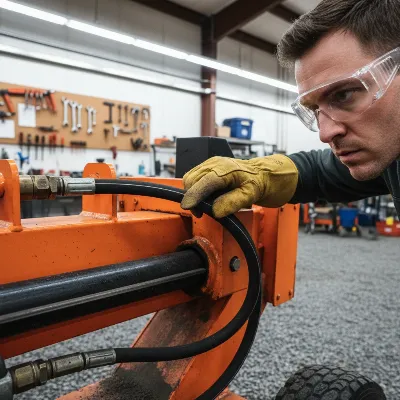 A person wearing essential safety gear while inspecting a log splitter's hydraulic system.
Tools and Materials
Having the right tools at hand will make the bleeding process much smoother and safer. You will need a set of wrenches to loosen and tighten hydraulic fittings. Keep a supply of clean rags on hand for wiping up any spilled hydraulic fluid. Crucially, have an adequate supply of new, clean hydraulic fluid of the correct type specified by your log splitter’s manufacturer to top off the reservoir as needed. A funnel will aid in cleanly adding fluid to the reservoir. While optional, leak detection fluid can be useful for identifying the source of persistent air entry after bleeding, if necessary.
Step-by-Step Guide: How to Bleed Air from Log Splitter Hydraulic Lines
Bleeding the air from your log splitter’s hydraulic system is a straightforward process, but it requires careful attention to detail. Follow these steps to effectively remove trapped air and restore your machine’s power.
Initial Checks and Fluid Level
Before you begin the bleeding process, take a moment to perform some initial checks. First, visually inspect the hydraulic fluid reservoir. Ensure that the fluid level is within the manufacturer’s recommended range, usually indicated by a dipstick or a sight glass. If the fluid level appears low, top it up with the correct type of new hydraulic fluid. Using the wrong fluid can lead to serious system damage, so always consult your owner’s manual. A low fluid level is a primary reason air enters the system, so addressing this first is crucial.
Locating the Bleed Point
On most log splitters, the main bleed point for air is typically found at the hydraulic cylinder itself or occasionally a dedicated bleed valve located at a high point in the system. Often, the oil filling plug on the reservoir or a fitting on the cylinder serves as the release point for trapped air. Refer to your log splitter’s owner’s manual to precisely locate the correct point for bleeding your specific model. Identifying this spot correctly is vital to ensuring efficient air removal.
The Bleeding Procedure
With your safety gear on and tools ready, you can begin the bleeding process. Start the log splitter’s engine and allow it to run for a few minutes to warm the hydraulic fluid slightly, which can help trapped air dissipate more easily. Next, extend the hydraulic cylinder to its fullest length if it isn’t already. Then, carefully and slowly loosen the bleed valve or the designated fitting by turning it counterclockwise. You may hear a distinct hissing sound as compressed air begins to escape.
While the valve is loosened, operate the splitter’s control lever to cycle the ram back and forth through its full range of motion several times. As the ram moves, hydraulic fluid will push air out through the loosened fitting. Watch closely for fluid without air bubbles emerging from the loosened point. Continue cycling the ram until only a steady stream of pure hydraulic fluid, free of any foam or bubbles, flows out. Once you observe this, securely tighten the bleed valve or fitting while the cylinder is still fully extended.
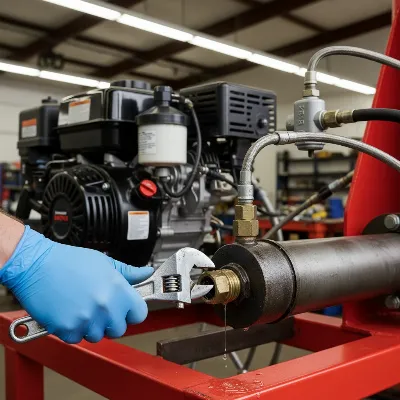 Close-up of a mechanic bleeding air from a log splitter's hydraulic cylinder by loosening a valve.
Post-Bleeding Verification
After completing the bleeding procedure, turn off the engine and allow the system to cool. Recheck the hydraulic fluid level in the reservoir and add more fluid if necessary to bring it back to the recommended level. Once filled, start the engine again and test the log splitter’s operation. Run the ram through several full cycles, observing for smooth, consistent movement and restored splitting power. Listen carefully for any unusual noises that might indicate remaining air or other issues. If the symptoms of air persist, you may need to repeat the bleeding process.
Common Issues and Troubleshooting After Bleeding
Even after carefully bleeding your hydraulic system, you might encounter some lingering issues. Knowing how to troubleshoot these can help you quickly get your log splitter back to full operation.
If the ram still feels spongy or lacks full power after one bleeding cycle, it’s likely that not all the air has been expelled. In this scenario, simply repeat the entire bleeding process. Sometimes, stubborn air pockets require multiple cycles to be fully purged from the system.
Another common problem after reassembling components is fluid leaks. After tightening all fittings, carefully inspect all connections for any signs of hydraulic fluid seeping. If you find a leak, retighten the connection firmly. If the leak persists, the fitting or hose itself might be damaged and require replacement. Always address leaks promptly, as they not only lead to air re-entry but also pose an environmental and safety hazard.
If your log splitter continues to produce unusual noises or shows significantly poor performance despite repeated bleeding and no visible leaks, the issue might be more complex than just trapped air. Persistent noise, especially a loud whine or grinding sound, could indicate a problem with the hydraulic pump itself, such as cavitation or internal wear. In such cases, or if the ram still doesn’t operate correctly, it’s advisable to consult a qualified log splitter technician.
Maintaining a Healthy Hydraulic System: Beyond Bleeding
Regular maintenance of your log splitter’s hydraulic system is key to its longevity and efficiency. Bleeding air is a crucial step, but it’s part of a broader maintenance regimen.
One of the simplest yet most important tasks is regular hydraulic fluid inspection. Check the fluid level before each use or at least weekly during heavy use. Ensure the fluid is clean and free of contamination. If it appears milky (indicating water) or contains particles, it needs to be changed immediately. Following the manufacturer’s recommended service intervals for hydraulic filter replacement is also vital. The filter prevents contaminants from circulating and damaging delicate hydraulic components.
Periodically, inspect all hydraulic hoses and fittings for signs of wear, cracks, bulges, or leaks. Hoses can degrade over time due to exposure to UV light, heat, and vibration, leading to potential failure points where air can enter. Tighten any loose fittings you find. Finally, proper storage practices contribute significantly to hydraulic system health. Store your log splitter in a dry, covered area to protect hoses and seals from environmental degradation and prevent moisture from entering the system. By adhering to these practices, you can minimize the chances of air entering your hydraulic lines and ensure your log splitter remains a reliable tool for years to come.
Conclusion
Bleeding air from your log splitter’s hydraulic lines is a fundamental maintenance task that significantly impacts its performance, safety, and lifespan. Understanding the subtle symptoms of trapped air, adhering to strict safety protocols, and meticulously following the step-by-step bleeding procedure ensures your machine operates with the force and efficiency it was designed for. Regular vigilance over your hydraulic fluid levels and routine inspections will keep air out and power in, making every log splitting session productive and safe. Don’t let a simple air bubble diminish your log splitter’s capabilities – master this skill and keep your equipment running like new.
What other hydraulic system challenges have you faced with your log splitter, and how did you overcome them?
Câu Hỏi Thường Gặp
How often should I check my log splitter’s hydraulic fluid?
It is recommended to check your log splitter’s hydraulic fluid level before each use or at least weekly during periods of heavy operation. This ensures the fluid remains at the optimal level, preventing air from being drawn into the system and maintaining efficient performance.
Can I use any type of hydraulic fluid in my log splitter?
No, it is crucial to use only the specific type of hydraulic fluid recommended by your log splitter’s manufacturer. Using an incorrect fluid can lead to poor performance, damage to seals, and ultimately, severe failure of the hydraulic pump and other components due to incompatible properties.
What causes a hydraulic log splitter to lose power?
A log splitter can lose power due to several factors, with air in the hydraulic lines being a common culprit, as it makes the fluid compressible. Other causes include low hydraulic fluid levels, a failing hydraulic pump, worn-out seals in the cylinder, or a malfunctioning control valve.
