For professionals engaged in firewood production, landscaping, or logging, a reliable log splitter is not merely a convenience but an absolute necessity. Manual splitting is labor-intensive, time-consuming, and physically demanding, making it unsustainable for commercial operations that process large volumes of wood regularly. The right commercial log splitter significantly enhances efficiency, productivity, and safety, transforming daunting piles of timber into manageable firewood with speed and consistent results. This guide delves into the essential aspects of commercial log splitters, helping you understand their core features, evaluate top models, and make an informed decision to optimize your workflow.
What Defines a Commercial Log Splitter? Understanding Professional-Grade Equipment
A commercial log splitter is engineered for continuous, heavy-duty operation, distinguishing itself from residential models through superior build quality, increased power, and advanced features. These machines are designed to withstand the rigors of daily use, processing large volumes of diverse wood types efficiently and consistently. Their primary purpose is to maximize output while minimizing operator fatigue and downtime, making them indispensable tools for businesses focused on firewood production or land management.
The evolution of log splitting technology has brought forth robust designs capable of handling significant challenges, from dense hardwoods to oversized, knotty logs. Unlike smaller consumer-grade splitters, professional units prioritize durability, higher tonnage ratings, and often incorporate automation to maintain peak productivity throughout long working hours.
Classifying Commercial Log Splitters: Power, Design, and Performance
Commercial log splitters come in various configurations, each offering distinct advantages depending on the operational environment and the specific demands of the wood splitting tasks. Understanding these classifications is key to selecting equipment that aligns perfectly with your professional requirements.
By Power Source
The engine driving a log splitter is fundamental to its performance, impacting power, portability, and maintenance needs.
- Gas-Powered Log Splitters: These are the workhorses of the commercial log splitting world, renowned for their raw power and unmatched portability. Gas models are ideal for heavy-duty splitting tasks in remote locations without access to electrical outlets, easily handling large hardwoods and high-volume workloads. However, they require more frequent maintenance, including oil changes, fuel refills, and air filter checks, and they operate with significant noise and exhaust fumes.
- Electric Log Splitters: While traditionally associated with smaller, residential tasks, some higher-end electric commercial models exist, offering a quieter and lower-maintenance alternative. They produce no exhaust fumes, making them suitable for enclosed or semi-enclosed workspaces. However, their power output is generally less than gas-powered counterparts, and their operation is limited by the proximity to an electrical power source.
- Diesel Log Splitters: Found in top-tier commercial and industrial applications, diesel engines offer exceptional torque and fuel efficiency for sustained heavy use. They are built for extreme durability and continuous operation, often powering the largest and most powerful log splitters available.
- Tractor PTO / Skid Steer Attachments: For operations already equipped with tractors or skid steers, attachments provide a highly powerful and cost-effective solution. These splitters leverage the existing hydraulic power of heavy machinery, offering immense splitting force for the most demanding logging applications without the need for an additional engine to maintain.
|
Our Picks for the Best Log Splitter in 2026
As an Amazon Associate I earn from qualifying purchases.
|
||
| Num | Product | Action |
|---|---|---|
| 1 | KABIN Kindle Quick Compact Log Splitter - Manual Splitting Tool - Steel Wedge Point Splits Firewood Like A Boss Safely & Easily |

|
| 2 | Kindling Cracker Firewood Kindling Splitter — Original Cast Iron Wood Splitting Wedge, 6.5" Safety Ring, 12" Frame, No Axe Needed, New Zealand Designed & Australian Made |
|
| 3 | Kindling Cracker King XL Firewood Kindling Splitter – Extra-Large Cast Iron Wood Splitting Wedge, 9" Safety Ring, 17" Height, No Axe Needed, Made in Australia |
|
| 4 | Wood Kindling Splitter - The Firewood Kindling Tool for Wood Stove Fireplace and Fire Pit |
|
| 5 | ESTWING Sure Split Wedge - 5-Pound Wood Splitting Tool with Forged Steel Construction & 1-7/8" Cutting Edge - E-5 |
|
| 6 | 2 Pcs 4 Lbs Wood Splitting Wedges Manual Log Splitter Wedge 4-Direction Diamond Design Forged Steel Tool for Easy Wood Splitting Splits Firewood into 4 Pieces Less Effort (Orange) |
|
| 7 | 13.8 Inch XL Manual Log Splitter with Self-Locking V-Blade for Hands-Free Safety - Unbreakable Welded Steel Firewood Cutter - Rust-Proof Electroplated Finish for Large Rounds, Fireplace & Camping |
|
| 8 | Wall Mounted Wood Splitter: Dual-Handle Manual Kindling Splitter with 6-Tooth Clamping, Heavy Duty Steel Log Splitter for Soft Firewood, Includes Gloves and Screws for Indoor and Outdoor Use |
|
| 9 | Firewood Kindling Splitter for Wood, Heavy Duty Cast Iron Wood Splitters for Firewood with No Axe, Manual Log Splitter for Kindling Wedge Point with Safety Cover |
|
| 10 | Firewood Kindling Splitter, Manual Log Splitter, Cast Iron Log Splitting Wedge, Heavy Duty Wood Splitter Tool with Cover (Black) |
|
By Splitting Mechanism
The way a log splitter generates and applies force largely determines its speed, efficiency, and suitability for different wood types.
- Hydraulic Log Splitters: The most common mechanism for commercial use, hydraulic splitters employ fluid pressure to drive a ram that pushes the log against a stationary wedge. This method delivers a slow, consistent, and immense force, making hydraulic splitters exceptionally effective at splitting tough, knotty, or dense hardwoods. While their cycle times are generally slower than kinetic models, their brute strength is invaluable for challenging logs.
- Kinetic Log Splitters: These splitters operate differently, storing energy in rapidly spinning flywheels and releasing it as a sudden, powerful impact. Kinetic models are significantly faster than hydraulic splitters, boasting cycle times often under three to five seconds. They are well-suited for processing large volumes of straight-grained wood, offering high productivity with less maintenance due to fewer hydraulic components. However, they may struggle with extremely large or highly knotty logs where sustained, immense pressure is required.
By Splitting Orientation
The orientation of the splitting mechanism affects how logs are loaded and processed, influencing operator ergonomics and efficiency.
- Horizontal Log Splitters: In this configuration, logs are typically loaded onto a beam horizontally, making it easier to handle smaller to medium-sized logs without excessive lifting.
- Vertical Log Splitters: Designed for heavier, larger diameter logs, vertical splitters allow operators to roll logs directly onto the splitting beam from the ground, eliminating the need for heavy lifting. This greatly reduces physical strain, especially when working with oversized timber.
- Horizontal/Vertical Convertible Log Splitters: Many commercial models offer the flexibility to switch between horizontal and vertical splitting modes. This versatility is highly advantageous for professionals who encounter a wide range of log sizes and weights, providing the best of both worlds for optimized handling and splitting.
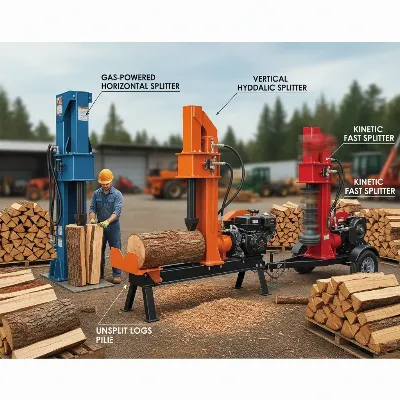 An illustration showing different types of commercial log splitters: gas-powered horizontal, vertical, and kinetic models, set in an outdoor work environment with split wood piles.
Crucial Features for Professional Log Splitters
Choosing the best commercial log splitter requires a deep understanding of its features and how they contribute to overall performance and efficiency in a professional setting.
Tonnage and Splitting Force
The splitting force, measured in tons, is arguably the most critical factor. For commercial operations, the force required depends heavily on the type, size, and dryness of the wood. As a general guideline:
- 10-20 tons: Sufficient for softwoods up to 12 inches (30cm) in diameter.
- 20-30 tons: Ideal for mixed wood types up to 16 inches (40cm) in diameter.
- 30+ tons: Essential for dense hardwoods like oak or hickory, or logs exceeding 16 inches (40cm) in diameter. Some industrial splitters offer upwards of 90 tons of force for truly massive logs.
> “For optimal efficiency in commercial operations, always select a log splitter with tonnage slightly exceeding your typical maximum log size and hardness to ensure consistent performance and prevent undue strain on the machine.”
Cycle Time and Productivity
Cycle time refers to the duration it takes for the splitting ram to extend, split the log, and fully retract. In a professional environment, where high volume is paramount, a faster cycle time directly translates to increased productivity and more cords of firewood processed per hour. Commercial-grade hydraulic splitters can offer cycle times as low as 5-7 seconds, while kinetic splitters are known for even faster cycles, often under 3 seconds.
Log Capacity (Length and Diameter)
Commercial operations frequently encounter logs of various dimensions. A professional log splitter must accommodate a substantial maximum log length, typically ranging from 24 to 30 inches, and a large diameter capacity, sometimes up to 5 feet for specialized industrial models. Features like a generous log cradle or table are beneficial for supporting large, heavy pieces.
Durability and Build Quality
Given the continuous and demanding nature of commercial use, durability is non-negotiable. Look for machines constructed with heavy-gauge steel frames, robust hydraulic components, and high-quality, reliable engines (such as Honda GX, Briggs & Stratton, or Kohler). Large hydraulic fluid reservoirs are also important, as they help to dissipate heat during prolonged operation, extending component life.
Ergonomics and Automation
Features that enhance operator comfort and automate parts of the splitting process are crucial for productivity and reducing fatigue.
- Hydraulic Log Lifts: These allow heavy logs to be easily loaded onto the splitting beam, minimizing manual lifting.
- Wedge Lifts: Hydraulically adjustable wedges or automatic wedge return systems streamline the process.
- Auto-Return Valves: Automatically retract the splitting wedge after each split, saving operator effort and time.
- Multi-Way Wedges: Options like 4-way or 6-way wedges increase efficiency by splitting logs into multiple pieces with a single pass.
- Operator Platform: Ergonomically designed platforms, such as those that position the operator at a comfortable working height, significantly reduce bending and back strain.
Portability and Mobility
For professionals who move their equipment between different job sites, portability is a key consideration. Towable models equipped with sturdy, often “never-flat” tires and a standard hitch allow for easy transport. The overall weight and balance of the machine also influence its maneuverability around a work area.
Safety Features
Safety is paramount when operating powerful machinery. Essential features include:
- Two-Handed Operation Controls: Requires both hands to engage the splitting ram, keeping hands away from the wedge.
- Log Cradles: Securely hold logs in place during splitting, preventing them from falling or rolling.
- Emergency Stop Buttons: Provide an immediate shutdown in case of an unforeseen hazard.
- Hydraulic Hose Protection: Shields hoses from damage and potential leaks.
Top Commercial Log Splitter Brands and Models for 2026
The market offers several reputable brands known for producing high-quality commercial log splitters, each with its unique strengths. When investing in professional-grade equipment, considering these top manufacturers is a wise starting point.
- Timberwolf: Regarded as a leader in firewood processing, Timberwolf offers high-output commercial log splitters like their Alpha Series and AutoSplit, capable of producing significant cords per hour with features like box wedges and rapid cycle times. Their TW-HD series focuses on ergonomic design and durability, while the industrial TW-10 can handle logs up to 5 feet in diameter with immense splitting force.
- BruteForce USA: Specializing in custom-built, heavy-duty equipment, BruteForce provides robust commercial splitters such as the BF-6 and BF-Auto, delivering powerful performance and high production rates designed for rigorous use.
- Iron & Oak: Known for rugged, commercial-grade hydraulic splitters, Iron & Oak models (e.g., 24-ton, 30-ton) are built to endure repeated, heavy use. They also offer skid steer attachments for integrated heavy equipment solutions.
- Oregon: With a focus on straightforward gas hydraulic machines, Oregon splitters (25-35 tons) provide predictable, reliable performance for year-round splitting, often featuring dependable Briggs & Stratton or Kohler engines.
- Detail K2: This brand offers versatility with both hydraulic and kinetic log splitters, ranging from 27-ton to 40-ton models. Their kinetic splitters are noted for dramatically faster cycle times, catering to high-volume processing of straight-grain wood.
- PowerKing: A prominent brand for kinetic log splitters, PowerKing models (22-42 tons) prioritize speed and throughput, making them excellent for processing large volumes of moderately knotty wood quickly.
- RuggedMade: Offers powerful gas horizontal splitters, like a 37-ton model, favored for their ability to split nearly any type of wood with significant force and log capacity.
- Swisher: The Swisher 34-Ton Timber Brute is appreciated for its ease of use and powerful Kawasaki V-twin engine, capable of switching to vertical splitting for oversized logs.
- NorthStar: Renowned for high-capacity machines, NorthStar offers deluxe horizontal/vertical splitters, designed for durability and efficient processing even under challenging conditions.
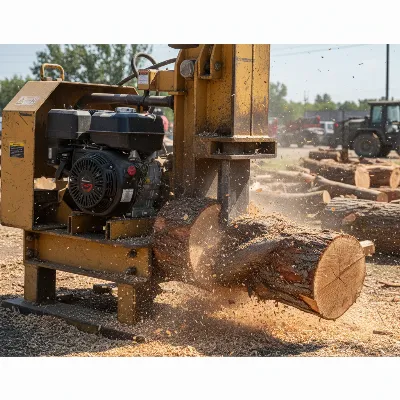 A powerful commercial log splitter with a large gas engine and heavy-duty frame, splitting a thick hardwood log in an outdoor setting, demonstrating its immense force and rugged construction.
Essential Safety and Maintenance for Commercial Log Splitters
Operating and maintaining a commercial log splitter safely and effectively is paramount to protecting operators, extending the machine’s lifespan, and ensuring consistent productivity.
Prioritizing Safety in Operation
Accidents can occur rapidly with powerful machinery. Adhering to strict safety protocols is non-negotiable.
- Personal Protective Equipment (PPE): Always wear safety glasses or a face shield to protect against flying debris, heavy-duty gloves to prevent splinters and pinches, steel-toed boots to guard against dropped logs, and hearing protection, especially for noisy gas-powered models.
- Clear Work Area: Ensure the operating area is level, stable, and free of obstacles, bystanders, children, and pets. An uneven surface can cause the splitter to tip, leading to serious injury.
- Operating Procedures: Always follow the manufacturer’s instructions diligently. Use the two-hand control system, if available, to keep hands clear of the splitting wedge. Position logs securely on the splitting bed, aligning them properly. Never attempt to split logs that exceed the machine’s capacity. Split one log at a time to maintain control and prevent kickback.
- Pre-Use Checks: Before each operation, visually inspect the splitter for any hydraulic leaks, ensure all safety guards are in place, and test emergency shut-off switches. Check logs for embedded foreign objects like nails or rocks that could damage the wedge or cause dangerous projectiles.
Comprehensive Maintenance Schedule
Regular and systematic maintenance is crucial for preventing costly breakdowns and ensuring your commercial log splitter performs reliably year after year.
- Daily Checks: Before starting work, perform visual inspections of all components, verify hydraulic fluid levels, check lubrication points, and test all safety systems. Inspect hydraulic hoses for leaks or damage, assess the condition of the splitting wedge, and ensure all safety guards are functional.
- Regular Servicing: Hydraulic fluid should be checked before each use and changed annually or according to the manufacturer’s recommendations. Regularly clean or replace hydraulic and air filters. Lubricate moving parts such as the beam, control levers, and joints to prevent rust and reduce wear. Periodically check and tighten all hydraulic fittings and connections.
- Wedge Inspection: Inspect the splitting wedge for dullness or damage. A dull wedge increases the effort required to split logs and puts unnecessary strain on the machine. Sharpen or replace it as needed.
- Engine Maintenance (for Gas/Diesel Models): This includes checking spark plugs, air filters, and oil levels regularly. Follow the engine manufacturer’s guidelines for oil changes and filter replacements to ensure optimal performance and longevity.
- Storage: When not in use, especially for extended periods, store your log splitter in a dry, sheltered area, such as a garage or shed. This protects it from the elements, preventing rust and corrosion. Clean the machine thoroughly before storage and apply a protective layer of lubricant to all moving parts.
Where to Invest in Reliable Commercial Log Splitters
Acquiring a commercial log splitter is a significant investment, and selecting a reputable source is as important as choosing the right model.
For authentic products and comprehensive support, always purchase from authorized dealers or specialized equipment suppliers who have established relationships with top manufacturers. These outlets can offer expert advice, ensure you receive genuine parts, and provide reliable warranty coverage. Many trusted suppliers, like Equipment Outfitters, curate a selection of leading brands, providing options ranging from robust hydraulic splitters to high-speed kinetic models for various professional applications.
When considering used commercial log splitters, exercise caution. While they can offer cost savings, thorough inspection is critical. Ask for detailed maintenance records, check for signs of excessive wear or damage to the frame, engine, and hydraulic system, and ideally, test the machine under load. Purchasing from a dealer who offers refurbished models with a limited warranty can mitigate some of the risks associated with used equipment.
Conclusion
Selecting the best commercial log splitter is a strategic decision that directly impacts the efficiency and profitability of your professional firewood operation. By carefully evaluating factors such as power source, splitting mechanism, tonnage, cycle time, and crucial features like log lifts and ergonomic design, you can choose a machine that perfectly aligns with your specific needs. Prioritizing robust construction, implementing a rigorous maintenance schedule, and strictly adhering to safety protocols will ensure your investment provides years of reliable, high-performance service. Equip yourself with a commercial log splitter built for durability and productivity, and transform your firewood production capabilities.
Are you ready to elevate your firewood operation with a commercial log splitter that truly meets the demands of professional use?
Frequently Asked Questions
What tonnage do I need for commercial log splitting?
For commercial applications, the required tonnage typically ranges from 20 to over 40 tons. Softwoods and mixed wood types generally need 20-30 tons, while dense hardwoods or logs exceeding 16 inches (40cm) in diameter will require 30 tons or more for efficient splitting. It is always wise to choose a machine with slightly more power than your estimated average needs to handle challenging logs and optimize productivity.
Are kinetic log splitters suitable for commercial use?
Yes, kinetic log splitters are highly suitable for commercial use, especially when rapid processing of large volumes of straight-grain or moderately knotty wood is a priority. Their exceptionally fast cycle times (often under 3 seconds) can significantly boost hourly output compared to traditional hydraulic models. However, for extremely large, gnarled, or tough hardwoods, a high-tonnage hydraulic splitter might still offer more consistent brute force.
How often should I change hydraulic fluid in a commercial log splitter?
For commercial log splitters, hydraulic fluid should be checked before each use and typically changed annually, or every 100 hours of operation, whichever comes first. Always refer to your machine’s specific manufacturer guidelines, as recommendations can vary. Regular fluid changes and filter replacements are crucial to maintaining the hydraulic system’s efficiency, preventing wear, and extending the lifespan of your equipment.
Can commercial log splitters handle knotty wood?
Yes, commercial log splitters are designed to handle knotty wood, especially high-tonnage hydraulic models. The consistent, immense pressure generated by hydraulic systems is very effective at powering through tough, twisted grain that would typically challenge smaller machines. Some models also feature specialized wedge designs or splitting mechanisms that further improve their ability to process knotty logs effectively.
What safety gear is essential when operating a commercial log splitter?
Essential safety gear when operating a commercial log splitter includes safety glasses or a face shield, heavy-duty gloves, steel-toed boots, and hearing protection. This personal protective equipment safeguards against flying debris, splinters, crushed feet, and noise-induced hearing damage, which are common risks associated with powerful wood-splitting machinery. Always prioritize wearing the full suite of PPE for your protection.
