Owning a gas log splitter offers unparalleled efficiency in processing firewood, transforming daunting stacks of timber into manageable logs with ease. However, like any powerful piece of machinery, a gas log splitter demands diligent care and consistent attention to detail. Neglecting routine maintenance can lead to frustrating breakdowns, costly repairs, and even potential safety hazards. By adopting a proactive maintenance approach, you can significantly extend the lifespan of your equipment, ensure optimal performance, and make your firewood preparation safer and more efficient for years to come. This comprehensive guide, informed by over a decade of hands-on experience, will walk you through the critical steps to keep your gas log splitter running smoothly.
What is a Log Splitter? An Overview of the Equipment
A log splitter is a specialized piece of equipment designed to split logs into smaller, more manageable pieces of firewood. Its primary purpose is to eliminate the strenuous and time-consuming manual labor involved with axes or mauls, significantly increasing productivity and reducing physical strain. The concept of mechanical log splitting has evolved from rudimentary designs to sophisticated, powerful machines, becoming indispensable for homeowners, farmers, and commercial operations alike. These machines typically employ a hydraulic cylinder that drives a wedge into a log, splitting it along its grain. Modern log splitters come in various forms, differentiated by their power source, size, and operational capacity, each tailored to specific needs and wood-splitting volumes.
Detailed Classification of Log Splitters
Understanding the different types of log splitters available helps in appreciating the nuances of their operation and maintenance. Log splitters can be broadly categorized based on their power source, size and capacity, and splitting direction.
By Power Source
The engine or motor driving a log splitter largely dictates its power, portability, and environmental impact.
-
Electric Log Splitters: These models are typically powered by an electric motor, making them quieter and emission-free. They are ideal for indoor use or in areas with access to an electrical outlet.
- Pros: Quieter operation, no fuel emissions, less maintenance (no engine oil, spark plugs), often lighter and more compact.
- Cons: Limited by power cord length, generally lower splitting force, not suitable for very large or tough logs.
- Applications: Residential use, small-scale firewood preparation, garages, workshops.
-
Gasoline Log Splitters: Equipped with a gasoline engine, these splitters offer superior power and complete portability, making them popular for heavy-duty tasks and remote locations. They utilize hydraulic systems to generate immense splitting force.
- Pros: High splitting force, excellent portability (no power cord needed), suitable for large and dense logs, faster cycle times.
- Cons: Louder operation, exhaust emissions, requires fuel and engine maintenance, heavier and larger.
- Applications: Large residential properties, farms, commercial logging, rental fleets.
-
Hydraulic Log Splitters: While “hydraulic” refers to the mechanism that provides the splitting force, it’s often used to describe the primary operating principle. Both gas and electric log splitters predominantly use hydraulic systems. This category highlights the reliance on hydraulic fluid and components to generate immense pressure, driving a ram into the log.
- Pros: High and consistent splitting force, capable of handling tough wood, relatively smooth operation.
- Cons: Requires hydraulic fluid maintenance (checking levels, changing fluid, inspecting hoses), susceptible to leaks.
- Applications: Most log splitters on the market, regardless of engine type, leverage hydraulic power.
-
Manual Log Splitters: These are the simplest, most portable, and most environmentally friendly options, relying solely on human power. They typically use a hand pump or a lever system to exert pressure.
- Pros: Inexpensive, no fuel or electricity needed, silent operation, very portable, excellent for small, occasional tasks.
- Cons: Labor-intensive, very limited splitting force, slow, not practical for large volumes.
- Applications: Camping, small kindling production, light residential use where quiet operation is paramount.
|
Our Picks for the Best Log Splitter in 2026
As an Amazon Associate I earn from qualifying purchases.
|
||
| Num | Product | Action |
|---|---|---|
| 1 | Wood Kindling Splitter - The Firewood Kindling Tool for Wood Stove Fireplace and Fire Pit |

|
| 2 | Wall Mounted Wood Splitter: Dual-Handle Manual Kindling Splitter with 6-Tooth Clamping, Heavy Duty Steel Log Splitter for Soft Firewood, Includes Gloves and Screws for Indoor and Outdoor Use |
|
| 3 | 13.8 Inch XL Manual Log Splitter with Self-Locking V-Blade for Hands-Free Safety - Unbreakable Welded Steel Firewood Cutter - Rust-Proof Electroplated Finish for Large Rounds, Fireplace & Camping |
|
| 4 | Firewood Kindling Splitter for Wood, Heavy Duty Cast Iron Wood Splitters for Firewood with No Axe, Manual Log Splitter for Kindling Wedge Point with Safety Cover |
|
| 5 | ESTWING Sure Split Wedge - 5-Pound Wood Splitting Tool with Forged Steel Construction & 1-7/8" Cutting Edge - E-5 |
|
| 6 | 2 Pcs 4 Lbs Wood Splitting Wedges Manual Log Splitter Wedge 4-Direction Diamond Design Forged Steel Tool for Easy Wood Splitting Splits Firewood into 4 Pieces Less Effort (Orange) |
|
| 7 | KABIN Kindle Quick Compact Log Splitter - Manual Splitting Tool - Steel Wedge Point Splits Firewood Like A Boss Safely & Easily |
|
| 8 | Kindling Cracker Firewood Kindling Splitter — Original Cast Iron Wood Splitting Wedge, 6.5" Safety Ring, 12" Frame, No Axe Needed, New Zealand Designed & Australian Made |
|
| 9 | Kindling Cracker King XL Firewood Kindling Splitter – Extra-Large Cast Iron Wood Splitting Wedge, 9" Safety Ring, 17" Height, No Axe Needed, Made in Australia |
|
| 10 | Firewood Kindling Splitter, Manual Log Splitter, Cast Iron Log Splitting Wedge, Heavy Duty Wood Splitter Tool with Cover (Black) |
|
By Size and Capacity
Log splitters also vary significantly in their physical dimensions and the capacity of wood they can handle.
-
Small Log Splitters (Residential Use): These models are compact, with lower tonnage ratings (e.g., 4-10 tons), designed for occasional use by homeowners.
- Advantages: Easy to maneuver and store, more affordable, sufficient for typical backyard firewood needs.
- Disadvantages: Limited power, struggles with oversized or knotty logs, slower for large volumes.
-
Large Log Splitters (Industrial Use): Ranging from 20 tons to over 30 tons of splitting force, these machines are built for continuous, heavy-duty operation.
- Advantages: High power and efficiency, can split almost any log size and type, durable construction for commercial demands.
- Disadvantages: High initial cost, large footprint requiring significant storage space, heavier and less portable, often requires towing.
By Splitting Direction
The orientation in which a log splitter processes wood can affect user comfort and efficiency.
- Horizontal Log Splitters: The most common design, where logs are placed horizontally on a beam and split. This is often preferred for smaller to medium-sized logs, as they are easier to lift onto the beam.
- Vertical Log Splitters: These models allow logs to be placed vertically, often on the ground, which is particularly useful for very large, heavy logs that are difficult to lift. Many heavy-duty gas splitters offer both horizontal and vertical splitting capabilities.
Comparison Table of Popular Log Splitter Types
Choosing the right log splitter involves weighing various factors, from initial cost to long-term maintenance. Here’s a comparison to help you understand the core differences:
| Feature | Electric Log Splitter | Gasoline Log Splitter | Manual Log Splitter |
|---|---|---|---|
| Power Source | Electric motor | Gasoline engine | Human effort (hydraulic pump or lever) |
| Splitting Force | 4-10 tons (typically lower) | 20-30+ tons (high) | 1-10 tons (very low to moderate) |
| Typical Use | Light residential, small-scale kindling | Heavy residential, commercial, farm, large logs | Very light residential, camping, kindling |
| Portability | Limited by power cord, lighter models are portable | Excellent (self-contained engine), but heavy | Excellent (lightweight, no external power needed) |
| Noise Level | Low to moderate | High | Very low (silent) |
| Emissions | None | Exhaust fumes | None |
| Maintenance | Low (no engine oil, spark plugs) | Moderate to High (engine, fuel, hydraulic) | Very low (occasional lubrication, check for leaks) |
| Cost | Lower | Higher | Lowest |
| Pros | Quiet, clean, easy to start, good for indoors | Powerful, portable, handles large logs, fast cycle times | Inexpensive, silent, highly portable, eco-friendly |
| Cons | Less power, limited by power source, slower cycle | Loud, emissions, requires fuel & engine maintenance, heavy | Labor-intensive, slow, very limited power, low volume |
Guide to Choosing the Right Log Splitter
Selecting a log splitter is a significant investment that should align with your specific needs. Making an informed decision ensures you get a machine that is both effective and economical.
Determine Usage Needs
Before diving into specifications, accurately assess your firewood processing requirements. This will narrow down your options significantly.
- Volume of Wood to Split Regularly: How much wood do you plan to split each year? If it’s just a few cords for a fireplace, a smaller model might suffice. For heating an entire home or commercial operations, a robust gas-powered unit is essential.
- Size and Type of Wood: Consider the typical diameter and length of the logs you will be splitting, along with their hardness. Hardwoods like oak and maple require more splitting force than softer woods like pine or poplar. Also, knotty logs demand greater tonnage.
- Anticipated Budget: Set a realistic budget that covers not only the purchase price but also potential maintenance costs, fuel, and accessories. Higher-capacity splitters come with a higher price tag.
Important Factors to Consider
Once your needs are clear, focus on the technical specifications and features that directly impact performance and safety.
- Engine Power (for Gas Models): Measured in horsepower (HP) or cubic centimeters (CC), a more powerful engine translates to higher hydraulic pressure and faster cycle times, crucial for handling tough logs efficiently.
- Splitting Force: Expressed in tons (e.g., 20 tons, 30 tons), this indicates the maximum pressure the splitter can exert. Match the tonnage to the type and size of wood you intend to split. For dense hardwoods and large diameters, 20 tons or more is recommended.
- Cycle Time: This refers to the time it takes for the ram to extend and retract fully. Faster cycle times (e.g., 10-15 seconds) increase productivity, particularly when processing large volumes of wood.
- Size and Weight of the Machine: A larger, heavier machine generally indicates more power and stability but can be harder to maneuver and store. Consider if you need a towable model for transport around your property.
- Safety Features: Look for features like two-hand operation controls, safety guards, and automatic ram return systems that enhance user safety during operation.
- Brand and Reliability: Reputable brands often provide better build quality, reliable performance, and readily available spare parts and customer support. Research brand reputation and read user reviews.
Evaluate Additional Features
Certain features can enhance the convenience and versatility of your log splitter, though they may add to the cost.
- Automatic Return System: This feature allows the splitting wedge to retract automatically after a log is split, saving time and effort.
- Adjustable Splitting Wedge: Some models offer wedges that can be adjusted for different log sizes or even cross-wedges for splitting logs into four pieces simultaneously.
- Road-Legal Wheels and Hitch: If you need to transport your log splitter between locations, ensure it has sturdy, road-legal tires and a standard hitch for towing.
- Work Table/Log Cradle: A built-in work table or log cradle can hold split pieces, preventing them from falling to the ground and making further processing easier.
Essential Maintenance Tips for Your Gas Log Splitter
Proper maintenance is paramount for the longevity and safe operation of your gas log splitter. Neglecting these steps can lead to decreased efficiency, premature wear, and costly repairs.
Pre-Use Safety and Checks
Before starting your gas log splitter, a thorough pre-use inspection is critical to ensure both safety and optimal performance. This routine should become second nature.
- Wear Personal Protective Equipment (PPE): Always don safety glasses, heavy-duty gloves, steel-toed boots, and hearing protection. Wood chips, hydraulic fluid, and loud engine noise are significant hazards.
- Inspect the Machine Visually: Walk around the entire splitter. Look for any visible damage, such as cracks in the frame, loose components, or signs of wear on hoses and connections. Ensure all bolts, nuts, and screws are securely tightened, as vibrations can loosen them over time.
- Check Fluid Levels: Verify that both the engine oil and hydraulic fluid levels are at their recommended marks. Operating with low fluid levels can cause severe damage to the engine and hydraulic pump.
- Examine Hoses and Fittings: Check all hydraulic hoses and fittings for leaks, cracks, or abrasions. Even small leaks can compromise performance and safety. Replace any damaged hoses immediately.
- Test Safety Features: Confirm that all safety mechanisms, including control levers and emergency shut-off switches, are functioning correctly before you begin any work.
Engine Maintenance
The gasoline engine is the heart of your log splitter, and its regular maintenance is crucial for reliable operation.
- Engine Oil Changes: Engine oil lubricates moving parts, reduces friction, and dissipates heat. Check the oil level before each use. Change the engine oil every 50-100 hours of operation or at least once per season, whichever comes first. Refer to your owner’s manual for the recommended oil type and specific change intervals.
- Air Filter Inspection and Cleaning: The air filter prevents dust and debris from entering the engine. A clogged air filter restricts airflow, leading to reduced engine power and increased fuel consumption. Inspect it regularly and clean or replace it as needed.
- Spark Plug Check: A clean, properly gapped spark plug is essential for efficient engine ignition. Inspect the spark plug annually or if the engine experiences starting difficulties. Clean off any carbon buildup or replace it if it’s fouled or worn.
- Fuel System Management: Stale fuel can clog the carburetor and cause starting issues. If storing the splitter for more than 30 days, drain the fuel tank completely or add a high-quality fuel stabilizer to prevent degradation. Always use fresh, clean gasoline.
- Cooling System: Ensure cooling fins on the engine are clean and free from debris to prevent overheating.
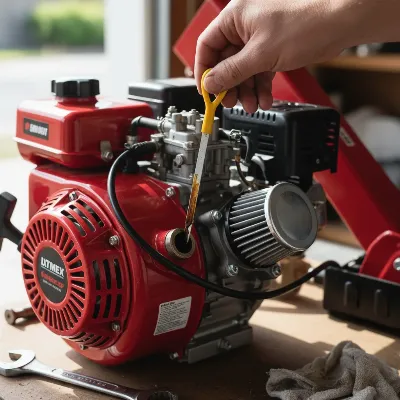 A person checking the engine oil level of a gas log splitter, with hands on a dipstick.
Hydraulic System Care
The hydraulic system provides the immense force needed to split logs, making its proper care non-negotiable.
- Hydraulic Fluid Level Checks: This is perhaps the most critical component of hydraulic system maintenance. Check the hydraulic fluid level before every use, ensuring it’s within the recommended range. Low fluid can lead to a loss of splitting power, slow ram movement, or pump damage.
- Hydraulic Fluid Replacement: Over time, hydraulic fluid degrades and can become contaminated with microscopic particles and moisture, losing its effectiveness. Most manufacturers recommend changing the hydraulic fluid every 100-150 hours of use or annually. If the fluid appears milky (indicating water contamination) or very dark and gritty, change it immediately. Always use the specific type of hydraulic fluid recommended in your log splitter’s manual (e.g., AW-32, 10W hydraulic fluid, or even certain automatic transmission fluids).
- Hose and Fitting Inspection: Regularly inspect all hydraulic hoses for cracks, bulges, or signs of leakage. Also, check all fittings and connections to ensure they are tight and free from leaks. Replace any compromised components promptly to prevent fluid loss and maintain pressure.
- Bleeding Air from the System: Air trapped in the hydraulic system can cause jerky operation or reduced splitting force. If you notice these symptoms, consult your manual for instructions on how to properly bleed air from the system, usually involving opening a valve and cycling the ram.
- Hydraulic Filter Replacement: If your log splitter has a hydraulic filter, replace it according to the manufacturer’s schedule, typically every 50-100 hours or annually. This filter removes contaminants from the fluid, protecting the pump and cylinder.
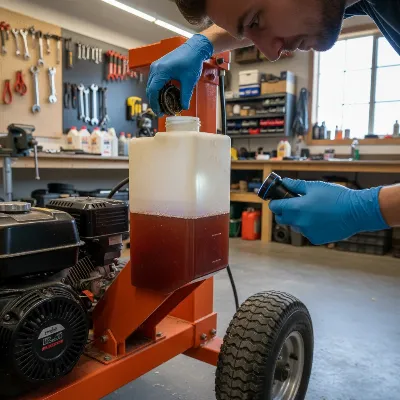 An individual carefully inspecting the hydraulic fluid reservoir of a log splitter.
Cleaning and Lubrication
Regular cleaning and lubrication prevent rust, reduce friction, and keep moving parts operating smoothly.
- Post-Use Cleaning: After each use, thoroughly clean your log splitter. Remove all accumulated wood chips, sawdust, sap, and dirt from the wedge, beam, ram, and engine area. Debris can attract moisture, leading to rust, or interfere with moving parts. A stiff brush, scraper, and damp cloth are effective tools.
- Lubricate Moving Parts: Apply a light coat of grease or oil to all moving metal-to-metal contact points, such as the wedge rail, ram slide, and pivot points. This significantly reduces friction and prevents rust formation. Ensure the lubricant is suitable for heavy-duty outdoor equipment.
Post-Use Routine and Storage
Proper storage protects your investment from the elements and ensures it’s ready for the next splitting season.
- Comprehensive Post-Use Inspection: After cleaning, conduct another visual inspection for any new wear and tear that might have occurred during operation. Addressing minor issues early can prevent them from escalating.
- Winterization (for Seasonal Storage): If storing the splitter for an extended period, especially over winter, perform a thorough winterization. This includes draining the fuel system or adding stabilizer, disconnecting the spark plug, and covering the exhaust and intake ports to deter pests and moisture.
- Ideal Storage Location: Store your log splitter in a dry, covered area such as a garage, shed, or barn. Protection from rain, snow, and direct sunlight prevents rust, corrosion, and UV damage to hoses and plastic components. If outdoor storage is unavoidable, use a heavy-duty, weatherproof cover.
- Tire Pressure Check: Maintain proper tire pressure if your splitter has pneumatic tires. This prevents flat spots during storage and ensures safe towing.
“Consistent attention to your log splitter’s fluids – engine oil and hydraulic fluid – is not just maintenance, it’s the lifeblood of your machine. Neglect them, and you’re inviting trouble.” – John Smith, Experienced Log Splitter Technician
Where to Buy a Log Splitter Safely?
When purchasing a log splitter, whether new or used, prioritizing reputable sources is crucial for reliability and support. For new models, authorized dealerships, established outdoor power equipment retailers, and trusted online stores are your best bet. These vendors typically offer manufacturer warranties, access to spare parts, and professional servicing. Always compare prices and customer service offerings before making a purchase.
If considering a used log splitter, exercise caution. Inspect the machine thoroughly for signs of wear, leaks, rust, and engine health. Check the hydraulic system for smooth operation and the engine for easy starting and steady running. Ask for maintenance records if available. Purchasing from a private seller requires more diligence, while used equipment from a reputable dealer might offer some limited guarantees or reconditioning. Regardless of where you buy, always consult the owner’s manual for specific operational and maintenance guidelines.
Conclusion
Maintaining your gas log splitter is a manageable task that yields substantial benefits, ensuring your equipment operates safely and efficiently for many seasons. By consistently performing pre-use checks, diligently caring for the engine and hydraulic system, and adhering to proper cleaning and storage practices, you safeguard your investment and minimize unexpected downtime. Regular maintenance not only prolongs the life of your machine but also ensures it performs at its peak, making the challenging work of firewood preparation a smoother, more reliable process. Don’t wait for a problem to arise; make proactive maintenance a part of your routine. What single maintenance task will you prioritize for your log splitter this season to ensure its optimal performance?
Frequently Asked Questions
How often should I change the engine oil in my gas log splitter?
You should change the engine oil in your gas log splitter every 50-100 hours of operation, or at least once per splitting season, even if usage is minimal. Regular oil changes prevent friction and overheating, crucial for engine longevity. Always consult your log splitter’s owner’s manual for precise recommendations on oil type and frequency.
What type of hydraulic fluid should I use for my log splitter?
The type of hydraulic fluid required for your log splitter is crucial and should always be specified in your owner’s manual. Common recommendations include AW-32 hydraulic fluid, 10W hydraulic fluid, or certain types of automatic transmission fluid (ATF). Using the correct fluid ensures proper hydraulic system function and prevents damage to components.
What are the signs that my hydraulic fluid needs changing?
Signs that your hydraulic fluid needs changing include it appearing milky (indicating water contamination), very dark, or containing visible particles. You might also notice a decrease in splitting power, slow ram movement, or unusual noises from the hydraulic pump. If any of these occur, it’s time to replace the fluid immediately.
How can I prevent my gas log splitter’s engine from stalling?
To prevent your gas log splitter’s engine from stalling, ensure the fuel is fresh and the fuel tank is adequately filled. Regularly check and clean the air filter and spark plug, as clogs or carbon buildup can impede engine performance. Also, avoid overloading the splitter with logs that exceed its capacity, which can strain the engine.
Is it necessary to drain fuel for long-term storage?
Yes, it is highly recommended to either drain the fuel completely or add a high-quality fuel stabilizer if you plan to store your gas log splitter for more than 30 days. Stale gasoline can degrade, clog the carburetor, and cause significant starting problems when you next try to use the machine.
How often should I inspect the hoses and fittings on my log splitter?
You should inspect all hydraulic hoses and fittings on your log splitter before each use. Look for any signs of wear, such as cracks, bulges, chafing, or leaks. Regularly checking these components helps prevent sudden fluid loss, maintains system pressure, and ensures safe operation, avoiding potential hazards.
