Safely unjamming a stuck log on a gas log splitter requires immediately shutting down the engine, removing the spark plug wire, and wearing personal protective equipment (PPE) like safety glasses and gloves. The safest methods involve using the hydraulic reverse function, often assisted by a heavy-duty chain, or employing a splitting wedge and sledgehammer to relieve pressure. Improper unjamming can lead to severe personal injury or damage to the log splitter’s hydraulic system.
Understanding Log Jams: Causes and Risks on Gas Log Splitters
A log jam on your gas log splitter is more than just an inconvenience; it’s a critical moment that requires a thorough understanding of its causes and inherent dangers. Knowing why logs get stuck helps you approach the problem strategically and safely.
Common Causes of Stuck Logs
Logs can become stuck for several reasons, often a combination of factors related to the wood itself and how it’s being split. Irregularly shaped logs, especially those with large knots or branches, present significant challenges for the splitting wedge. These natural imperfections create areas of immense resistance that can exceed the splitter’s force, causing the log to bind rather than cleave. Similarly, attempting to split logs that are too large in diameter or length for your specific splitter’s capacity will almost certainly lead to a jam, putting undue strain on the hydraulic system. Improper log positioning, such as placing a log at an angle or failing to align it with the wood grain, prevents the wedge from making a clean cut, often resulting in a partial split that seizes the log. Over time, a dull splitting wedge also loses its efficiency, requiring more force and increasing the likelihood of logs getting caught. Finally, a build-up of small wood debris, splinters, or sap around the wedge and ram can create friction and obstruct the smooth movement, leading to minor but stubborn jams.
Why Safe Unjamming is Crucial
The hydraulic systems in gas log splitters generate thousands of pounds of force, making them incredibly powerful but also inherently dangerous if mishandled. Attempting to unjam a log improperly can lead to severe personal injury, including crushing injuries, lacerations from flying wood fragments, or even broken bones if a sudden release of pressure causes parts to move unpredictably. The immense pressure trapped within the hydraulic lines during a jam means that any sudden, uncontrolled movement could cause the log or even parts of the machine to spring back with violent force. Beyond personal safety, improper unjamming techniques can cause significant damage to the log splitter itself. Forcing the ram, striking hydraulic components, or using incorrect tools can bend the wedge, damage the hydraulic cylinder, compromise seals, or even warp the beam, leading to costly repairs and extensive downtime. Therefore, prioritizing safety and following correct procedures is not just advisable, it’s absolutely essential.
Essential Safety Protocols Before Attempting to Unjam
Before you even consider touching a stuck log, it is crucial to follow a strict set of safety protocols. These steps are designed to eliminate potential hazards and ensure your protection. Never rush this phase, as impatience can lead to serious accidents.
Prioritizing Personal Protective Equipment (PPE)
|
Our Picks for the Best Log Splitter in 2026
As an Amazon Associate I earn from qualifying purchases.
|
||
| Num | Product | Action |
|---|---|---|
| 1 | ESTWING Sure Split Wedge - 5-Pound Wood Splitting Tool with Forged Steel Construction & 1-7/8" Cutting Edge - E-5 |

|
| 2 | Kindling Cracker Firewood Kindling Splitter — Original Cast Iron Wood Splitting Wedge, 6.5" Safety Ring, 12" Frame, No Axe Needed, New Zealand Designed & Australian Made |
|
| 3 | Kindling Cracker King XL Firewood Kindling Splitter – Extra-Large Cast Iron Wood Splitting Wedge, 9" Safety Ring, 17" Height, No Axe Needed, Made in Australia |
|
| 4 | Firewood Kindling Splitter, Manual Log Splitter, Cast Iron Log Splitting Wedge, Heavy Duty Wood Splitter Tool with Cover (Black) |
|
| 5 | KABIN Kindle Quick Compact Log Splitter - Manual Splitting Tool - Steel Wedge Point Splits Firewood Like A Boss Safely & Easily |
|
| 6 | Firewood Kindling Splitter for Wood, Heavy Duty Cast Iron Wood Splitters for Firewood with No Axe, Manual Log Splitter for Kindling Wedge Point with Safety Cover |
|
| 7 | 2 Pcs 4 Lbs Wood Splitting Wedges Manual Log Splitter Wedge 4-Direction Diamond Design Forged Steel Tool for Easy Wood Splitting Splits Firewood into 4 Pieces Less Effort (Orange) |
|
| 8 | Wood Kindling Splitter - The Firewood Kindling Tool for Wood Stove Fireplace and Fire Pit |
|
| 9 | Wall Mounted Wood Splitter: Dual-Handle Manual Kindling Splitter with 6-Tooth Clamping, Heavy Duty Steel Log Splitter for Soft Firewood, Includes Gloves and Screws for Indoor and Outdoor Use |
|
| 10 | 13.8 Inch XL Manual Log Splitter with Self-Locking V-Blade for Hands-Free Safety - Unbreakable Welded Steel Firewood Cutter - Rust-Proof Electroplated Finish for Large Rounds, Fireplace & Camping |
|
Your personal safety is paramount when working with powerful machinery like a log splitter. Always don a full complement of personal protective equipment (PPE) before approaching a jammed machine. This includes sturdy safety glasses or a full face shield to protect against flying wood chips and debris, which can be ejected with surprising force. Heavy-duty work gloves are essential to protect your hands from splinters, sharp edges, and potential pinch points. Wear sturdy, close-toed boots, preferably steel-toed, to guard your feet from falling logs or dropped tools. If your gas log splitter is particularly loud, hearing protection such as earmuffs or earplugs should be worn to prevent long-term hearing damage.
Shutting Down and Securing Your Gas Log Splitter
The very first step in addressing a log jam is to completely power down and secure your gas log splitter. Immediately turn off the engine and ensure it has come to a complete stop. To prevent any accidental restarts, which could be catastrophic, it is vital to remove the spark plug wire. This acts as a definitive power lockout, ensuring the engine cannot be engaged while you are working near the ram and wedge. Wait for all moving parts, including the ram, to cease movement completely before approaching the machine. Verify that your log splitter is stable and positioned on a flat, solid surface. If it’s on uneven ground or its wheels aren’t locked, it could shift unexpectedly, creating further danger.
Assessing the Log Jam
Once the machine is safely shut down, take a moment to carefully assess the situation. Examine how the log is stuck against the wedge and the ram. Is it partially split? Is it twisted? Is there any visible debris contributing to the jam? Understanding the nature of the jam will help you choose the most effective and safest unjamming method. Look for any splinters, small wood pieces, or other obstructions that might be caught between the ram and the beam or around the wedge. A visual inspection provides critical information, allowing you to anticipate how the log might behave when pressure is released or applied.
Step-by-Step Methods for Safely Unjamming a Log
With safety precautions firmly in place, you can now proceed with unjamming the log. There are several techniques, and the best approach often depends on the type and severity of the jam. Always start with the least aggressive method and progress as needed.
Method 1: Utilizing the Reverse Function (Hydraulic Power)
Many modern gas log splitters are equipped with a hydraulic reverse function, which is often the safest and easiest way to free a stuck log. With the engine off and spark plug wire removed, slowly engage the control lever to reverse the ram. The hydraulic pressure might be enough to back the log off the wedge. If the log is still stubbornly stuck and doesn’t budge, a common and effective trick is to use a heavy-duty chain. Wrap the chain securely around the end of the stuck log, then loop the other end around the push plate of the log splitter. Ensure the chain is taut. With the chain in place, reattach the spark plug wire, restart the engine, and very gently engage the reverse lever. The hydraulic power, combined with the chain’s leverage, can often pull the log free. Immediately shut off the engine and remove the spark plug wire once the log is loose.
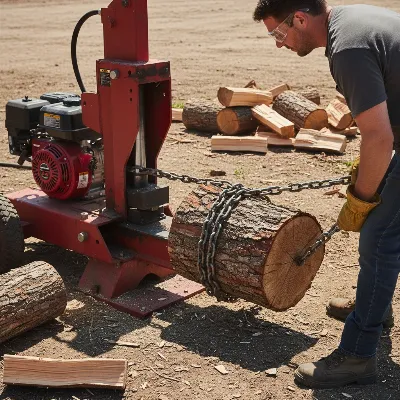 Person safely unjamming a gas log splitter with a chain and hydraulic reverse function, wearing PPE.
Method 2: The Wedge and Sledgehammer Technique
For logs that resist the reverse function, a traditional splitting wedge and sledgehammer can often provide the necessary force. Place a metal splitting wedge directly into any existing crack or gap in the stuck log, ideally perpendicular to the main splitting wedge of the machine. Carefully strike the top of your auxiliary splitting wedge with a sledgehammer. The goal is to either split the log further, releasing the tension, or to create enough vibration and impact to dislodge it from the splitter’s wedge. Always aim for your auxiliary wedge, not directly at the stuck log or any part of the log splitter’s mechanism. Repeated, controlled blows are more effective than one frantic strike.
Method 3: Using a Second Log or Pry Bar
Sometimes, a log is stuck in a way that allows for indirect force. You can try placing a smaller, manageable log behind the stuck log, then carefully engaging the ram to push this second log into the stuck one. The impact or sustained pressure from the smaller log might be enough to break the jam. Alternatively, a sturdy wooden lever or a pry bar can be used to apply leverage. Position the pry bar against a solid point on the log splitter’s beam or frame, and carefully pry against the stuck log to create movement. Never use your hands to push or pull the log directly while it’s under tension. Always use a tool for leverage and keep your body clear of potential pinch points.
Removing Small Debris and Splinters
Often, minor jams or sluggish ram movement are caused by accumulated debris. Small splinters, wood chips, or sticky sap can build up around the splitting wedge, the ram, or along the beam, creating friction or physical obstructions. With the machine fully powered down and secured, use needle-nose pliers, a stiff wire brush, a hacksaw blade, or even compressed air to carefully clean out any trapped material. Lubricating the ram and beam with a suitable, non-corrosive lubricant can also help to free up movement and prevent future minor jams.
When to Seek Professional Assistance
While many log jams can be resolved with the methods described, there are situations where professional help is the safest and most prudent option. If the log remains firmly stuck after multiple careful attempts, or if you notice any unusual noises, fluid leaks, or suspected damage to the hydraulic system (e.g., the ram not returning correctly or extended fully without pressure), it’s best to stop immediately. Attempting to force a solution in such cases could lead to more severe damage or serious injury. Contact the manufacturer or a certified service technician who has the expertise and specialized tools to diagnose and safely resolve complex issues without further compromising your log splitter.
Preventing Future Log Jams for Smoother Operation
The best way to handle a log jam is to prevent it from happening in the first place. Adopting good practices for log selection, preparation, and consistent machine maintenance can significantly reduce the frequency of jams and prolong the life of your gas log splitter.
Proper Log Preparation and Selection
One of the most critical preventative steps is to be selective about the logs you split. Always choose logs that are within the specified capacity of your log splitter in terms of both diameter and length. Attempting to split logs that are too large will inevitably lead to jams and strain your machine. Visually inspect each log for excessive knots, twisted grain, or large burl formations, as these are common culprits for creating stubborn jams. Wherever possible, cut these challenging sections out or split them into smaller, more manageable pieces before feeding them into the splitter. Ensure logs are cut to uniform, appropriate lengths, typically around 24 inches or less, as specified by your splitter’s manual. Removing small branches or stubs also helps ensure a cleaner, more direct split.
Correct Log Positioning
How you position a log on the splitter beam makes a significant difference in preventing jams. Always place logs flat on the splitting beam, ensuring that one of the cleanly cut ends rests squarely and evenly against the push plate or wedge. Avoid positioning logs at an angle or trying to split them lengthwise if they are too long for the bed, as this can cause them to tip, bind, or kick back. Aim to align the wood grain as straight as possible with the splitting wedge. For logs with some curvature or knots, try to orient them so the wedge can enter along the straighter grain lines first, allowing the split to propagate naturally. Never attempt to split multiple logs at once, as this drastically increases the chance of them binding together.
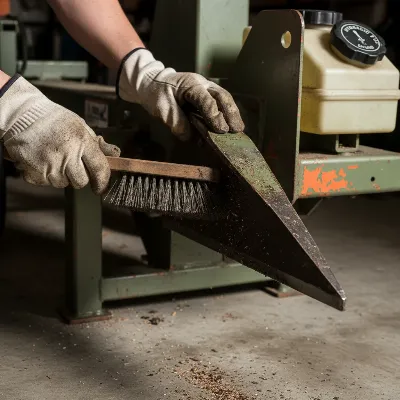 Person performing maintenance on a gas log splitter, ensuring the wedge is clean and hydraulic fluid is checked.
Routine Maintenance and Inspection
Regular maintenance is key to the long-term, jam-free operation of your gas log splitter. A dull splitting wedge is a common cause of jams; therefore, ensure your wedge is kept sharp. Inspect it regularly for nicks, dents, or excessive wear and sharpen it as needed, following manufacturer guidelines. After each splitting session, thoroughly clean the splitting area, removing any accumulated sawdust, wood chips, or sticky sap from the ram, beam, and wedge. This prevents debris from interfering with smooth operation. Periodically check your hydraulic fluid levels and top them off if necessary, using the type of fluid recommended by your manufacturer. Proper hydraulic fluid ensures optimal splitting pressure and smooth ram movement. Finally, routinely inspect your entire machine for any loose bolts, damaged hoses, or other signs of wear and tear, addressing them promptly to prevent larger issues down the line.
Recommended Tools and Equipment for Unjamming
Having the right tools on hand can make a significant difference in safely and efficiently resolving a log jam. Equally important is knowing which tools and practices to avoid to prevent injury or damage.
Essential Unjamming Tools
A well-equipped log splitting station includes several tools specifically useful for unjamming. A sturdy sledgehammer or heavy maul is indispensable for driving in auxiliary splitting wedges or gently tapping stubborn logs. Always use dedicated metal splitting wedges, which are designed to withstand heavy impacts and effectively split wood. For leveraging very tight jams, a heavy-duty chain can be incredibly effective when used with the splitter’s reverse function, as demonstrated in many professional setups. A sturdy pry bar or a long, robust wooden lever provides safe leverage to dislodge logs without placing your hands in dangerous zones. For cleaning out smaller obstructions, keep needle-nose pliers, a wire brush, or even a small air compressor handy to clear splinters and debris from around the ram and wedge.
Tools and Practices to Avoid
When dealing with a stuck log, certain tools and actions should be strictly avoided. Never use your hands or feet to push, pull, or stabilize a log on an active or potentially pressurized log splitter. The risk of crushing injuries is extremely high. Avoid using common wrenches, crowbars, or other tools that could accidentally strike or damage delicate hydraulic lines, fittings, or the ram itself. Any damage to these components can lead to hydraulic fluid leaks, pressure loss, or even catastrophic failure. Most importantly, resist the urge to use uncontrolled, excessive force. Forcing a jam with a running engine or applying extreme leverage without caution can cause the log to suddenly release, sending it flying or causing the machine to lurch unpredictably. Patience, precision, and adherence to safety protocols are far more effective than brute force.
Conclusion
Encountering a stuck log on your gas log splitter can be a moment of frustration, but it doesn’t have to be a major setback or a dangerous ordeal. By understanding the common causes of log jams and, more importantly, by strictly adhering to safety protocols, you can confidently and effectively resolve these issues. Always prioritize your personal protective equipment, completely power down and secure your machine, and carefully assess the jam before attempting any unjamming methods. Whether you’re utilizing the hydraulic reverse function, employing a sledgehammer with an auxiliary wedge, or simply clearing debris, choosing the right technique safely is paramount. Prevention through proper log selection, correct positioning, and diligent maintenance is the ultimate strategy for uninterrupted, safe log splitting. What steps will you take to ensure your next log splitting session is free from unexpected jams?
Frequently Asked Questions
Why do logs get stuck so easily?
Logs often get stuck due to irregular shapes, large knots, or twisting grain patterns that resist splitting. Using logs too large for your splitter’s capacity or positioning them incorrectly can also lead to jams by preventing the wedge from cleanly cleaving the wood.
Can a log splitter break from a jam?
Yes, a log splitter can be damaged by a severe jam, especially if you attempt to force the issue. Continuous strain on the hydraulic system, bending of the wedge, or damage to the ram seals can result from persistent forcing, leading to costly repairs.
Is it safe to leave a log stuck overnight?
While leaving a log stuck overnight with the machine turned off and secured is generally safe for your immediate person, it’s not ideal for the machine. Hydraulic pressure might remain, and prolonged stress on components could be detrimental. It’s best to address jams promptly.
What if my ram is completely stuck and won’t reverse?
If your ram is completely stuck and won’t reverse even with assisted methods like a chain, it might indicate a more serious hydraulic or mechanical issue. In such cases, it’s safest to consult your log splitter’s manual or seek professional assistance to avoid further damage.
How often should I sharpen my log splitter wedge?
The frequency for sharpening your log splitter wedge depends on usage and the type of wood you’re splitting. Inspect the wedge regularly for dullness, nicks, or burrs. A general rule is to sharpen it when you notice a decrease in splitting efficiency or an increase in jams.
Can I use a chainsaw to cut a stuck log?
Using a chainsaw to cut a log while it’s stuck in a log splitter is extremely dangerous and highly discouraged. The chainsaw could kick back unpredictably, or contact the metal components of the splitter, causing severe injury or damage to both machines. Always remove the log safely before cutting.
Frequently Asked Questions
Why do logs get stuck so easily in a log splitter?
Logs often get stuck due to irregular shapes, large knots, or twisting grain patterns that resist splitting. Using logs too large for your splitter's capacity or positioning them incorrectly can also lead to jams by preventing the wedge from cleanly cleaving the wood.
Can a log splitter be damaged if a log gets jammed?
Yes, a log splitter can be damaged by a severe jam, especially if you attempt to force the issue. Continuous strain on the hydraulic system, bending of the wedge, or damage to the ram seals can result from persistent forcing, leading to costly repairs.
Is it safe to leave a log stuck in the splitter overnight?
While leaving a log stuck overnight with the machine turned off and secured is generally safe for your immediate person, it's not ideal for the machine. Hydraulic pressure might remain, and prolonged stress on components could be detrimental. It's best to address jams promptly to prevent potential issues.
What should I do if the ram is completely stuck and won't reverse?
If your ram is completely stuck and won't reverse even with assisted methods like a chain, it might indicate a more serious hydraulic or mechanical issue. In such cases, it's safest to consult your log splitter's manual or seek professional assistance to avoid further damage.
How often should the log splitter wedge be sharpened?
The frequency for sharpening your log splitter wedge depends on usage and the type of wood you're splitting. Inspect the wedge regularly for dullness, nicks, or burrs. A general rule is to sharpen it when you notice a decrease in splitting efficiency or an increase in jams.
Is it safe to use a chainsaw to cut a log stuck in a splitter?
Using a chainsaw to cut a log while it's stuck in a log splitter is extremely dangerous and highly discouraged. The chainsaw could kick back unpredictably, or contact the metal components of the splitter, causing severe injury or damage to both machines. Always remove the log safely before cutting.
Safely Unjam a Stuck Log on a Gas Log Splitter
This guide outlines the essential steps to safely unjam a log from your gas log splitter, minimizing risk of injury and equipment damage.
Immediately turn off the engine and remove the spark plug wire to prevent accidental restarts. Ensure all moving parts have stopped and the splitter is stable on a flat surface before approaching.
Carefully examine how the log is stuck against the wedge and ram. Identify any partial splits, twists, or debris contributing to the jam to determine the best unjamming method.
Engage the hydraulic reverse function with the engine off and spark plug wire removed. If the log remains stuck, wrap a heavy-duty chain around the log and push plate, then gently engage reverse with the engine restarted. Immediately shut off the engine once the log is loose.
If hydraulic reverse fails, place a metal splitting wedge into an existing crack in the stuck log, perpendicular to the splitter's wedge. Strike the auxiliary wedge with a sledgehammer to split the log further or dislodge it.
With the machine fully powered down, use pliers or a wire brush to clear any splinters, wood chips, or sap from around the wedge, ram, and beam. Lubricate the ram and beam with a suitable, non-corrosive lubricant to ensure smooth movement and prevent future minor jams.
Get our weekly buyer guide
Practical specs, not advice. Unsubscribe anytime.

The info on using a splitting wedge and sledgehammer is solid, but I wish there was a bit more detail on how to best position the wedge for different types of jams. I tried it on a particularly gnarly piece of oak and it still took a lot of effort. Maybe some diagrams would help. Still, it’s better than just yanking on it.
This really helped me understand why logs get stuck in the first place, which makes me more mindful when loading them. I had a log jam last week and remembered to immediately shut down the engine. That simple step alone made me feel a lot safer approaching the problem. Great practical advice for anyone with a gas log splitter.
Good tips here, especially the reminder about PPE. I’m usually pretty good about safety glasses, but I sometimes forget gloves when I’m just quickly trying to clear a jam. The part about shutting down the engine and removing the spark plug wire is crucial and something everyone should do. It’s easy to get complacent when you’re in a hurry.
I’ve had a few logs get really wedged in my splitter, and this advice about using the hydraulic reverse function with a chain is a game-changer. I used to just try to pry them out, which was always a struggle and felt unsafe. This method made it so much easier and I felt a lot more in control. Definitely recommend trying it if you’re in a similar bind.