A reliable log splitter is an invaluable tool for any homeowner or professional dealing with firewood, but its efficiency hinges on the health of its hydraulic system. Just like the engine oil in your car, the hydraulic fluid in your log splitter degrades over time, impacting performance and potentially leading to costly repairs. Understanding when and how to change this vital fluid can significantly extend the life and effectiveness of your machine. This comprehensive DIY guide will walk you through everything you need to know, from identifying the right fluid to safely bleeding the system, ensuring your log splitter remains a powerful and consistent workhorse for years to come.
Understanding Your Log Splitter’s Hydraulic System
Your log splitter relies on a sophisticated hydraulic system to generate the immense force needed to split tough logs. This system typically includes a pump, a control valve, a cylinder with a ram, and a reservoir for the hydraulic fluid. The fluid acts as the medium for power transfer, enabling the ram to extend and retract with precision and strength. Regular maintenance of this system, particularly the hydraulic fluid, is crucial for optimal performance.
What is Hydraulic Fluid and Why is it Important?
|
Our Picks for the Best Log Splitter in 2026
As an Amazon Associate I earn from qualifying purchases.
|
||
| Num | Product | Action |
|---|---|---|
| 1 | Firewood Kindling Splitter for Wood, Heavy Duty Cast Iron Wood Splitters for Firewood with No Axe, Manual Log Splitter for Kindling Wedge Point with Safety Cover |

|
| 2 | ESTWING Sure Split Wedge - 5-Pound Wood Splitting Tool with Forged Steel Construction & 1-7/8" Cutting Edge - E-5 |
|
| 3 | Firewood Kindling Splitter, Manual Log Splitter, Cast Iron Log Splitting Wedge, Heavy Duty Wood Splitter Tool with Cover (Black) |
|
| 4 | Kindling Cracker King XL Firewood Kindling Splitter – Extra-Large Cast Iron Wood Splitting Wedge, 9" Safety Ring, 17" Height, No Axe Needed, Made in Australia |
|
| 5 | 2 Pcs 4 Lbs Wood Splitting Wedges Manual Log Splitter Wedge 4-Direction Diamond Design Forged Steel Tool for Easy Wood Splitting Splits Firewood into 4 Pieces Less Effort (Orange) |
|
| 6 | 13.8 Inch XL Manual Log Splitter with Self-Locking V-Blade for Hands-Free Safety - Unbreakable Welded Steel Firewood Cutter - Rust-Proof Electroplated Finish for Large Rounds, Fireplace & Camping |
|
| 7 | Wall Mounted Wood Splitter: Dual-Handle Manual Kindling Splitter with 6-Tooth Clamping, Heavy Duty Steel Log Splitter for Soft Firewood, Includes Gloves and Screws for Indoor and Outdoor Use |
|
| 8 | Kindling Cracker Firewood Kindling Splitter — Original Cast Iron Wood Splitting Wedge, 6.5" Safety Ring, 12" Frame, No Axe Needed, New Zealand Designed & Australian Made |
|
| 9 | KABIN Kindle Quick Compact Log Splitter - Manual Splitting Tool - Steel Wedge Point Splits Firewood Like A Boss Safely & Easily |
|
| 10 | Wood Kindling Splitter - The Firewood Kindling Tool for Wood Stove Fireplace and Fire Pit |
|
Hydraulic fluid is more than just a liquid; it’s the lifeblood of your log splitter’s power system. Its primary role is to transmit power, but it also lubricates moving parts, dissipates heat generated during operation, and helps prevent corrosion. Without the correct type and amount of clean hydraulic fluid, the pump, valve, and cylinder would quickly wear out, leading to a significant loss of splitting force and potential system failure. The fluid’s ability to maintain stable pressure and its lubricating properties are key to efficient operation and component longevity.
When to Change Your Log Splitter’s Hydraulic Fluid
The frequency of hydraulic fluid changes can vary, but most manufacturers recommend changing it after every 50 to 150 hours of operation. If your log splitter sees heavy, continuous use, you might lean towards the lower end of that range. For occasional users, a yearly check and change might suffice, even if you haven’t hit the hourly benchmark. However, regardless of usage hours, it’s essential to inspect the fluid regularly for signs of degradation or contamination. Heat is the primary enemy of hydraulic oil, accelerating its breakdown, so operating in hot conditions or under heavy loads might necessitate more frequent changes.
Signs of Old or Contaminated Hydraulic Fluid
Ignoring the condition of your hydraulic fluid can lead to noticeable performance drops and potential damage. Watch for these common indicators that your fluid needs changing:
- Changes in Color: New hydraulic fluid is typically clear or a light amber. If it appears dark, milky, or cloudy, it’s a strong sign of contamination, often with water. Milky fluid is a red flag and should be changed immediately to prevent corrosion.
- Reduced Splitting Power: If your log splitter struggles with logs it once handled easily, or if the ram moves sluggishly, the hydraulic fluid may be low or its viscosity degraded.
- Increased Noise: Unusual noises, such as whining or groaning from the pump, can indicate air in the system or insufficient lubrication from old fluid.
- Foaming: Excessive foam in the reservoir suggests air contamination or that the fluid’s anti-foaming additives have broken down.
- Overheating: If the hydraulic system components feel excessively hot after operation, the fluid may be losing its ability to dissipate heat effectively.
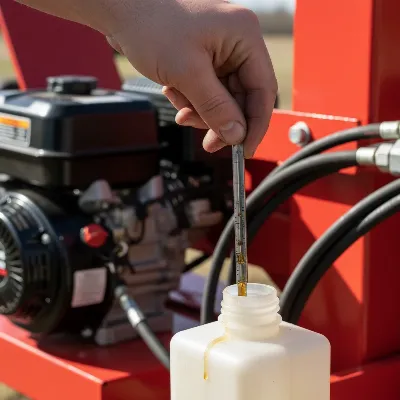 A person checking the hydraulic fluid level on a log splitter with a dipstick, demonstrating proper maintenance.
Essential Tools and Supplies for the DIY Hydraulic Fluid Change
Before you begin, gathering all the necessary tools and supplies will make the process smooth and safe. Being prepared ensures you won’t have to stop mid-task to search for an item.
Recommended Hydraulic Fluid Types
Always consult your log splitter’s owner’s manual for the manufacturer’s recommended hydraulic fluid type and viscosity grade. Using the wrong fluid can compromise performance and potentially damage your equipment. Common recommendations include:
- AW32 or ISO VG 32 Hydraulic Oil: A thin, light oil with low viscosity, best suited for colder environments or general use. It’s often referred to as 10-weight fluid.
- AW46 or ISO VG 46 Hydraulic Oil: A thicker oil that performs well in temperate climates and hotter conditions, or for heavy-duty use. This is a 20-weight fluid.
- Dexron III Automatic Transmission Fluid (ATF): Some manufacturers approve ATF for use in log splitters, as it shares many properties with hydraulic oil, including good lubricating and anti-wear characteristics. It also makes leaks easier to spot due to its distinct red color.
It’s crucial not to mix different types of hydraulic fluids. If you’re unsure what type is currently in your system, it’s best to completely drain the old fluid and refill with a single, approved type. Ensure the fluid is non-foaming and has anti-wear, anti-oxidation, and anti-rust additives for long-term protection. Reservoir capacities can vary from 3.5 to 12 gallons, so be sure to purchase enough.
Tools You’ll Need
- Wrenches/Sockets: To remove drain plugs and potentially hydraulic filters or hoses.
- Large Drain Pan or Container: Sufficiently sized to hold the entire volume of old hydraulic fluid. A 5-gallon bucket is often suitable.
- Funnel: To prevent spills when refilling the reservoir.
- Clean Rags: For wiping up spills and cleaning components.
- Hydraulic Filter Wrench (if applicable): For easier removal of spin-on filters.
- Penetrating Oil: Helpful for loosening stubborn bolts or filter screens.
- Blocks or Sawhorses: To elevate the log splitter, providing better access to the drain plug.
- Wire Brush: To clean around the drain plug or filter housing if there’s significant buildup.
Safety Gear
Your safety is paramount. Always wear appropriate personal protective equipment when working with machinery and fluids:
- Safety Glasses or Goggles: To protect your eyes from splashes of hydraulic fluid.
- Chemical-Resistant Gloves: Hydraulic fluid can irritate skin.
- Work Boots: Ideally steel-toed, to protect your feet from dropped tools or machine parts.
- Long Sleeves and Pants: To minimize skin exposure.
Step-by-Step Guide: How to Change Hydraulic Fluid in Your Log Splitter
Changing your log splitter’s hydraulic fluid is a straightforward DIY task that can save you money and ensure your machine runs optimally. Follow these steps carefully.
Step 1: Prepare for the Fluid Change (Safety First!)
Preparation is key to a safe and efficient fluid change.
- Park on Level Ground: Ensure your log splitter is on a stable, level surface.
- Turn Off Engine/Disconnect Power: For gas-powered splitters, turn off the engine and disconnect the spark plug wire to prevent accidental starting. For electric models, unplug the machine from its power source.
- Relieve Hydraulic Pressure: This is a critical safety step. Operate the control lever back and forth a few times with the engine off to release any residual pressure in the hydraulic lines.
- Elevate the Log Splitter: Use sturdy blocks or jack stands to raise one end of the log splitter, providing easier access to the drain plug, which is usually located at the bottom of the reservoir tank.
- Position Drain Pan: Place your large drain pan directly underneath the hydraulic fluid drain plug.
Step 2: Draining the Old Hydraulic Fluid
Draining the old fluid is often the messiest part of the process, so proceed with care.
- Remove Fill Cap/Dipstick: Locate and remove the hydraulic fluid fill cap or dipstick from the top of the reservoir. This allows air to enter the tank, facilitating a smoother drain.
- Locate and Remove Drain Plug: Identify the hydraulic fluid drain plug, typically at the lowest point of the reservoir. Use the appropriate wrench or socket to carefully remove it. Be prepared for the fluid to start flowing immediately.
- Clean Inlet Filter Screen (If Applicable): Some log splitters have an inlet filter screen or suction hose at the bottom of the reservoir. While the fluid is draining, you may be able to access and clean this screen with penetrating oil if it’s detachable.
- Allow Complete Drainage: Let the old hydraulic fluid drain completely into the collection container. This may take some time. Tilting the splitter slightly (if safe to do so) can help ensure all fluid is removed.
- Replace Drain Plug: Once all the fluid has drained, clean the drain plug threads and surrounding area with a rag. Reinsert and securely tighten the drain plug. Do not overtighten.
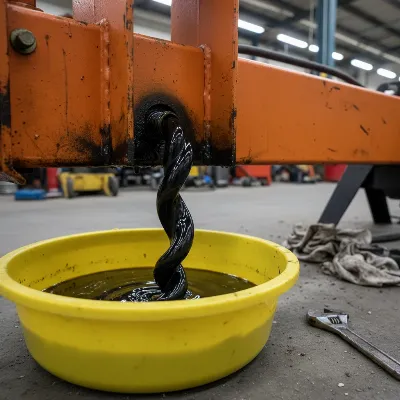 Old hydraulic fluid draining from a log splitter into a collection pan during maintenance.
Step 3: Replacing the Hydraulic Filter (If Applicable)
Not all log splitters have a replaceable hydraulic filter, but if yours does, now is the time to change it.
- Locate the Filter: Hydraulic filters are often spin-on canister types, similar to engine oil filters, and may be located on the return line from the valve to the reservoir.
- Remove Old Filter: Place a rag or small pan underneath to catch any drips. Use a hydraulic filter wrench if needed, or simply unscrew by hand.
- Prepare New Filter: Apply a thin film of new hydraulic fluid to the O-ring gasket of the new filter. This ensures a good seal and prevents damage during installation. Some experts recommend filling the new filter partially with fluid before installing to reduce air in the system, but this depends on its orientation.
- Install New Filter: Screw on the new filter by hand until the gasket makes contact, then tighten an additional ¾ to 1 full turn as specified by the manufacturer. Do not overtighten.
Step 4: Refilling with New Hydraulic Fluid
Refilling the system correctly is crucial to avoid air pockets and ensure proper fluid levels.
- Refill Reservoir: Using a clean funnel, carefully pour the recommended new hydraulic fluid into the reservoir through the fill hole.
- Monitor Level: Fill the reservoir to the appropriate level indicated on the dipstick or fill level indicator, typically about 75% full, or to the specific mark in your manual. Remember that the entire system (hoses, pump, cylinder) will also need to be filled, so the reservoir level will drop once the system is primed.
- Replace Fill Cap/Dipstick: Securely replace the fill cap or dipstick.
Step 5: Bleeding the System and Final Checks
After refilling, air can become trapped in the hydraulic lines. Bleeding the system removes this air, ensuring smooth and powerful operation.
- Reconnect Spark Plug (Gas) / Plug In (Electric): Reconnect the spark plug wire or plug the electric splitter back into power.
- Prime the Pump (Optional but Recommended): To push fluid into the pump and other components before starting the engine, some manuals recommend pulling the engine starter rope 10-15 times with the spark plug disconnected (gas models). This helps prevent the pump from running dry.
- Start the Engine/Motor: Start your log splitter and let it idle for a few minutes.
- Bleed the Cylinder: Operate the control handle to fully extend and retract the splitting ram (wedge) through its entire cycle 10-12 times. This action helps to circulate the fluid and force trapped air out of the system, often releasing it through the reservoir.
- Check Fluid Level Again: After bleeding, turn off the engine/disconnect power, and recheck the hydraulic fluid level. It will likely have dropped as the fluid fills the pump and cylinder. Top it off as needed to the correct mark.
- Check for Leaks: Visually inspect all connections, the drain plug, and the filter (if applicable) for any signs of leaks.
- Test Operation: Run the log splitter briefly to ensure smooth, powerful operation. The ram should extend and retract without hesitation or jerky movements.
Troubleshooting Common Issues After a Fluid Change
Even with careful execution, sometimes minor issues can arise after a hydraulic fluid change.
- Sluggish or Jerky Ram Movement: This is almost always a sign of air still trapped in the hydraulic system. Repeat the bleeding process by fully extending and retracting the ram multiple times. Ensure the fluid level is correct.
- Reduced Splitting Force: Verify the fluid level again. If the level is correct and the system is bled, check for leaks around hoses and fittings. A very low fluid level or significant air can prevent proper pressure buildup.
- Foaming in Reservoir: A small amount of foam initially can be normal as air works its way out. However, persistent or excessive foaming indicates too much air, incorrect fluid, or an issue with the anti-foaming agents. Continue bleeding the system.
- Leaks: Double-check all tightened connections, including the drain plug, filter, and any hoses that were disconnected. Ensure O-rings are properly seated and undamaged.
Tips for Extending Your Log Splitter’s Hydraulic System Life
Proactive maintenance goes a long way in ensuring your log splitter’s longevity and reliability.
- Regular Fluid Level Checks: Before each use, quickly check the hydraulic fluid level using the dipstick. Top off as needed with the recommended fluid.
- Keep it Clean: Regularly clean your log splitter, especially around the hydraulic reservoir and connections. Dirt and debris can contaminate the fluid if allowed to enter the system.
- Store Properly: Store your log splitter in a dry, covered area (shed or garage) to protect it from the elements. Moisture can lead to water contamination in the hydraulic fluid and rust on components. Always leave the ram fully retracted when storing the machine to protect the cylinder rod from corrosion.
- Avoid Overheating: Do not continuously operate the log splitter under extreme load for extended periods without breaks. Excessive heat breaks down hydraulic fluid faster.
- Use Quality Fluid and Filters: Invest in high-quality hydraulic fluid and replace filters according to the manufacturer’s schedule. Quality fluids offer better protection against wear, oxidation, and foaming.
- Inspect for Leaks: Periodically check hydraulic hoses, fittings, and seals for any signs of leaks. Address small leaks immediately to prevent fluid loss and contamination.
Where to Buy Quality Hydraulic Fluid and Filters
Finding the right supplies is essential for proper maintenance. You can typically purchase hydraulic fluid and filters from several reliable sources:
- Log Splitter Manufacturer/Dealer: The most reliable source for specific recommendations and genuine parts designed for your machine. Many manufacturers offer their own branded hydraulic fluids.
- Automotive Supply Stores: Often carry various hydraulic fluids, including AW32, AW46, and Dexron III ATF.
- Farm Equipment Retailers: A good source for larger quantities of hydraulic oil and filters, especially if your splitter is a heavy-duty model.
- Hardware Stores/Home Improvement Centers: May stock general-purpose hydraulic fluids.
- Online Retailers: A vast selection of fluids and filters, but ensure you are buying from reputable sellers and matching specifications precisely.
When purchasing, always verify the viscosity grade (e.g., ISO VG 32 or 46), the type (e.g., AW hydraulic oil, ATF), and ensure it has anti-wear (AW) properties if required by your manufacturer. If buying filters, match the part number precisely to your existing filter or consult your manual.
Conclusion
Maintaining your log splitter’s hydraulic system by regularly changing the fluid is a simple yet crucial task that directly impacts its performance and lifespan. By following this DIY guide, you can ensure your machine operates at peak efficiency, splitting wood cleanly and consistently. From understanding the importance of the right fluid to carefully executing each step of the replacement and bleeding process, you’re now equipped with the knowledge to keep your log splitter in top condition.
Remember, a little preventive maintenance today can save you from significant headaches and expenses tomorrow. So, take charge of your log splitter’s hydraulic health and enjoy years of effortless wood splitting. What other maintenance tasks do you find most critical for your outdoor power equipment?
Câu Hỏi Thường Gặp
How often should hydraulic fluid in a log splitter be changed?
Manufacturers generally recommend changing hydraulic fluid every 50 to 150 hours of operation. For occasional users, an annual check and change is a good practice. Always inspect the fluid’s color and clarity, as contamination or degradation warrants an immediate change.
What type of hydraulic fluid is best for a log splitter?
The best hydraulic fluid type depends on your log splitter’s manufacturer recommendations. Common types include AW32 or AW46 hydraulic oil, or sometimes Dexron III Automatic Transmission Fluid. AW32 is suitable for colder climates, while AW46 is better for temperate or hot conditions. Always consult your owner’s manual.
Can I mix different types of hydraulic fluid in my log splitter?
No, it is strongly advised against mixing different types of hydraulic fluid. Mixing fluids can lead to compatibility issues, breakdown of additives, reduced lubrication, foaming, and potential damage to the hydraulic system. If unsure of the current fluid, drain it completely and refill with a single, approved type.
How do I know if my log splitter needs hydraulic fluid?
Signs your log splitter needs hydraulic fluid include reduced splitting power, sluggish ram movement, unusual noises from the pump, or foaming in the reservoir. Visually check the fluid level with the dipstick, and inspect its color; dark, milky, or cloudy fluid indicates it’s time for a change.
How do I bleed air out of my log splitter’s hydraulic system?
After refilling hydraulic fluid, start the engine or motor and operate the control handle to fully extend and retract the splitting ram 10-12 times. This circulates the fluid and forces trapped air out through the reservoir. Then, recheck the fluid level and top it off as needed.
Is changing log splitter hydraulic fluid a DIY task?
Yes, changing hydraulic fluid in a log splitter is generally a manageable DIY task for most homeowners. With the right tools, supplies, and careful adherence to safety procedures, you can successfully perform this maintenance yourself, saving money and ensuring your equipment’s longevity.
