The Champion 27 Ton Gas Log Splitter is a powerful and versatile machine designed for efficiently processing large volumes of firewood, capable of splitting dense hardwoods up to 24 inches long with its 27 tons of force. This gas-powered hydraulic splitter offers both horizontal and vertical operation, making it suitable for various log sizes and reducing physical strain. It features a 224cc Champion engine and a fast cycle time of 11 to 16 seconds, enabling rapid wood processing for homeowners and professionals alike.
What is a Log Splitter? Overview of the Device
A log splitter is a powerful mechanical device engineered to simplify the arduous task of dividing large, unsplit logs into smaller, more manageable pieces of firewood. Unlike an axe or a splitting maul, which rely entirely on manual force, a log splitter employs hydraulic or mechanical power to drive a wedge through the wood, splitting it along its grain with immense force. This innovation has transformed firewood preparation, making it safer, faster, and significantly less physically demanding.
The evolution of log splitters has seen them advance from basic manual designs to sophisticated, high-tonnage machines capable of processing challenging hardwoods with ease. Today, these devices are indispensable for anyone regularly working with timber, from homesteaders stocking up for winter to professionals managing forestry tasks. They come in various configurations, each designed to meet specific needs in terms of power, portability, and log-handling capacity.
Detailed Log Splitter Classification
Log splitters are diverse, categorized primarily by their power source, size, and splitting orientation. Understanding these classifications is crucial for selecting a model that perfectly aligns with your specific requirements.
By Power Source
The engine driving the splitting wedge is a primary differentiator among log splitters, influencing their power, portability, and environmental impact.
- Electric Log Splitters: These models are typically powered by an electric motor, making them quieter and producing no exhaust fumes. They are ideal for lighter to medium-duty tasks and can often be used indoors or in enclosed spaces with an accessible power outlet. While convenient for smaller logs and residential use, their splitting force is generally lower than gas models, and their range of operation is limited by cord length.
- Gas Log Splitters: Featuring a gasoline-powered engine, these splitters are renowned for their raw power and mobility. Gas models like the Champion 27 Ton are designed for heavy-duty tasks, easily handling larger, denser, and knotty hardwoods. Their independence from an external power source allows them to be used in remote locations, making them a favorite for extensive property clearing or commercial operations. However, they are louder, require fuel and regular engine maintenance, and must be operated outdoors due to exhaust.
- Hydraulic Log Splitters: While many gas and electric splitters utilize a hydraulic system to generate splitting force, “hydraulic” often refers to the core mechanism. These systems use pressurized fluid to push a ram, delivering consistent and powerful splitting action. The Champion 27 Ton, for instance, is a gas-powered hydraulic log splitter, combining the mobility of a gas engine with the formidable force of hydraulics.
- Manual Log Splitters: These rely purely on human effort, often using a lever or pump action to build hydraulic pressure or mechanical force. They are the most affordable and quietest option, suitable for very light, occasional use with small, easy-to-split logs. They are ideal for individuals who prefer a simple tool for kindling or a few small pieces of firewood.
By Size and Power
|
Our Picks for the Best Log Splitter in 2026
As an Amazon Associate I earn from qualifying purchases.
|
||
| Num | Product | Action |
|---|---|---|
| 1 | Firewood Kindling Splitter for Wood, Heavy Duty Cast Iron Wood Splitters for Firewood with No Axe, Manual Log Splitter for Kindling Wedge Point with Safety Cover |

|
| 2 | Wood Kindling Splitter - The Firewood Kindling Tool for Wood Stove Fireplace and Fire Pit |
|
| 3 | 2 Pcs 4 Lbs Wood Splitting Wedges Manual Log Splitter Wedge 4-Direction Diamond Design Forged Steel Tool for Easy Wood Splitting Splits Firewood into 4 Pieces Less Effort (Orange) |
|
| 4 | 13.8 Inch XL Manual Log Splitter with Self-Locking V-Blade for Hands-Free Safety - Unbreakable Welded Steel Firewood Cutter - Rust-Proof Electroplated Finish for Large Rounds, Fireplace & Camping |
|
| 5 | Kindling Cracker King XL Firewood Kindling Splitter – Extra-Large Cast Iron Wood Splitting Wedge, 9" Safety Ring, 17" Height, No Axe Needed, Made in Australia |
|
| 6 | KABIN Kindle Quick Compact Log Splitter - Manual Splitting Tool - Steel Wedge Point Splits Firewood Like A Boss Safely & Easily |
|
| 7 | Firewood Kindling Splitter, Manual Log Splitter, Cast Iron Log Splitting Wedge, Heavy Duty Wood Splitter Tool with Cover (Black) |
|
| 8 | ESTWING Sure Split Wedge - 5-Pound Wood Splitting Tool with Forged Steel Construction & 1-7/8" Cutting Edge - E-5 |
|
| 9 | Wall Mounted Wood Splitter: Dual-Handle Manual Kindling Splitter with 6-Tooth Clamping, Heavy Duty Steel Log Splitter for Soft Firewood, Includes Gloves and Screws for Indoor and Outdoor Use |
|
| 10 | Kindling Cracker Firewood Kindling Splitter — Original Cast Iron Wood Splitting Wedge, 6.5" Safety Ring, 12" Frame, No Axe Needed, New Zealand Designed & Australian Made |
|
Log splitters are also differentiated by their splitting force, measured in “tons,” which directly correlates to the size and hardness of logs they can process.
- Small Log Splitters (Household Use): Ranging from 4 to 15 tons, these are perfect for residential use, handling smaller logs up to 18-20 inches in length and typically softwoods or moderately sized hardwoods. They are generally compact, easier to store, and more budget-friendly. Their primary advantage lies in ease of use and reduced physical strain for light firewood preparation.
- Large Log Splitters (Industrial/Heavy-Duty Use): Machines like the 27-ton Champion fall into this category, offering 20 tons of force or more. These are built for processing large volumes of wood, including oversized, knotty, and dense hardwoods up to 24 inches long. Industrial models are robust, featuring powerful engines and heavy-duty components designed for continuous operation. While more expensive and requiring significant storage space, their efficiency for high-volume tasks is unmatched.
By Splitting Direction
The orientation in which a log splitter operates significantly impacts user convenience, especially when dealing with heavy logs.
- Horizontal Splitters: In this configuration, logs are placed horizontally on the beam and split. These are common for smaller logs that are easy to lift onto the splitting beam. They are generally simpler in design and might be more compact.
- Vertical Splitters: Designed for heavier, larger diameter logs, vertical splitters allow you to roll a log into place at ground level, eliminating the need to lift it onto a high beam. The wedge then descends to split the log. This significantly reduces physical strain for oversized logs.
- Horizontal/Vertical Splitters: Many modern gas log splitters, including the Champion 27 Ton, offer the best of both worlds with a convertible design. They can quickly switch between horizontal and vertical splitting modes, providing flexibility for various log sizes and reducing back strain when tackling particularly heavy timber. This versatility makes them highly sought after for a wide range of splitting tasks.
Comparing Popular Log Splitter Types
Choosing the right log splitter involves weighing various factors against your specific needs. The table below provides a comprehensive comparison of the most common types.
| Feature | Manual Log Splitter | Electric Log Splitter | Gas Log Splitter (e.g., Champion 27 Ton) |
|---|---|---|---|
| Power Source | Human effort | Electric motor | Gasoline engine (often hydraulic) |
| Tonnage Range | 0-10 tons (hand-pumped) | 4-15 tons | 13-40+ tons |
| Best For | Light, occasional use, small logs, kindling | Small to medium logs, residential use | Heavy-duty, large logs, frequent use |
| Portability | Highly portable, lightweight | Limited by power cord/extension | Highly portable (towable), self-contained |
| Noise Level | Very Low | Low to Moderate | High |
| Emissions | None | None | Exhaust fumes |
| Maintenance | Minimal | Low | Moderate (engine, hydraulic system) |
| Price Range | Low | Moderate | Moderate to High |
| Pros | Quiet, affordable, simple | Quiet, no fumes, easy to start, compact | Powerful, mobile, fast cycle times, handles tough wood, versatile (H/V) |
| Cons | Very slow, labor-intensive, low power | Limited power, cord dependence, slower than gas | Noisy, requires fuel, engine maintenance, emissions, larger footprint |
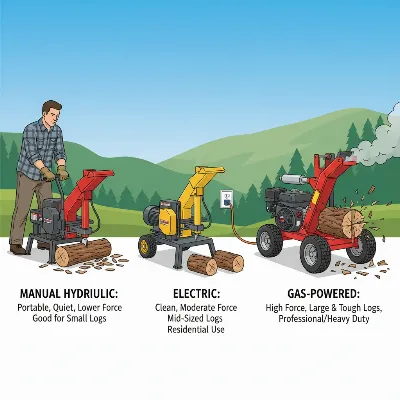 Comparison of manual, electric, and gas log splitter types for firewood processing
Guide to Choosing the Right Log Splitter
Selecting the ideal log splitter is a strategic decision that can significantly impact your efficiency and satisfaction. Consider these factors before making your purchase.
Determine Usage Needs
The first step in choosing a log splitter is to clearly define your needs. This involves evaluating the type, quantity, and size of wood you’ll be processing.
- Volume of Wood: How much wood do you plan to split regularly? For a few cords a year, a smaller electric or a versatile gas model might suffice. For substantial quantities, a heavy-duty gas splitter with a fast cycle time is essential.
- Log Size and Type: What are the typical diameter and length of your logs? Are you primarily splitting softwoods like pine, or dense hardwoods such as oak and hickory, which require more force? The Champion 27 Ton Log Splitter, for instance, is designed to handle logs up to 24 inches long and is powerful enough for even knotty hardwoods.
- Budget: Log splitters range widely in price. Establish a realistic budget that balances your needs with the cost of initial investment and ongoing maintenance. While cheaper models might save money upfront, a more robust unit often proves more cost-effective in the long run due to durability and efficiency.
Key Factors Important to Consider
Once your needs are clear, examine the technical specifications and features that directly influence performance and user experience.
- Splitting Force (Tonnage): Measured in tons, this is arguably the most critical specification. For most residential use with mixed woods, 10-20 tons is often adequate. For challenging hardwoods, larger diameters, or green wood, 20-30+ tons is recommended. The Champion 27 Ton provides ample force for almost any wood you’ll encounter.
- Engine Power (for Gas Models): A larger engine (measured in cubic centimeters, or CCs) typically translates to more consistent power and better performance under load. The 224cc engine on the Champion 27 Ton is a good indicator of its robust capabilities.
- Cycle Time: This refers to the time it takes for the splitting ram to extend and retract fully. A faster cycle time (e.g., 11-16 seconds on the Champion 27 Ton) means you can process more wood in less time, significantly boosting productivity.
- Size and Weight of the Machine: Consider how the splitter’s dimensions and weight will affect its storage, maneuverability around your property, and transportability. If you need to move it between locations, features like towability and robust tires are vital.
- Safety Features: Always prioritize models with essential safety mechanisms. Look for two-handed operation controls (ensuring hands are away from the wedge), automatic shut-off, log cradles to hold wood securely, and sturdy construction.
Evaluate Additional Features
Modern log splitters often come with features that enhance convenience and efficiency.
- Auto-Return Valve: This feature automatically retracts the splitting wedge after a split, allowing you to quickly prepare the next log and significantly reducing idle time. The Champion 27 Ton includes this, contributing to its high efficiency.
- Convertible Horizontal/Vertical Operation: As discussed, the ability to switch between splitting orientations is a major ergonomic benefit, especially for heavy logs that are difficult to lift.
- Wheels and Towability: For gas models, robust, DOT-approved tires and a tow hitch (like the 2-inch ball hitch on the Champion 27 Ton) are crucial for easy transport across your property or even on public roads.
- Log Catchers/Cradles: These small shelves help hold split wood or unsplit logs in position, preventing them from falling to the ground and reducing the need for constant bending and lifting. While some stock log cradles can be flimsy, they are a valuable addition.
Review: The Champion 27 Ton Gas Log Splitter (2026 Model)
The Champion Power Equipment 27 Ton Gas Log Splitter, available in models like the 100424 and 201312, stands out as a formidable machine designed to tackle demanding wood-splitting tasks. Engineered for both power and user convenience, it has garnered a reputation as a reliable workhorse for homeowners and professionals alike.
At its core, this splitter boasts a robust 224cc Champion single-cylinder OHV engine, providing the consistent power needed to drive its impressive 27 tons of splitting force. This power means it can effortlessly cleave through tough, knotty hardwoods such as oak, maple, and even juniper, which often challenge lesser machines. Users consistently report that it powers through logs that might otherwise require multiple swings with an axe or struggle with lower-tonnage splitters.
One of its most praised features is its versatile horizontal/vertical operation. The ability to quickly convert the splitting beam from horizontal to vertical in a matter of seconds is a significant ergonomic advantage. For smaller, lighter logs, horizontal splitting is convenient. However, when faced with massive, heavy logs up to 24 inches long and weighing up to 100 pounds, the vertical mode allows you to roll them into place at ground level, saving your back from strenuous lifting. This adaptability makes it suitable for a wide range of log sizes and user preferences.
Efficiency is another hallmark of the Champion 27 Ton. Depending on the specific model variation (100424 vs. 201312), the cycle time ranges from a swift 11 to 16 seconds. Coupled with an auto-return valve, which automatically retracts the ram after each split, this machine is capable of over 220 to 300 cycles per hour. This rapid processing capability significantly reduces the time spent on large piles of wood, allowing you to complete tasks more quickly. The hydraulic system typically features a 4.5-gallon oil capacity and operates at 11-14 GPM with a 2-stage gear pump, ensuring efficient power delivery as resistance changes.
Portability is well-addressed with its towable design. Equipped with 16-inch DOT-approved tires, an extended tongue, and a 2-inch ball hitch coupler, it can be easily towed at speeds up to 45 mph, making transport between job sites or across large properties a breeze. The inclusion of helpful accessories like an oil funnel and 10W-30 engine oil (and often hydraulic oil) simplifies initial setup.
> “The Champion 27 Ton Log Splitter is a beast that genuinely delivers on its promise of power and versatility. It consistently handles everything I throw at it, turning daunting piles of logs into manageable firewood with surprising speed.” – John D., Professional Arborist
While the Champion 27 Ton receives overwhelmingly positive feedback, some users have noted areas for improvement. Common observations include the log “shelves” or cradles being somewhat flimsy or too small for very large logs, sometimes bending or allowing logs to fall. The motor’s exposed location has also been a point of concern, as accidentally dropped logs can potentially damage it. Minor assembly-related issues, such as loose hydraulic reservoir caps or unsecured air filter covers, have been reported but are generally resolvable. One user experienced a rare manufacturing defect with the splitting wedge welds after heavy use, highlighting the importance of proper inspection and the value of Champion’s 2-year limited warranty and lifetime technical support. Despite these minor criticisms, the overall sentiment points to a highly capable and reliable machine that offers excellent value for its price point.
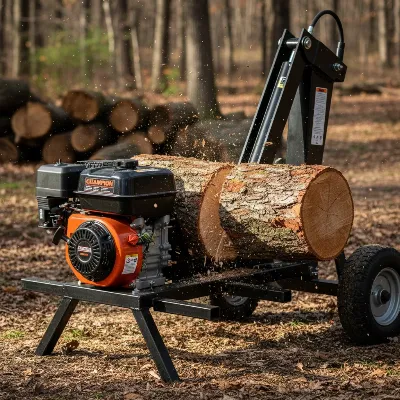 Champion 27 Ton Gas Log Splitter splitting a large log
Safe Operation and Maintenance of Log Splitters
Operating and maintaining any heavy machinery, especially a log splitter, demands adherence to strict safety protocols and a consistent maintenance schedule. These practices ensure not only the longevity of your equipment but, more importantly, your personal safety.
Safety When Using
Working with a log splitter involves powerful hydraulics and moving parts, making safety paramount.
- Personal Protective Equipment (PPE): Always wear appropriate safety gear. This includes safety glasses or a face shield to protect against flying debris, heavy-duty gloves to prevent splinters and protect hands, steel-toed boots to guard against dropped logs, and hearing protection due to engine noise.
- Pre-Operation Check: Before each use, thoroughly inspect your log splitter. Check the hydraulic fluid levels, engine oil, and fuel. Ensure all bolts and fasteners are tight, the tires are properly inflated, and there are no signs of leaks or damage to hoses and components.
- Read the Manual: Familiarize yourself with the manufacturer’s instructions. Each model may have specific operating procedures and safety warnings.
- Maintain a Clear Work Area: Ensure the area around the splitter is free of obstructions, debris, and bystanders (especially children and pets). Keep a safe distance from the machine while it’s in operation.
- Proper Log Handling: Never attempt to split logs that exceed the machine’s recommended capacity in length or diameter. Use the log cradles to secure wood and avoid holding logs manually during the splitting process.
- Never Operate While Fatigued or Impaired: Ensure you are well-rested and fully alert when operating the splitter. Avoid operating under the influence of alcohol or medication that could impair judgment.
- Two-Handed Operation: Most modern splitters require two hands to engage the splitting action, ensuring your hands are away from the moving wedge. Always follow this safety feature.
Regular Maintenance
Consistent maintenance is key to the performance and lifespan of your log splitter.
- Clean After Each Use: Clear away wood chips, bark, and debris from the beam, wedge, and engine area. Accumulated debris can interfere with moving parts or lead to overheating.
- Check and Change Hydraulic Fluid: Refer to your owner’s manual for the recommended type and schedule for checking and changing hydraulic fluid. This is critical for the proper function of the hydraulic system.
- Engine Maintenance (for Gas Models): Follow the engine manufacturer’s guidelines for oil changes (e.g., 10W-30 oil), spark plug replacement, air filter cleaning/replacement, and fuel system checks. Use fresh fuel, especially if storing the unit for extended periods.
- Inspect Fasteners: Regularly check and tighten all nuts, bolts, and pins on the machine. Vibrations during operation can loosen components over time.
- Lubrication: Apply grease to moving parts as recommended by the manufacturer to reduce friction and wear.
- Storage: Store the log splitter in a dry, covered area to protect it from weather elements, which can cause rust and damage to components. If storing for the off-season, follow specific winterization procedures outlined in the manual.
Where to Buy Log Splitters (Reputable Sources)
When purchasing a log splitter, especially a significant investment like the Champion 27 Ton Gas Log Splitter, it’s crucial to buy from reputable sources to ensure authenticity, warranty support, and access to customer service.
For new models, consider major hardware retailers and outdoor power equipment dealers. Stores like The Home Depot, Lowe’s, Northern Tool + Equipment, and dedicated Champion Power Equipment dealers often stock these machines. Online marketplaces can also be a good option, but always verify the seller’s credibility and ensure they are an authorized dealer to guarantee warranty validity. Purchasing directly from the manufacturer’s website is another reliable choice.
When buying a used log splitter, exercise extreme caution. Thoroughly inspect the machine for any signs of damage, leaks, excessive wear, or shoddy repairs. Test the engine, hydraulic system, and splitting mechanism to ensure they operate smoothly and efficiently. While a used machine can offer cost savings, the lack of a warranty and potential hidden issues can lead to significant repair costs down the line. It’s often advisable to have a knowledgeable technician inspect a used unit before purchase.
Conclusion
The Champion 27 Ton Gas Log Splitter proves itself to be a formidable and highly capable machine for handling substantial wood-splitting tasks in 2026. Its powerful 224cc engine, combined with 27 tons of splitting force and the invaluable versatility of horizontal and vertical operation, makes it adept at tackling even the most challenging logs. While minor critiques regarding log cradle design and motor protection exist, these are often outweighed by its consistent performance, impressive efficiency with fast cycle times, and robust towable design. For those who frequently process large volumes of diverse timber, this Champion log splitter represents a solid investment, significantly reducing labor and time.
Ready to conquer your firewood pile with power and efficiency? Explore the Champion 27 Ton Gas Log Splitter and experience the difference a high-performance machine can make.
Frequently Asked Questions
What kind of wood can a 27-ton log splitter handle?
A 27-ton log splitter, like the Champion model, is designed to handle a wide range of wood types, including dense hardwoods such as oak, hickory, maple, and even knotty or green logs. It can typically split logs up to 24 inches long and many inches in diameter, making it suitable for almost any firewood task.
How fast is the cycle time on the Champion 27 Ton Log Splitter?
The Champion 27 Ton Gas Log Splitter features a fast cycle time, which varies slightly by model (e.g., 100424 vs. 201312), typically ranging from 11 to 16 seconds. This rapid cycle, combined with an auto-return valve, allows for efficient processing of large quantities of wood.
Can the Champion 27 Ton Log Splitter be moved easily?
Yes, the Champion 27 Ton Log Splitter is designed for excellent portability. It comes equipped with 16-inch DOT-approved tires, an extended tongue, and a 2-inch ball hitch coupler, allowing it to be easily towed behind an ATV, UTV, or truck at speeds up to 45 mph for transport across properties or on roads.
Is the Champion 27 Ton Log Splitter suitable for commercial use?
While primarily marketed for heavy-duty homeowner and landowner use, its robust 27-ton force, efficient cycle time, and durable construction make it capable of handling demanding tasks that approach light commercial applications. Its ability to process large volumes of diverse wood efficiently can certainly benefit small-scale firewood businesses.
Frequently Asked Questions
What kind of wood can a 27-ton log splitter handle?
A 27-ton log splitter, such as the Champion model, is designed to handle a wide range of wood types, including dense hardwoods like oak, hickory, and maple, as well as knotty or green logs. It can typically split logs up to 24 inches long, making it suitable for almost any firewood task.
How fast is the cycle time on the Champion 27 Ton Log Splitter?
The Champion 27 Ton Gas Log Splitter features a fast cycle time, which varies slightly by model (e.g., 100424 vs. 201312), typically ranging from 11 to 16 seconds. This rapid cycle, combined with an auto-return valve, allows for efficient processing of large quantities of wood, up to 300 cycles per hour.
Can the Champion 27 Ton Log Splitter be moved easily?
Yes, the Champion 27 Ton Log Splitter is designed for excellent portability. It comes equipped with 16-inch DOT-approved tires, an extended tongue, and a 2-inch ball hitch coupler, allowing it to be easily towed behind an ATV, UTV, or truck at speeds up to 45 mph for transport across properties or on roads.
Is the Champion 27 Ton Log Splitter suitable for commercial use?
While primarily marketed for heavy-duty homeowner and landowner use, its robust 27-ton force, efficient cycle time, and durable construction make it capable of handling demanding tasks that approach light commercial applications. Its ability to process large volumes of diverse wood efficiently can certainly benefit small-scale firewood businesses.
What safety equipment should I use with a log splitter?
When operating a log splitter, always wear appropriate personal protective equipment (PPE). This includes safety glasses or a face shield, heavy-duty gloves, steel-toed boots, and hearing protection. These items protect against flying debris, splinters, dropped logs, and engine noise, ensuring your safety during operation.
How to Choose the Right Log Splitter
Selecting the ideal log splitter involves evaluating your usage needs, considering key technical factors, and assessing additional features to ensure efficiency and satisfaction.
Evaluate the volume, size, and type of wood you plan to split regularly. For instance, a Champion 27 Ton Log Splitter handles logs up to 24 inches long and dense hardwoods. Establish a realistic budget that balances initial cost with long-term durability and efficiency.
Examine specifications like splitting force (tonnage), engine power (for gas models), and cycle time. For challenging hardwoods, 20-30+ tons is recommended, and a faster cycle time like 11-16 seconds on the Champion 27 Ton boosts productivity. Also, prioritize models with essential safety features like two-handed operation.
Look for features that enhance convenience and efficiency, such as an auto-return valve, convertible horizontal/vertical operation, and robust wheels with towability. Log catchers or cradles can also be valuable additions to prevent logs from falling and reduce bending.
Get our weekly buyer guide
Practical specs, not advice. Unsubscribe anytime.

Absolutely love my new Champion splitter! The hydraulic power is fantastic, and it makes splitting large volumes of firewood so much easier than my old electric one. It’s built like a tank and feels very durable. If you’re on the fence about upgrading, this model is definitely worth the investment for its sheer power and versatility.
The Champion 27 Ton does a good job splitting logs up to 24 inches, and the 27 tons of force handles most of what I throw at it. However, I found the setup instructions a little unclear, which made getting it ready for first use a bit frustrating. Once it’s running, it performs well, but that initial hurdle was a bit annoying.
This splitter is solid! I was a bit skeptical about the 11 to 16 second cycle time, but it’s actually really efficient. We processed a huge pile of mixed hardwoods in just a few hours. My only minor gripe is that it’s quite loud, but that’s to be expected with a gas-powered unit this powerful. Definitely recommend for anyone serious about firewood.
I finally pulled the trigger on the Champion 27 Ton after wrestling with an axe for years. The 224cc Champion engine is a beast and makes quick work of even the gnarliest oak. I especially appreciate the horizontal and vertical operation; it saves my back from lifting those really heavy rounds. This machine has been a game-changer for my winter firewood supply.