As winter approaches, the thought of manually splitting countless logs for firewood can feel like a daunting chore. But what if you could transform this laborious task into an efficient, even enjoyable process? Building your own custom log splitter at home is a rewarding DIY project that not only saves money but also provides a powerful tool perfectly tailored to your needs. This guide will walk you through everything from understanding log splitter types to the step-by-step construction and crucial safety measures, empowering you to tackle your firewood with ease.
What is a Log Splitter? An Overview of the Essential Tool
A log splitter is a mechanical device engineered to efficiently divide large logs into smaller, more manageable pieces, primarily for firewood. While the traditional axe demands significant physical effort and time, a well-designed log splitter can handle the same volume of wood in a fraction of the time, reducing strain and increasing safety. The concept of using mechanical advantage to split wood has evolved significantly, moving from rudimentary manual tools to sophisticated hydraulic, electric, and gas-powered machines.
Modern log splitters come in various forms, each offering distinct advantages. Hydraulic splitters, which use fluid pressure to drive a ram, are particularly popular for their power and versatility, making them a common choice for DIY enthusiasts. Other types include manual splitters, which rely on human strength amplified by levers or jacks, electric models ideal for lighter, residential use, and gas-powered units offering mobility and higher power for larger tasks. Beyond their power source, log splitters can also be categorized by their orientation—horizontal or vertical—and specialized mechanisms like flywheel or screw-type systems, each designed to optimize the splitting process for different wood types and user preferences. For best log splitters roundups on this site.
Detailed Classification of Log Splitters
Understanding the various classifications of log splitters is crucial when planning your DIY project, as each type offers different levels of power, portability, and operational characteristics.
By Power Source
Log splitters are primarily defined by how they generate the force needed to split wood.
- Electric Log Splitters: These units are typically powered by a standard electrical outlet, making them convenient for home use where power is readily available. Their main advantages include quieter operation, no exhaust fumes, and generally lower maintenance requirements. However, electric splitters usually offer less splitting force (tonnage) compared to gas or hydraulic models, making them best suited for smaller to medium-sized logs and occasional use. They are ideal for residential settings where noise and emissions are concerns.
- Gas Log Splitters: Utilizing a gasoline engine, these splitters provide robust power and superior mobility, as they do not require an external power source. This makes them perfect for working in remote areas or large properties where logs are scattered. Gas-powered splitters come in a wide range of tonnage ratings, capable of handling very large and dense hardwoods. Their primary drawbacks include noise, exhaust emissions, and higher maintenance needs for the engine.
- Hydraulic Log Splitters: While often powered by either gas or electric engines, the core mechanism of these splitters is a hydraulic system. A pump pressurizes hydraulic fluid, which then drives a cylinder (ram) to push a wedge through the log. Hydraulic systems are renowned for their immense power and consistent splitting force, making them highly effective for tough, knotted wood. DIY log splitters frequently incorporate hydraulic components due to their efficiency and the ability to customize power output.
- Manual Log Splitters: These are the most economical and simplest type, relying solely on human effort. They can range from basic wedge-and-maul setups to more advanced models that use leverage or even a hand-pump hydraulic jack. Manual splitters are quiet, require no fuel or electricity, and are low-maintenance. However, they are significantly slower and demand more physical exertion, suitable only for small quantities of softwoods or for those who prefer a workout.
By Size and Capacity
|
Our Picks for the Best Log Splitter in 2026
As an Amazon Associate I earn from qualifying purchases.
|
||
| Num | Product | Action |
|---|---|---|
| 1 | Firewood Kindling Splitter for Wood, Heavy Duty Cast Iron Wood Splitters for Firewood with No Axe, Manual Log Splitter for Kindling Wedge Point with Safety Cover |

|
| 2 | KABIN Kindle Quick Compact Log Splitter - Manual Splitting Tool - Steel Wedge Point Splits Firewood Like A Boss Safely & Easily |
|
| 3 | Kindling Cracker King XL Firewood Kindling Splitter – Extra-Large Cast Iron Wood Splitting Wedge, 9" Safety Ring, 17" Height, No Axe Needed, Made in Australia |
|
| 4 | ESTWING Sure Split Wedge - 5-Pound Wood Splitting Tool with Forged Steel Construction & 1-7/8" Cutting Edge - E-5 |
|
| 5 | 13.8 Inch XL Manual Log Splitter with Self-Locking V-Blade for Hands-Free Safety - Unbreakable Welded Steel Firewood Cutter - Rust-Proof Electroplated Finish for Large Rounds, Fireplace & Camping |
|
| 6 | Wood Kindling Splitter - The Firewood Kindling Tool for Wood Stove Fireplace and Fire Pit |
|
| 7 | Firewood Kindling Splitter, Manual Log Splitter, Cast Iron Log Splitting Wedge, Heavy Duty Wood Splitter Tool with Cover (Black) |
|
| 8 | Wall Mounted Wood Splitter: Dual-Handle Manual Kindling Splitter with 6-Tooth Clamping, Heavy Duty Steel Log Splitter for Soft Firewood, Includes Gloves and Screws for Indoor and Outdoor Use |
|
| 9 | Kindling Cracker Firewood Kindling Splitter — Original Cast Iron Wood Splitting Wedge, 6.5" Safety Ring, 12" Frame, No Axe Needed, New Zealand Designed & Australian Made |
|
| 10 | 2 Pcs 4 Lbs Wood Splitting Wedges Manual Log Splitter Wedge 4-Direction Diamond Design Forged Steel Tool for Easy Wood Splitting Splits Firewood into 4 Pieces Less Effort (Orange) |
|
The size and splitting capacity (often measured in tons) of a log splitter dictate the types and volumes of wood it can handle.
- Small-Scale Log Splitters (Family Use): Designed for homeowners with moderate firewood needs, these splitters typically offer 4 to 20 tons of splitting force. They are more compact, easier to maneuver, and generally more affordable. While efficient for common firewood, their limited power might struggle with very large diameter or extremely dense hardwoods.
- Large-Scale Log Splitters (Industrial/Commercial Use): These robust machines boast 20 to 30 tons or more of splitting force, capable of processing huge, knotty logs quickly. They are built for heavy, continuous use in commercial settings or by individuals who require vast quantities of firewood. Industrial models are often gas-powered, heavy, and require substantial space for operation and storage, reflecting their higher cost and complexity.
By Splitting Direction
Log splitters also come in different orientations, impacting how logs are loaded and split.
- Horizontal Log Splitters: This is the most common configuration. Logs are placed horizontally on a beam, and a hydraulic ram pushes them into a stationary wedge. Many horizontal splitters are towable, making them convenient to move to the woodpile. They are straightforward to use and efficient for most log sizes.
- Vertical Log Splitters: In this design, logs are positioned upright, and the splitting wedge descends from above. A key advantage of vertical splitters is that they often eliminate the need to lift heavy logs high off the ground, as larger logs can be rolled into place. This can be a significant back-saver, especially for very large, heavy timber. They also offer a more stable platform on uneven terrain.
Comparing Popular Log Splitter Types
Choosing the right log splitter involves weighing various factors, from the power source to the splitting capacity and portability. The table below provides a concise comparison to help you understand the distinctions.
| Feature | Manual Splitter | Electric Splitter | Gas-Powered Hydraulic Splitter |
|---|---|---|---|
| Power Source | Human strength | Electric motor (120V/240V) | Gasoline engine, hydraulic pump |
| Splitting Force | Low (up to 10 tons) | Moderate (4-20 tons) | High (10-30+ tons) |
| Portability | High (lightweight) | Moderate (cord length limited) | High (towable, go-anywhere) |
| Cost | Very Low | Low to Moderate | Moderate to High |
| Noise Level | Very Low | Low | High |
| Emissions | None | None | Exhaust fumes |
| Ideal Use | Small logs, occasional use | Medium logs, residential, indoor | Large, dense logs, heavy use, outdoor |
| Maintenance | Very Low | Low | Moderate (engine/hydraulic system) |
> “The real strength of a DIY log splitter lies in its adaptability. You’re not just building a tool; you’re engineering a solution perfectly matched to your specific wood-splitting challenges.” – Johnathan Hayes, Reviewsmenia.com Admin
Your Guide to Building a Custom Log Splitter
Embarking on the journey to build your own log splitter offers unparalleled customization and the satisfaction of crafting a powerful tool. A hydraulic system is typically the heart of a custom build, offering robust performance.
Determining Your Needs
Before cutting any steel or ordering components, clearly define what your log splitter needs to accomplish.
- Volume of Wood: How much firewood do you process annually? Small amounts for a fire pit might warrant a simpler, lower-tonnage design, while heating an entire home demands a heavy-duty, high-capacity machine.
- Log Size and Type: Consider the typical diameter and length of logs you’ll be splitting. Are you dealing with small, seasoned softwoods, or large, green, knotty hardwoods like oak or maple? This directly impacts the required splitting force (tonnage) and the physical dimensions of your splitter’s frame and ram stroke.
- Budget Estimation: Establish a realistic budget for materials, tools, and components. While DIY can save money, quality hydraulic parts and engine components represent a significant investment.
Key Components and Design Considerations
A custom hydraulic log splitter requires several core components, each vital to its function and safety.
- Frame: The backbone of your splitter, the frame must be exceptionally sturdy to withstand immense splitting forces. Heavy-duty steel I-beams or thick C-channels are common choices. Design the frame to securely mount all components and consider adding wheels and a hitch for portability if needed. Precision in cutting and welding is paramount for structural integrity.
- Hydraulic System: This is where the splitting power comes from. It includes:
- Hydraulic Cylinder (Ram): The main component that pushes the log. Its bore diameter and stroke length determine the splitting force and the maximum log length it can handle.
- Hydraulic Pump: Converts mechanical energy from the engine into hydraulic pressure. Two-stage pumps are common, offering high flow at low pressure for speed and low flow at high pressure for splitting tough wood.
- Control Valve: Manages the flow of hydraulic fluid to extend and retract the cylinder. An “automatic kick-off” valve is a desirable safety feature that retracts the ram automatically, freeing your hands.
- Hydraulic Hoses and Fittings: Connect all hydraulic components, rated for high pressure.
- Hydraulic Reservoir (Tank): Stores the hydraulic fluid. Ensure it has adequate capacity and includes a breather cap and a return line filter.
- Engine: The power source for the hydraulic pump. A gasoline engine offers mobility, while an electric motor is quieter for indoor use. Select an engine with sufficient horsepower to drive your chosen hydraulic pump effectively. Horsepower, pump GPM (gallons per minute), and cylinder bore combine to determine the splitter’s tonnage.
- Splitting Wedge: This steel component is fixed to the end of the beam, or to the ram on some designs, against which the log is forced. Wedges can be simple two-way designs or multi-way (4-way, 6-way) for faster processing of smaller logs. The wedge must be robust and securely mounted.
- Safety Features: Integrate safety into the design from the outset. This includes a clear “operator zone,” log stops to prevent kick-out, and consideration for hands-free operation where possible (e.g., with automatic kick-off valves).
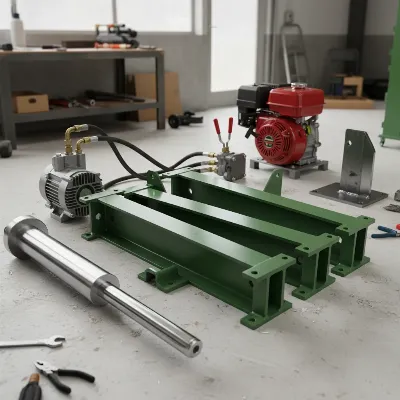 Essential components for building a custom hydraulic log splitter at home, laid out clearly
Step-by-Step Assembly Process
Building a hydraulic log splitter is a multi-stage process that demands careful attention to detail and safety.
- Planning and Design: Begin with detailed plans or a well-thought-out sketch. Consider the overall dimensions, the type of frame (horizontal or vertical), the required splitting force, and the placement of all components. Account for safety features like a secure work area and emergency stops in your design.
- Frame Construction: This is the foundation of your splitter. Cut the steel beams for your main beam, log tray, and support structures. Weld them together meticulously, ensuring all joints are strong and square. Reinforce critical stress points, such as where the hydraulic cylinder will mount and where the wedge will be fixed. If making a mobile unit, weld on an axle for wheels and a tongue for towing.
- Hydraulic Tank Assembly: For a durable hydraulic reservoir, clean the inside of your square tubing to remove all metal flakes. Weld side plates, then other structural components, to form the tank. Test the tank for leaks by plugging holes, filling with water, and pressurizing with a low PSI (around 5 psi) before draining and blowing dry. Install hubs, spindles, safety jacks, fittings, a vent, and a hydraulic filter.
- Engine and Hydraulic Pump Assembly: Mount your chosen engine securely onto the frame. Then, connect the hydraulic pump to the engine, typically using a pump mounting bracket and couplings, ensuring perfect alignment. All connections should be tight and secure to prevent leaks and ensure efficient power transfer.
- Beam and Wedge Assembly: Install the main beam onto the frame. Mount the hydraulic cylinder to the beam using pins and locks, ensuring it moves freely. Construct the splitting wedge from robust steel plates, welding them to create the desired profile (e.g., 2-way, 4-way). Position the wedge and cylinder base plates on the beam, allowing for smooth movement of the cylinder rod into the wedge.
- Hydraulic System Connection: Install the control valve, then connect all hydraulic hoses between the pump, control valve, cylinder, and reservoir. Ensure all fittings are tight to prevent leaks. Fill the hydraulic tank with the correct type and amount of hydraulic fluid.
- System Bleeding and Pressure Adjustment: Start the engine and run it at idle. Extend and retract the cylinder fully a few times to bleed any air from the hydraulic system. Refill the tank to the proper level. Install a hydraulic gauge and, with the engine running at maximum speed, set the relief valve on the kick-off valve to the desired pressure (e.g., 2000-2500 psi) while holding the cylinder in the full extended position. Retract the cylinder using the automatic kick-off valve.
Essential Safety Practices for Operating Your Homemade Log Splitter
Safety is paramount when operating any log splitter, especially a custom-built one. Adhering to strict safety protocols protects you and those around you from serious injury.
Safety Before Operation
Preparation is key to a safe splitting session.
- Personal Protective Equipment (PPE): Always wear safety glasses or goggles to shield your eyes from flying wood chips and debris. Heavy-duty gloves protect your hands from splinters and improve grip. Steel-toed boots are essential to protect your feet from falling logs. Hearing protection, such as earmuffs or earplugs, is highly recommended, especially for gas-powered units. Avoid loose clothing or jewelry that could get caught in moving parts.
- Clear the Work Area: Ensure your work area is free of obstructions, tripping hazards, and debris. Keep children, pets, and bystanders at a safe distance (at least 10-20 feet away) from the machine during operation.
- Pre-Use Inspection: Before each use, thoroughly inspect your log splitter. Check hydraulic fluid levels, look for any signs of damage, loose bolts, or hydraulic fluid leaks. Ensure all guards and safety devices are in place and functioning correctly. Cut both ends of each log as square as possible to prevent kick-outs.
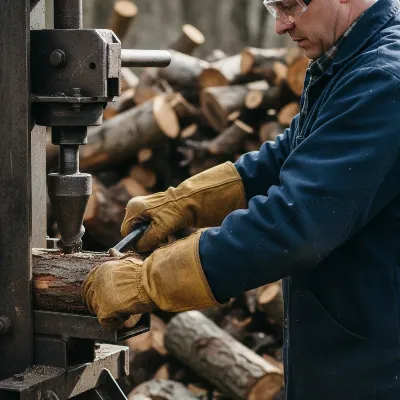 A person wearing proper safety gear while operating a log splitter, emphasizing eye and hand protection
Safe Operating Procedures
Proper operation minimizes risks and maximizes efficiency.
- Maintain a Stable Stance: Stand to the side of the log splitter, never directly in front of or behind the splitting wedge. Keep your feet shoulder-width apart and maintain a balanced posture.
- Handle Logs Correctly: Position logs securely on the splitting beam, placing your hands on the sides, not the ends. Never place fingers, hands, feet, or any other body part between the log and the wedge, or between the log and the stop. Use a log pusher or a long stick to adjust logs, rather than your hands, especially when the ram is in motion.
- One Log at a Time: Never attempt to split two logs simultaneously, or stack logs end-to-end. This can cause logs to fly out unexpectedly, leading to serious injury.
- Do Not Force the Machine: If a log resists splitting, do not continuously force the machine beyond its limits. Re-position the log, or if necessary, remove it and try a different piece of wood. Overloading can damage the machine and create dangerous kick-back scenarios.
- Turn Off When Not in Use: Always turn off the engine and remove the spark plug wire (for gas models) or disconnect power (for electric models) when making adjustments, clearing jams, refueling, or leaving the machine unattended.
Maintenance for Longevity
Regular maintenance ensures your custom log splitter remains safe and operates efficiently for years to come.
- Cleanliness: After each use, clean debris, wood chips, and bark from the splitter and its engine. This prevents buildup that can interfere with moving parts or lead to overheating.
- Hydraulic Fluid Checks: Regularly check the hydraulic fluid level and quality. Replace the hydraulic fluid and filter according to the manufacturer’s recommendations for your specific components.
- Inspection and Tightening: Periodically inspect all bolts, nuts, and hydraulic fittings, tightening any that have loosened due to vibration. Check hoses for wear, cracks, or leaks and replace them if damaged. Store the machine in a dry, well-ventilated area to prevent rust and degradation.
Sourcing Components for Your DIY Log Splitter
Building a custom log splitter means sourcing individual parts or complete kits, allowing for a personalized machine that meets your exact needs.
For structural components like steel I-beams, C-channels, and various plates for the frame and wedge, local metal suppliers or fabrication shops are excellent resources. They can often cut materials to your specifications.
Hydraulic system components—including cylinders, pumps, control valves, hoses, fittings, and reservoirs—are crucial and should be sourced from reputable hydraulics suppliers. Many online retailers specialize in hydraulic parts for agricultural, industrial, and DIY applications, offering a wide range of sizes and pressure ratings. Some suppliers also offer pre-matched hydraulic kits that include a pump, valve, cylinder, and necessary fittings, simplifying the selection process. When purchasing these components, pay close attention to the tonnage rating of the cylinder, the GPM (gallons per minute) of the pump, and the PSI (pounds per square inch) capacity of the entire system to ensure they are compatible and meet your splitting force requirements.
Engines (gasoline or electric motors) can be purchased from small engine dealers, hardware stores, or online retailers. Match the engine’s horsepower to the hydraulic pump’s requirements. Consider safety items like emergency shut-off switches, and wheels and a trailer hitch if you plan for your splitter to be mobile. Many specialized DIY log splitter plans available online also include detailed bills of materials, sometimes even suggesting specific part numbers, though it’s important to cross-reference and ensure compatibility with current products.
Conclusion
Building your own custom log splitter is a deeply satisfying project that yields a powerful, tailored tool for managing firewood. From selecting the right power source and hydraulic components to meticulously constructing the frame and integrating safety features, each step contributes to a machine designed precisely for your needs. This DIY approach not only offers significant cost savings but also provides a deeper understanding and appreciation for the mechanics of your equipment. By prioritizing safety during both construction and operation, and committing to regular maintenance, your homemade log splitter will reliably serve you for many years, making those chilly winter preparations far more efficient and enjoyable. What kind of wood-splitting challenges are you hoping to conquer with your new custom machine?
Frequently Asked Questions
What is the most important component when building a DIY log splitter?
The hydraulic cylinder is often considered the most important component. Its bore diameter and the system’s pressure directly determine the splitting force (tonnage), which dictates the size and hardness of logs your splitter can handle. Selecting the correct cylinder is critical for the machine’s overall effectiveness.
Can I use an electric motor instead of a gas engine for a custom log splitter?
Yes, you can use an electric motor. Electric motors are quieter and produce no emissions, making them suitable for enclosed spaces. However, ensure the motor’s horsepower is sufficient to drive the hydraulic pump effectively, as electric splitters generally offer less power than their gas counterparts.
What safety gear should I always wear when using a log splitter?
Always wear safety glasses or goggles, heavy-duty gloves, steel-toed boots, and hearing protection. Avoid loose clothing or jewelry that could get caught in moving parts. This personal protective equipment is vital to safeguard against flying debris, splinters, falling logs, and noise exposure.
How much splitting force (tonnage) do I need for a homemade log splitter?
The required tonnage depends on the type and size of wood you plan to split. For small, seasoned logs, 10-15 tons might suffice. For larger, green, or knotty hardwoods, 20 tons or more is recommended. Assess your typical wood supply to choose an appropriate tonnage for your custom build.
Are there legal requirements for towing a homemade log splitter?
Yes, legal requirements for towing vary by region. Generally, towable equipment needs functional lights (brake lights, turn signals), reflectors, safety chains, and potentially registration, depending on its weight and the laws in your specific state or country. Always check local regulations before towing.
How often should I perform maintenance on my DIY log splitter?
Regular maintenance is crucial. Clean your log splitter after each use to remove debris. Check hydraulic fluid levels weekly during active use and replace the fluid and filter annually or as recommended by component manufacturers. Inspect all connections, bolts, and hoses before each operation.
Get our weekly buyer guide
Practical specs, not advice. Unsubscribe anytime.
