Processing firewood can be a demanding task, turning hours of strenuous manual labor into a more manageable chore. For homeowners who regularly need to split logs, a reliable log splitter is not just a convenience, but a necessity that saves time, effort, and physical strain. Among the numerous options available, the CountyLine 25 Ton Gas Log Splitter frequently stands out as a strong contender, offering a blend of power, versatility, and value that appeals to many. This comprehensive review dives deep into its quality, performance, and features, helping you determine if this robust machine is the right fit for your firewood processing needs.
What is a Log Splitter? An Overview of the Device
A log splitter is a powerful piece of equipment designed to divide logs into smaller pieces, typically for firewood, by forcing a wedge through the wood using hydraulic pressure. Unlike chopping with an axe, which relies on brute force and skill, a log splitter uses mechanical advantage to achieve a clean, efficient split with minimal physical exertion.
The concept of splitting wood mechanically dates back centuries, evolving from simple screw-type devices to the sophisticated hydraulic systems we see today. Modern log splitters offer a significant leap in efficiency and safety, transforming what was once an arduous full-day task into a much faster and more enjoyable process. Today’s market features various types, primarily categorized by their power source and the force they can exert, ranging from compact electric models to heavy-duty gas-powered machines, like the CountyLine 25 Ton, which combine robust engines with powerful hydraulic systems for serious wood-splitting capabilities. For shop curated log splitters on this site.
Detailed Classification of Log Splitters
Understanding the different types of log splitters helps in appreciating where a model like the CountyLine 25 Ton fits into the broader landscape. Log splitters are typically classified by their power source, size, and the direction in which they split wood.
By Power Source
- Electric Log Splitters: These models are generally quieter and produce no emissions, making them suitable for indoor use with proper ventilation or in residential areas where noise is a concern. Their primary drawbacks include limited power output, usually ranging from 5 to 10 tons, and restriction by a power cord, which limits mobility. They are ideal for splitting smaller, softer logs.
- Gas Log Splitters: As exemplified by the CountyLine 25 Ton, gas-powered splitters are designed for heavy-duty tasks, offering significantly more power and portability. Equipped with robust engines, they can tackle larger, tougher, and knotty logs with ease. They are perfect for use in remote areas where electricity is unavailable but require more maintenance and produce exhaust fumes.
- Hydraulic Log Splitters: Most gas-powered log splitters, including the CountyLine 25 Ton, utilize a hydraulic system. This system consists of an engine (gas or electric) powering a pump that pressurizes hydraulic fluid, which then drives a cylinder to push the log against a splitting wedge. This mechanism provides immense splitting force, making quick work of even the most challenging logs.
- Manual Log Splitters: These are the most basic and environmentally friendly, relying solely on human power. While inexpensive and requiring no fuel, they are best suited for very small splitting tasks and can be physically demanding.
By Size and Power
|
Our Picks for the Best Log Splitter in 2026
As an Amazon Associate I earn from qualifying purchases.
|
||
| Num | Product | Action |
|---|---|---|
| 1 | 13.8 Inch XL Manual Log Splitter with Self-Locking V-Blade for Hands-Free Safety - Unbreakable Welded Steel Firewood Cutter - Rust-Proof Electroplated Finish for Large Rounds, Fireplace & Camping |

|
| 2 | KABIN Kindle Quick Compact Log Splitter - Manual Splitting Tool - Steel Wedge Point Splits Firewood Like A Boss Safely & Easily |
|
| 3 | ESTWING Sure Split Wedge - 5-Pound Wood Splitting Tool with Forged Steel Construction & 1-7/8" Cutting Edge - E-5 |
|
| 4 | Kindling Cracker King XL Firewood Kindling Splitter – Extra-Large Cast Iron Wood Splitting Wedge, 9" Safety Ring, 17" Height, No Axe Needed, Made in Australia |
|
| 5 | Firewood Kindling Splitter, Manual Log Splitter, Cast Iron Log Splitting Wedge, Heavy Duty Wood Splitter Tool with Cover (Black) |
|
| 6 | Firewood Kindling Splitter for Wood, Heavy Duty Cast Iron Wood Splitters for Firewood with No Axe, Manual Log Splitter for Kindling Wedge Point with Safety Cover |
|
| 7 | 2 Pcs 4 Lbs Wood Splitting Wedges Manual Log Splitter Wedge 4-Direction Diamond Design Forged Steel Tool for Easy Wood Splitting Splits Firewood into 4 Pieces Less Effort (Orange) |
|
| 8 | Wood Kindling Splitter - The Firewood Kindling Tool for Wood Stove Fireplace and Fire Pit |
|
| 9 | Wall Mounted Wood Splitter: Dual-Handle Manual Kindling Splitter with 6-Tooth Clamping, Heavy Duty Steel Log Splitter for Soft Firewood, Includes Gloves and Screws for Indoor and Outdoor Use |
|
| 10 | Kindling Cracker Firewood Kindling Splitter — Original Cast Iron Wood Splitting Wedge, 6.5" Safety Ring, 12" Frame, No Axe Needed, New Zealand Designed & Australian Made |
|
- Small Log Splitters (Home Use): These models, typically ranging from 5 to 20 tons of splitting force, are designed for occasional use by homeowners. They are often more compact, easier to store, and more budget-friendly. The CountyLine 25 Ton, while powerful, fits well into the high-end homeowner category, offering professional-grade force at a consumer-friendly price point. It’s well-suited for those who split several cords of wood annually without needing a commercial-grade behemoth.
- Large Log Splitters (Industrial/Commercial Use): With splitting forces often exceeding 30 tons, these machines are built for continuous, heavy-duty operation. They are robust, highly durable, and designed to handle massive logs quickly. While efficient, they come with a higher price tag, are much heavier, and require significant storage space.
By Splitting Direction
- Horizontal Log Splitters: In this common configuration, logs are placed on a beam and split horizontally against a fixed wedge. They are ergonomic for smaller to medium-sized logs that can be easily lifted onto the beam.
- Vertical Log Splitters: This design allows larger, heavier logs to be rolled into position without lifting. The splitting wedge or ram moves downwards, splitting the log while it rests on the ground. This feature is particularly beneficial for logs too heavy to manually hoist. The CountyLine 25 Ton Log Splitter offers the convenience of both horizontal and vertical operation, allowing users to switch positions by simply pulling a pin, making it highly adaptable for various log sizes and personal preferences.
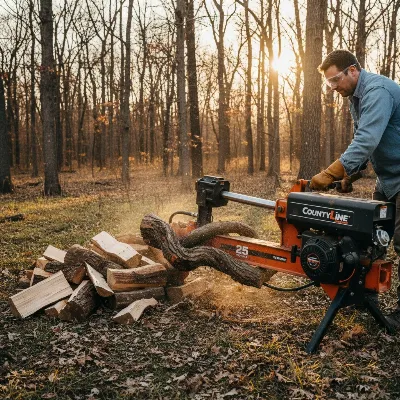 A CountyLine 25 Ton gas log splitter actively splitting a large log horizontally, with firewood piled nearby in an outdoor setting. The image should show the machine in action, with the operator wearing safety glasses and gloves, focusing on the hydraulic ram pushing the log against the wedge. The background features a forest edge, late afternoon sun, realistic style.
Comparing Log Splitters: How the CountyLine 25 Ton Stands Out
When evaluating log splitters, understanding key specifications and how a model like the CountyLine 25 Ton compares to others is crucial. Its blend of power, features, and price point makes it a compelling option for many homeowners.
| Feature | Electric Log Splitter (e.g., 7-10 Ton) | Small Gas Log Splitter (e.g., 15-20 Ton) | CountyLine 25 Ton Gas Log Splitter | Large Gas Log Splitter (e.g., 30+ Ton) |
|---|---|---|---|---|
| Power Source | Electric (120V/240V) | Gasoline | Gasoline (Kohler 6.5 HP Engine) | Gasoline |
| Splitting Force | 7-10 tons | 15-20 tons | 25 tons | 30+ tons |
| Log Capacity | Up to 20 inches length, 12 inches diameter | Up to 24 inches length, 18 inches diameter | Up to 24.5 inches length, large diameter | Up to 36+ inches length, very large diameter |
| Cycle Time | 15-20 seconds | 13-18 seconds | ~11-11.5 seconds | 8-10 seconds |
| Portability | Limited (corded), often on small wheels | Good (wheels, towable) | Excellent (DOT-approved tires, towable) | Good (heavy-duty wheels, towable) |
| Operation | Horizontal | Horizontal, sometimes vertical | Horizontal and Vertical | Horizontal and Vertical |
| Noise Level | Low | Moderate to High | Moderate to High | High |
| Maintenance | Low (motor, hydraulics) | Moderate (engine, hydraulics) | Moderate (engine, hydraulics) | High (heavy-duty engine, hydraulics) |
| Typical Use | Light-duty, small logs, quiet areas | Medium-duty, mixed woods | Heavy-duty homeowner, tough logs | Commercial, very large logs, continuous use |
| Price Point | Low | Mid-range | Mid-range (Excellent Value) | High |
The CountyLine 25 Ton Log Splitter with its Kohler 6.5 HP engine strikes an impressive balance, delivering ample 25-ton splitting force with a relatively fast cycle time of approximately 11-11.5 seconds. This power is more than sufficient for most hardwoods and even knotty logs, easily outperforming many smaller gas and all electric models. Its ability to operate in both horizontal and vertical positions provides crucial versatility, allowing users to comfortably handle both manageable and oversized logs. While it shares the noise and maintenance requirements of other gas splitters, its reliable Kohler engine and robust hydraulic system make it a standout choice for homeowners seeking significant power and efficiency without stepping into the higher price bracket of commercial-grade machines. The accessible pricing and strong warranty also contribute to its overall quality and appeal as a homeowner’s primary log splitter.
Guide to Choosing the Right Log Splitter for Your Needs
Selecting the perfect log splitter involves a thoughtful evaluation of your specific requirements and the machine’s capabilities. With models like the CountyLine 25 Ton offering substantial power, it is important to match the tool to the task.
Determine Usage Needs
Before diving into specifications, consider how you intend to use the log splitter.
- Volume of Wood: Do you split a few cords a year for personal use, or do you have a much larger volume from clearing land or selling firewood? For home use (e.g., 2-5 cords annually), a 25-ton splitter like the CountyLine is often an excellent fit, providing more than enough power without being overkill.
- Size and Type of Wood: What are the typical diameters and lengths of the logs you will be splitting? Are they mostly softwoods like pine, or dense, knotty hardwoods such as oak, maple, or black locust? A 25-ton machine is well-equipped to handle challenging hardwoods and larger rounds up to 24.5 inches in length.
- Budget: Log splitters vary widely in price. Determine your comfortable spending limit, ing to factor in potential costs for accessories (like a log catcher) and ongoing maintenance. The CountyLine 25 Ton typically offers a competitive price for its power class.
Key Factors to Consider
Once your needs are clear, focus on the critical features that impact performance and user experience.
- Machine Power (Tonnage): This is the force the splitter can exert. For general homeowner use, tackling a mix of softwoods and hardwoods, 20-25 tons is often ideal. A 25-ton splitter, like the CountyLine, offers a good balance of power for tough logs without being excessively large or expensive.
- Splitting Force: Measured in tons, this directly correlates to the machine’s ability to split various log types. A higher tonnage means less struggle with dense or knotty wood.
- Engine Type and Horsepower (for Gas Models): For gas splitters, the engine is the heart of the machine. The CountyLine’s Kohler 6.5 HP engine is known for its reliability and ease of starting, a crucial factor for consistent performance. An accessible air filter and spark plug also simplify routine maintenance.
- Cycle Time: This refers to the time it takes for the ram to extend and retract fully. A faster cycle time, around 11-15 seconds, means you can process wood more quickly. The CountyLine’s 11-11.5 second cycle time is efficient for its class.
- Operating Position: The flexibility of both horizontal and vertical splitting is a significant advantage. Horizontal is comfortable for lighter logs, while vertical saves your back when handling very heavy rounds you can’t lift. The CountyLine’s dual-position capability is a major plus.
- Portability: If you need to move your splitter around your property or to different locations, consider its weight and wheel quality. The CountyLine 25 Ton features DOT-approved pneumatic tires and a 2-inch ball coupler hitch, making it easily towable (up to 45 mph on non-highways).
- Safety Features: Look for features like two-handed operation controls, automatic return valves, and sturdy log cradles. The auto-return valve on the CountyLine is a convenient feature that enhances efficiency and safety.
- Brand and Reliability: Opt for reputable brands with good customer support and warranty coverage. CountyLine log splitters are widely available, often through major retailers, and typically come with a solid warranty on the engine, hydraulics, and workmanship.
Evaluate Additional Features
Beyond the core specifications, certain additional features can greatly enhance the splitting experience.
- Automatic Return Valve: This feature allows the ram to return to its starting position automatically when you release the control lever, freeing up a hand and speeding up the splitting process. The CountyLine includes this.
- Log Cradle: A well-designed log cradle helps hold logs securely in place during splitting, improving safety and efficiency. The CountyLine features a built-in log cradle for logs up to 24.5 inches.
- Log Catcher (Optional): Many users highly recommend an optional log catcher accessory, which attaches to the side of the splitter to collect split wood, preventing it from falling to the ground and saving significant bending and lifting. For the CountyLine, this accessory is a worthwhile investment.
- 4-Way Wedge (Optional): Designed to split logs into four pieces simultaneously, this can potentially increase efficiency. However, user experiences with optional 4-way wedges, including those for the CountyLine, vary; some find them unreliable, especially with knotty or wet wood, as they can cause jams. It is generally recommended to stick with the standard wedge for consistent results.
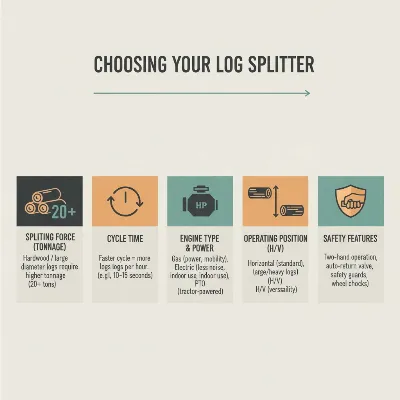 An illustrative infographic detailing key factors to consider when buying a log splitter: tonnage, cycle time, engine type, vertical/horizontal operation, and safety features. Each factor has a small icon next to it and a brief description, presented in a clean, modern style.
The CountyLine 25 Ton Gas Log Splitter: A Detailed Quality Review (2026)
The CountyLine 25 Ton Gas Log Splitter has established itself as a popular choice, particularly for homeowners seeking robust performance without the commercial price tag. After years of experience with various machines, I can confidently assess its quality and suitability for a wide range of users.
At its core, the CountyLine 25 Ton is powered by a reliable Kohler SH265 6.5 HP (196cc) engine. This engine is frequently lauded for its easy starting and dependable operation, providing consistent power to the hydraulic system. Even after years of ownership, many users report minimal engine issues, provided basic maintenance is performed. This engine’s reputation for accessibility in terms of air filter and spark plug design further simplifies routine upkeep. The 25 tons of splitting force it delivers is more than sufficient for almost any type of wood a homeowner would encounter, from common oak and maple to tougher species like black locust. This capability ensures that even challenging, knotty logs can be processed efficiently.
A significant advantage of this model is its dual horizontal and vertical splitting capability. The horizontal position is ideal for logs that are easy to lift, promoting a comfortable working posture. However, for those large, unwieldy rounds that defy lifting, the vertical position is a back-saver, allowing you to roll logs into place and split them on the ground. This versatility greatly enhances the machine’s utility for diverse splitting tasks. With an impressive cycle time of around 11-11.5 seconds, the CountyLine is also relatively fast, maximizing productivity during your splitting sessions. Its portability is another strong suit, featuring DOT-approved pneumatic tires and a 2-inch ball coupler hitch, enabling easy transport around a property or to an off-site woodlot (at speeds up to 45 mph on non-highways).
However, like any piece of equipment, the CountyLine 25 Ton has areas where improvements could be considered. One common concern among users is the accumulation of wood debris around the back plate and under the hydraulic arm. If not regularly cleared, this debris can become tightly packed and difficult to remove, potentially impeding operation. While the Kohler engine is generally reliable, some users have reported cold start difficulties, especially when the machine lacks a primer bulb. Ethanol-blended fuels can lead to carburetor gumming if the splitter is not properly winterized or stored with a fuel stabilizer, causing stalling or starting problems.
Another point of contention is the optional 4-way splitting wedge. While appealing in theory for speeding up the process, many users find it less effective in practice, particularly with inconsistent wood types, often resulting in partial splits or jams. The standard wedge typically delivers more reliable results. While the overall construction is sturdy for homeowner use, the lighter frame compared to commercial models means it’s best stored indoors or under a high-quality cover to prevent surface rust, particularly on the muffler, if left exposed to the elements. Some also note the engine’s exposure to falling logs during operation as a design oversight, suggesting caution and perhaps a custom guard for added protection.
Despite these minor drawbacks, the CountyLine 25 Ton Gas Log Splitter offers exceptional value. Its powerful Kohler engine, rapid cycle time, versatile horizontal/vertical operation, and solid construction make it an excellent investment for homeowners who process a moderate to large amount of firewood annually. It reliably handles tough woods, and with proper care and attention to its known quirks, it can provide many years of dependable service.
Safe Operation and Maintenance of Your Log Splitter
Operating a log splitter, particularly a powerful gas-powered model like the CountyLine 25 Ton, demands strict adherence to safety protocols and a consistent maintenance routine. These practices ensure not only your personal safety but also the longevity and optimal performance of your machine.
Safety When Using
Working with a log splitter involves significant force and moving parts, making safety paramount.
- Personal Protective Equipment (PPE): Always wear appropriate safety gear. This includes safety glasses or a face shield to protect against flying wood chips, heavy-duty work gloves to prevent splinters and provide grip, and sturdy work boots (preferably steel-toed) to protect your feet from falling logs. Hearing protection is also advisable due to the noise of the gas engine.
- Pre-Operation Inspection: Before each use, conduct a thorough visual inspection of the splitter. Check for any loose bolts, hydraulic fluid leaks, or damaged hoses. Ensure all safety guards are in place and the controls are functioning correctly. Never operate a damaged machine.
- Two-Handed Operation: Most log splitters, including the CountyLine, are designed for two-handed operation, meaning you must use both hands to engage the splitting ram. This keeps your hands away from the moving wedge and the log. Never attempt to hold a log with one hand while operating the controls with the other.
- Awareness of Hot Components: The muffler and engine components of gas splitters become extremely hot during operation. Be mindful of these areas when loading logs, especially in the vertical position, to avoid burns.
- Stable Work Area: Operate the splitter on a firm, level surface to prevent tipping or instability. Keep the work area clear of debris and obstacles to minimize tripping hazards.
- Proper Log Placement: Always place logs firmly on the splitting beam or cradle. Ensure they are free of nails, wire, or other foreign objects that could damage the wedge or cause dangerous projectiles.
- Never Force a Split: If a log jams, do not attempt to force the wedge through by applying excessive pressure. Follow the manufacturer’s instructions for safely dislodging jammed logs, which often involves reversing the ram and repositioning the log.
> “Safety is non-negotiable when operating a log splitter. A momentary lapse in attention can lead to serious injury. Always prioritize protective gear and machine checks before beginning any work.” – John D., Outdoor Power Equipment Specialist
Regular Maintenance
Consistent maintenance is key to extending the life of your CountyLine 25 Ton Log Splitter and ensuring its reliable performance.
- Cleaning After Each Use: After every splitting session, thoroughly clean the machine. Remove wood chips, sap, and dirt from the splitting beam, wedge, and hydraulic components. Pay special attention to the area around the back plate and under the hydraulic arm where debris can accumulate. A stiff brush and a damp cloth are usually sufficient. Dry the machine completely to prevent rust.
- Hydraulic Fluid Management: The hydraulic system is the heart of your splitter. Regularly check the hydraulic fluid level before each use and top it off as needed with the manufacturer-recommended fluid. Replace the hydraulic fluid annually or after every 100 hours of use, whichever comes first. Also, inspect hydraulic hoses for any signs of wear, cracks, or leaks, replacing them if necessary.
- Engine Maintenance (for Gas Models): For the Kohler engine on the CountyLine, regular engine maintenance is crucial. This includes:
- Oil Changes: Follow the manufacturer’s schedule for engine oil changes (e.g., every 25-50 hours of operation) using the recommended oil type (e.g., 10W-30).
- Air Filter: Inspect and clean or replace the air filter regularly, especially if working in dusty conditions. A clogged air filter can reduce engine performance and fuel efficiency.
- Spark Plug: Check and clean or replace the spark plug as per the engine manual to ensure easy starting and efficient combustion.
- Fuel System Care: To prevent carburetor issues, particularly with ethanol-blended fuels, always use fresh gasoline and consider adding a fuel stabilizer, especially when storing the splitter for more than 30 days. Running the fuel dry from the carburetor bowl before extended storage can also help prevent gumming.
- Lubrication: Apply a light coat of grease or oil to all moving parts, such as the wedge slide points on the beam, to reduce friction and prevent rust.
- Inspecting Fasteners: Regularly check and tighten all bolts, nuts, and screws, as vibrations during operation can cause them to loosen.
- Proper Storage: When not in use, store your CountyLine 25 Ton Log Splitter in a dry, sheltered location, such as a garage or shed. Using a weatherproof cover is highly recommended, especially if outdoor storage is unavoidable, to protect it from moisture and UV exposure. This will prevent surface rust on painted components and prolong the machine’s lifespan.
Where to Purchase a Reliable Log Splitter?
Finding a reliable log splitter is about more than just the brand; it’s also about where you make your purchase. When looking for a quality machine, consider authorized dealers and reputable retailers who offer genuine products, warranties, and customer support.
For the CountyLine 25 Ton Gas Log Splitter, a primary and highly recommended retailer is Tractor Supply Co., as it is their house brand. Purchasing directly from such a store ensures you receive a new unit with full warranty support (5-year on workmanship, 2-year on engine, 3-year on hydraulics), access to parts, and knowledgeable staff who can assist with assembly or initial setup. Other agricultural equipment suppliers or specialized outdoor power equipment stores may also carry similar models or alternatives. Online marketplaces can offer convenience, but it is crucial to verify the seller’s reputation and ensure the product comes with a manufacturer’s warranty.
When considering a used log splitter, exercise caution. While you might find a bargain, inspect the machine thoroughly for signs of wear, leaks in the hydraulic system, engine issues (especially starting and running), and frame damage. Always try to test the machine under load before purchasing. Asking for maintenance records can also provide valuable insight into its history. For most homeowners, investing in a new CountyLine 25 Ton from an authorized dealer often provides greater peace of mind and long-term reliability.
Conclusion
The CountyLine 25 Ton Gas Log Splitter represents a formidable tool for homeowners committed to efficient firewood processing. Its robust Kohler engine, ample 25-ton splitting force, and versatile horizontal and vertical operating positions make it highly capable of tackling a wide range of logs, including dense hardwoods. While minor issues like debris accumulation and the effectiveness of the optional 4-way wedge exist, these are often manageable with proper care and accessory choices. Its strong performance, combined with a competitive price point and comprehensive warranty, positions it as an excellent value within the homeowner-grade log splitter market. By adhering to rigorous safety practices and a diligent maintenance schedule—including specific attention to carburetor care for its gas engine and protective storage—you can ensure this machine remains a dependable workhorse for years to come. Investing in a quality log splitter like the CountyLine 25 Ton not only simplifies the task of preparing firewood but also allows you to reclaim your weekends, transforming a laborious chore into a satisfying and productive endeavor. Are you ready to upgrade your firewood processing experience with power and reliability?
Frequently Asked Questions
What kind of wood can a 25-ton log splitter handle?
A 25-ton log splitter, such as the CountyLine 25 Ton, is powerful enough to handle most types of wood, including softwoods like pine and hardwoods like oak, maple, and even notoriously tough varieties such as black locust and hickory. It can typically split logs up to 24.5 inches in length and varying diameters, making it highly versatile for almost any homeowner’s firewood needs.
How often should I change the hydraulic fluid in my gas log splitter?
For optimal performance and longevity, it is generally recommended to change the hydraulic fluid in your gas log splitter annually or after every 100 hours of use, whichever comes first. Regularly checking the fluid level before each operation and topping it off as needed is also crucial for maintaining the hydraulic system’s health.
Is the CountyLine 25 Ton Log Splitter suitable for commercial use?
While the CountyLine 25 Ton Log Splitter offers significant power and reliability for homeowners, it is primarily designed for residential, heavy-duty use rather than continuous commercial operation. For commercial applications, heavier-duty machines with more robust frames and components designed for prolonged, daily use are typically recommended to withstand the increased workload and reduce wear and tear.
What are common starting problems with gas log splitters like the CountyLine?
Common starting problems with gas log splitters, including the CountyLine, often stem from fuel-related issues. Ethanol in gasoline can gum up the carburetor if the machine is stored without a fuel stabilizer or if old fuel is used. Other causes include a dirty air filter, a fouled spark plug, or issues with cold starting if the engine lacks a primer bulb. Regular maintenance and proper fuel management are key to preventing these problems.
Get our weekly buyer guide
Practical specs, not advice. Unsubscribe anytime.
