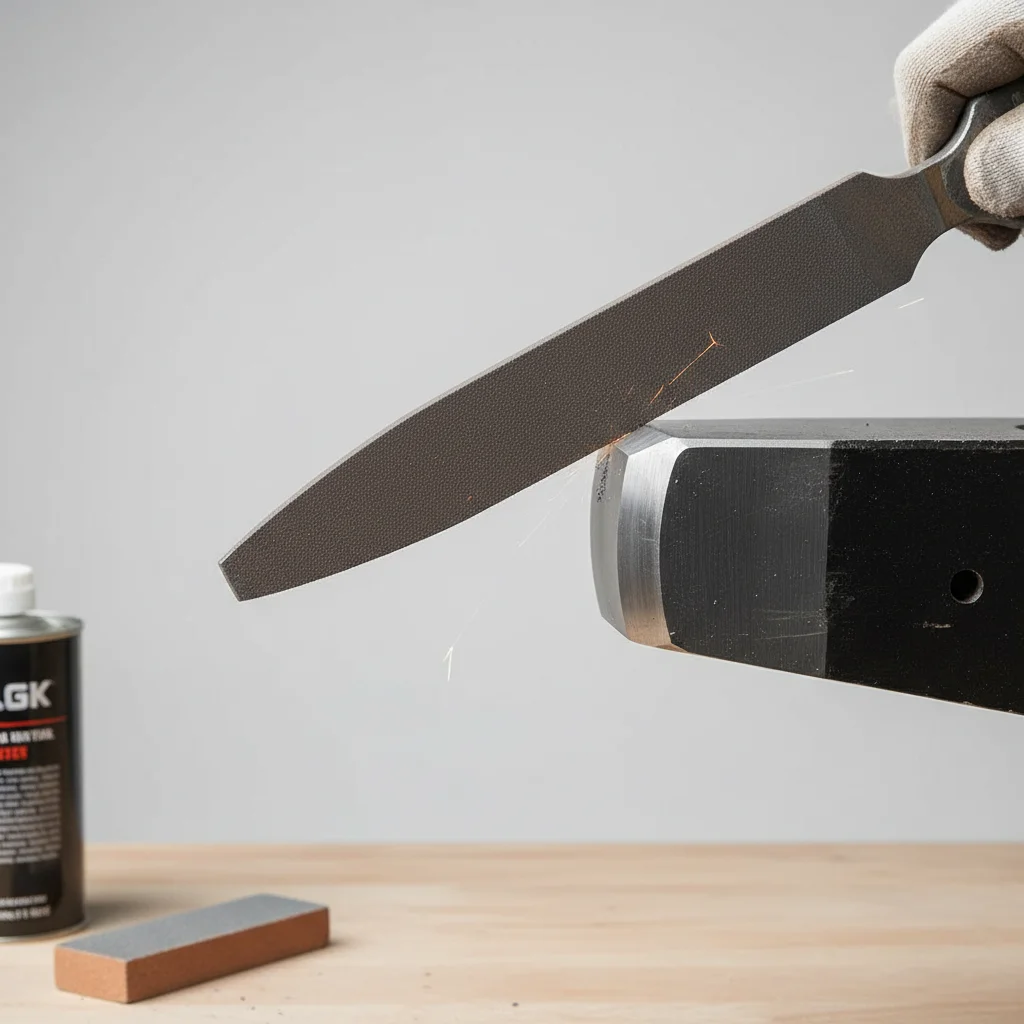
A dull log splitter wedge significantly reduces efficiency and can even be dangerous. You can effectively sharpen a dull log splitter wedge using a metal file or an angle grinder, restoring its cutting edge and improving your splitting performance. This simple maintenance task can save you time and effort, ensuring your splitter operates at its peak.
Why a Sharp Wedge Matters for Log Splitting
The wedge is the primary component responsible for splitting wood. Over time, repeated impact with logs, especially knotty or hard varieties, will dull its edge. A dull wedge doesn’t cut cleanly; instead, it tends to crush and tear the wood, requiring more force from the hydraulic system and increasing fuel consumption for gas models. This not only slows down your work but also puts unnecessary strain on your machine’s components, potentially leading to premature wear and tear. A sharp wedge, on the other hand, slices through wood with minimal resistance, making the process faster, safer, and more efficient.
Tools You’ll Need for Sharpening
Before you begin, gather the necessary tools. For manual sharpening, a high-quality metal file (flat or half-round) is essential. For a quicker and more aggressive approach, an angle grinder with a metal grinding disc is ideal. Always prioritize safety by wearing appropriate personal protective equipment (PPE), including heavy-duty work gloves and safety glasses. A wire brush will also be useful for cleaning the wedge surface before and after sharpening.
- Metal file (flat or half-round)
- Angle grinder with metal grinding disc
- Heavy-duty work gloves
- Safety glasses
- Wire brush
Step-by-Step Guide to Sharpening Your Wedge
|
Our Picks for the Best Log Splitter in 2026
As an Amazon Associate I earn from qualifying purchases.
|
||
| Num | Product | Action |
|---|---|---|
| 1 | Firewood Kindling Splitter for Wood, Heavy Duty Cast Iron Wood Splitters for Firewood with No Axe, Manual Log Splitter for Kindling Wedge Point with Safety Cover |

|
| 2 | KABIN Kindle Quick Compact Log Splitter - Manual Splitting Tool - Steel Wedge Point Splits Firewood Like A Boss Safely & Easily |
|
| 3 | Kindling Cracker Firewood Kindling Splitter — Original Cast Iron Wood Splitting Wedge, 6.5" Safety Ring, 12" Frame, No Axe Needed, New Zealand Designed & Australian Made |
|
| 4 | Wall Mounted Wood Splitter: Dual-Handle Manual Kindling Splitter with 6-Tooth Clamping, Heavy Duty Steel Log Splitter for Soft Firewood, Includes Gloves and Screws for Indoor and Outdoor Use |
|
| 5 | Firewood Kindling Splitter, Manual Log Splitter, Cast Iron Log Splitting Wedge, Heavy Duty Wood Splitter Tool with Cover (Black) |
|
| 6 | Kindling Cracker King XL Firewood Kindling Splitter – Extra-Large Cast Iron Wood Splitting Wedge, 9" Safety Ring, 17" Height, No Axe Needed, Made in Australia |
|
| 7 | 13.8 Inch XL Manual Log Splitter with Self-Locking V-Blade for Hands-Free Safety - Unbreakable Welded Steel Firewood Cutter - Rust-Proof Electroplated Finish for Large Rounds, Fireplace & Camping |
|
| 8 | 2 Pcs 4 Lbs Wood Splitting Wedges Manual Log Splitter Wedge 4-Direction Diamond Design Forged Steel Tool for Easy Wood Splitting Splits Firewood into 4 Pieces Less Effort (Orange) |
|
| 9 | ESTWING Sure Split Wedge - 5-Pound Wood Splitting Tool with Forged Steel Construction & 1-7/8" Cutting Edge - E-5 |
|
| 10 | Wood Kindling Splitter - The Firewood Kindling Tool for Wood Stove Fireplace and Fire Pit |
|
First, ensure your log splitter is turned off and disconnected from any power source (spark plug removed for gas models, unplugged for electric). Clean the wedge thoroughly with a wire brush to remove any wood debris, sap, or rust. If using a metal file, hold it at a consistent angle (typically between 20-30 degrees) and push it across the cutting edge in one direction, lifting on the return stroke. Repeat this motion until a new, sharp edge is formed. For an angle grinder, maintain a steady hand and a consistent angle, making light passes along the edge. Avoid applying too much pressure, as this can overheat the metal and potentially damage the wedge. Work slowly and evenly across the entire cutting surface.
Finishing Touches and Testing
Once you’ve achieved a satisfactory edge, use the wire brush again to remove any metal filings. You can also use a finer grit file or sandpaper to deburr the edge, making it even smoother. After sharpening, reassemble any components if necessary and perform a test split with a small log. You should notice a significant improvement in how easily the wood splits. Regular inspection of your wedge and prompt sharpening will extend its life and keep your log splitter performing optimally. Consider sharpening your wedge after every 10-15 hours of operation, or whenever you notice a decrease in splitting efficiency.
For a wide selection of replacement wedges and sharpening tools, check out. Maintaining a sharp wedge is a crucial part of log splitter care, ensuring both efficiency and safety during your firewood processing tasks. Don’t let a dull wedge slow you down or put extra strain on your equipment.
If you’re looking to upgrade your log splitter or need more advanced sharpening solutions, explore the options available at. Investing in quality tools and proper maintenance practices will ensure your log splitter remains a reliable workhorse for years to come.
Get our weekly buyer guide
Practical specs, not advice. Unsubscribe anytime.
