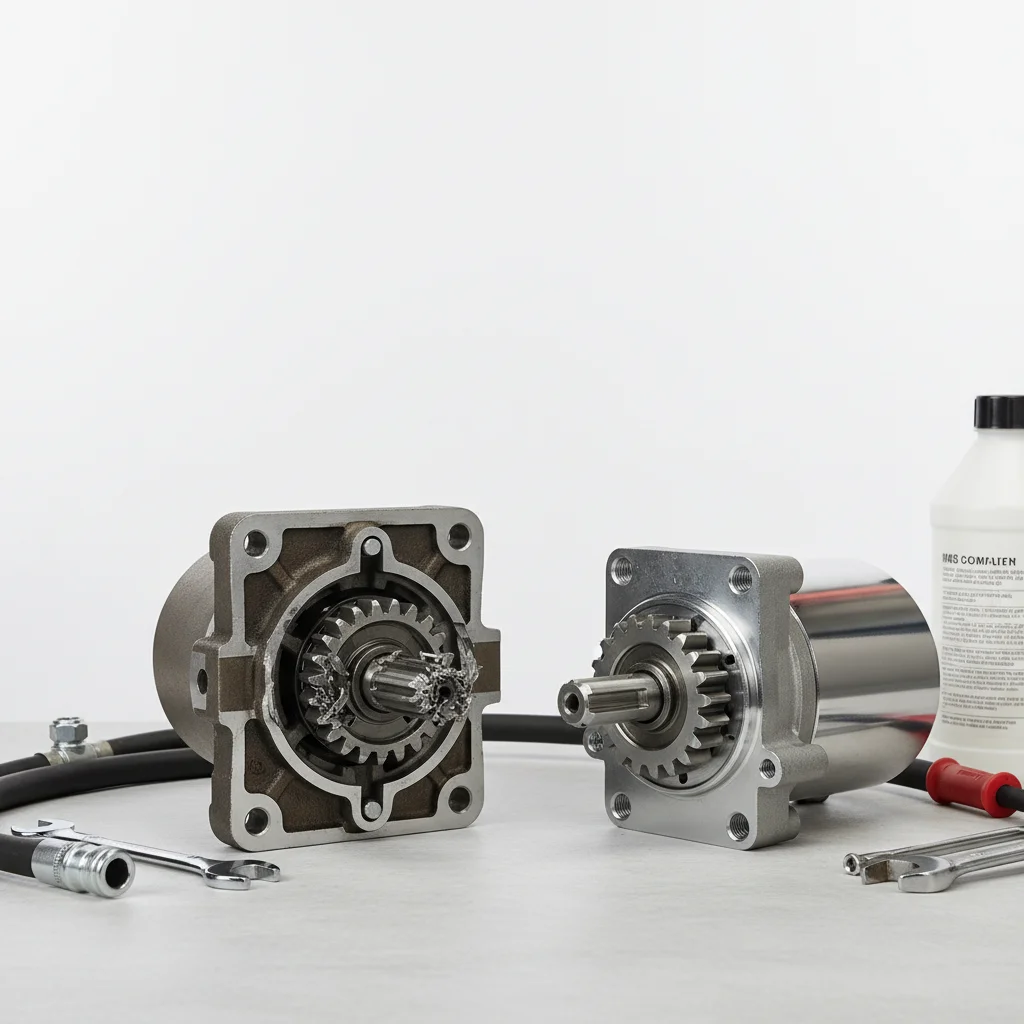
Replacing a stripped hydraulic pump on your log splitter is a critical repair that can restore your machine’s full power and efficiency. This guide will walk you through the process, which typically involves about 2-4 hours of work depending on your mechanical experience and the specific log splitter model. A stripped pump often manifests as a complete loss of hydraulic pressure, preventing the ram from extending or retracting.
Identifying a Stripped Hydraulic Pump
Before you begin, it’s crucial to confirm that the hydraulic pump is indeed the issue. Common symptoms of a stripped pump include the engine running but the ram not moving, or a noticeable grinding noise coming from the pump area when the engine is engaged. You might also observe metal shavings in the hydraulic fluid reservoir, indicating internal damage to the pump gears. Always check the hydraulic fluid level and filter first, as these are simpler fixes. For log splitters buying guides on this site.
Gathering Your Tools and Replacement Parts
To successfully replace a stripped hydraulic pump, you’ll need a standard set of mechanic’s tools, including wrenches, sockets, a drain pan, and a funnel. Crucially, you’ll need a new hydraulic pump that is compatible with your log splitter’s make and model. Consult your owner’s manual or the manufacturer’s website for the correct part number. It’s also wise to have fresh hydraulic fluid and a new hydraulic filter on hand for a complete system refresh.
- Wrench set (metric and/or SAE)
- Socket set with ratchet
- Drain pan for hydraulic fluid
- Funnel for refilling fluid
- New hydraulic pump (model-specific)
- New hydraulic filter
- Fresh hydraulic fluid (type specified by manufacturer)
- Shop rags and gloves
Step-by-Step Replacement Process
|
Our Picks for the Best Log Splitter in 2026
As an Amazon Associate I earn from qualifying purchases.
|
||
| Num | Product | Action |
|---|---|---|
| 1 | 2 Pcs 4 Lbs Wood Splitting Wedges Manual Log Splitter Wedge 4-Direction Diamond Design Forged Steel Tool for Easy Wood Splitting Splits Firewood into 4 Pieces Less Effort (Orange) |

|
| 2 | Firewood Kindling Splitter, Manual Log Splitter, Cast Iron Log Splitting Wedge, Heavy Duty Wood Splitter Tool with Cover (Black) |
|
| 3 | Firewood Kindling Splitter for Wood, Heavy Duty Cast Iron Wood Splitters for Firewood with No Axe, Manual Log Splitter for Kindling Wedge Point with Safety Cover |
|
| 4 | Wall Mounted Wood Splitter: Dual-Handle Manual Kindling Splitter with 6-Tooth Clamping, Heavy Duty Steel Log Splitter for Soft Firewood, Includes Gloves and Screws for Indoor and Outdoor Use |
|
| 5 | Kindling Cracker Firewood Kindling Splitter — Original Cast Iron Wood Splitting Wedge, 6.5" Safety Ring, 12" Frame, No Axe Needed, New Zealand Designed & Australian Made |
|
| 6 | KABIN Kindle Quick Compact Log Splitter - Manual Splitting Tool - Steel Wedge Point Splits Firewood Like A Boss Safely & Easily |
|
| 7 | Wood Kindling Splitter - The Firewood Kindling Tool for Wood Stove Fireplace and Fire Pit |
|
| 8 | 13.8 Inch XL Manual Log Splitter with Self-Locking V-Blade for Hands-Free Safety - Unbreakable Welded Steel Firewood Cutter - Rust-Proof Electroplated Finish for Large Rounds, Fireplace & Camping |
|
| 9 | Kindling Cracker King XL Firewood Kindling Splitter – Extra-Large Cast Iron Wood Splitting Wedge, 9" Safety Ring, 17" Height, No Axe Needed, Made in Australia |
|
| 10 | ESTWING Sure Split Wedge - 5-Pound Wood Splitting Tool with Forged Steel Construction & 1-7/8" Cutting Edge - E-5 |
|
Begin by ensuring the log splitter’s engine is off and cool, and disconnect the spark plug wire to prevent accidental starting. Place a drain pan beneath the hydraulic reservoir and open the drain plug to completely empty the old hydraulic fluid. Once drained, locate the hydraulic pump, which is usually mounted near the engine and connected to the hydraulic lines. Carefully disconnect all hydraulic lines leading to and from the pump, being mindful of any residual fluid. Then, unbolt the pump from its mounting bracket. Install the new hydraulic pump, ensuring all connections are secure and tightened to the manufacturer’s specifications. Reconnect the hydraulic lines, making sure they are properly seated and free of leaks.
Refilling and Bleeding the System
After the new pump is installed and all lines are reconnected, replace the hydraulic drain plug and install a new hydraulic filter. Using a funnel, slowly refill the hydraulic reservoir with the recommended type and amount of fresh hydraulic fluid. Once filled, reconnect the spark plug wire. Start the engine and allow it to run at a low idle for a few minutes. Slowly actuate the log splitter’s control lever back and forth several times to cycle the ram through its full extension and retraction. This process helps to bleed any air out of the hydraulic system. Monitor the fluid level and top it off as needed. Check for any leaks around the new pump and connections.
Post-Replacement Checks and Maintenance
After successfully replacing the pump and bleeding the system, perform a few test splits with smaller logs to ensure everything is functioning correctly. Listen for any unusual noises and observe the ram’s movement for smoothness and full power. Regular maintenance, such as checking hydraulic fluid levels, replacing filters, and inspecting hoses, will help prolong the life of your new pump and the entire log splitter. Addressing minor issues promptly can prevent more significant and costly repairs down the line.
Get our weekly buyer guide
Practical specs, not advice. Unsubscribe anytime.
